Why the best injectable work is the kind no one notices
At Anastology, restraint is the actual skill, not a compromise on results.
ANASTOLOGY STAFFTurn your social into search
We turn your posts into editorial stories that bring new search traffic to anastology.com. Three of yours will be on this page.
Book a demo
anastology.la Aesthetic medicine isn’t about doing MORE. It’s about knowing what to do, how much to do. and when to say no. My goal has always been for my patients to look refreshed, balanced and like themselves. 🤍 Would you rather have someone notice your filler… or just notice that you look amazing? #Anastology #MedicalAesthetics #NaturalResults #Botox #Filler
At Anastology, restraint is the actual skill, not a compromise on results.
ANASTOLOGY STAFFHow it works
Same as today. Nothing changes on Instagram.
We turn your post into a full story in your voice within the hour.
One click publishes it to anastology.com. Nothing goes live without you.
Your stories
Nothing was published anywhere. You decide that. Every word will come from your own posts, your own photos and your own treatments.
Injector Philosophy · From your post
At Anastology, restraint is the actual skill, not a compromise on results.
“Aesthetic medicine isn’t about doing MORE. It’s about knowing what to do, how much to do. and when to say no. My goal has always been for my patients to look refreshed, balanced and like themselves. 🤍 Would you rather have someone notice your filler… or just notice that you look amazing? #Anastology #MedicalAesthetics #NaturalResults #Botox #Filler”

Skin & GLP-1 · From your post
Waiting until a GLP-1 course of treatment ends to think about skin and facial balance can mean missing the window when support matters most.
“On a GLP 1? Do not wait until the weight is gone to care for your skin. 👀 PRX Peel, diluted Radiesse, strategic filler and EvolveX may help support your skin and facial balance during your journey. Save this and comment “GLP 1” to book a consultation with Anastology. Individual plans and results vary. #GLP1 #MedicalAesthetics #Anastology #LosAngelesMedSpa #SkinCare”
Lip Filler · From your post
Not every lip filler consultation should end at a full syringe, and knowing why starts with understanding what half a syringe actually does.
“½ syringe or full syringe, which one is right for you? 👄 The answer depends on your natural lip shape, goals and personalized treatment plan. Subtle or more defined, we create results designed for you. Which would you choose? Comment “LIPS” to schedule your consultation. 📍Anastology, Woodland Hills Results vary by client. #LipFiller #HalfSyringe #NaturalLipFiller #LipEnhancement #WoodlandHillsMedspa”
One social post becomes another searchable entry point to Anastology.
Our own magazine. Clicks and citations from Google Search Console, as of September 15, 2026.
Draft story for anastology.com · Injector Philosophy
At Anastology, restraint is the actual skill, not a compromise on results.
There is a moment in every consultation when the conversation could go two directions. One patient wants more, more filler, more product, more correction. The other wants to still look like herself when she leaves. Our job is deciding which conversation we are actually having, and being honest even when the easier answer is simply saying yes to whatever is requested.
Aesthetic medicine is often framed as a menu of additions, another syringe, another area, another treatment stacked onto the last one. We see it differently. The skill is not in how much we can do to a face. It is in knowing what a face actually needs, how much is enough, and recognizing the point where doing less produces the better outcome.
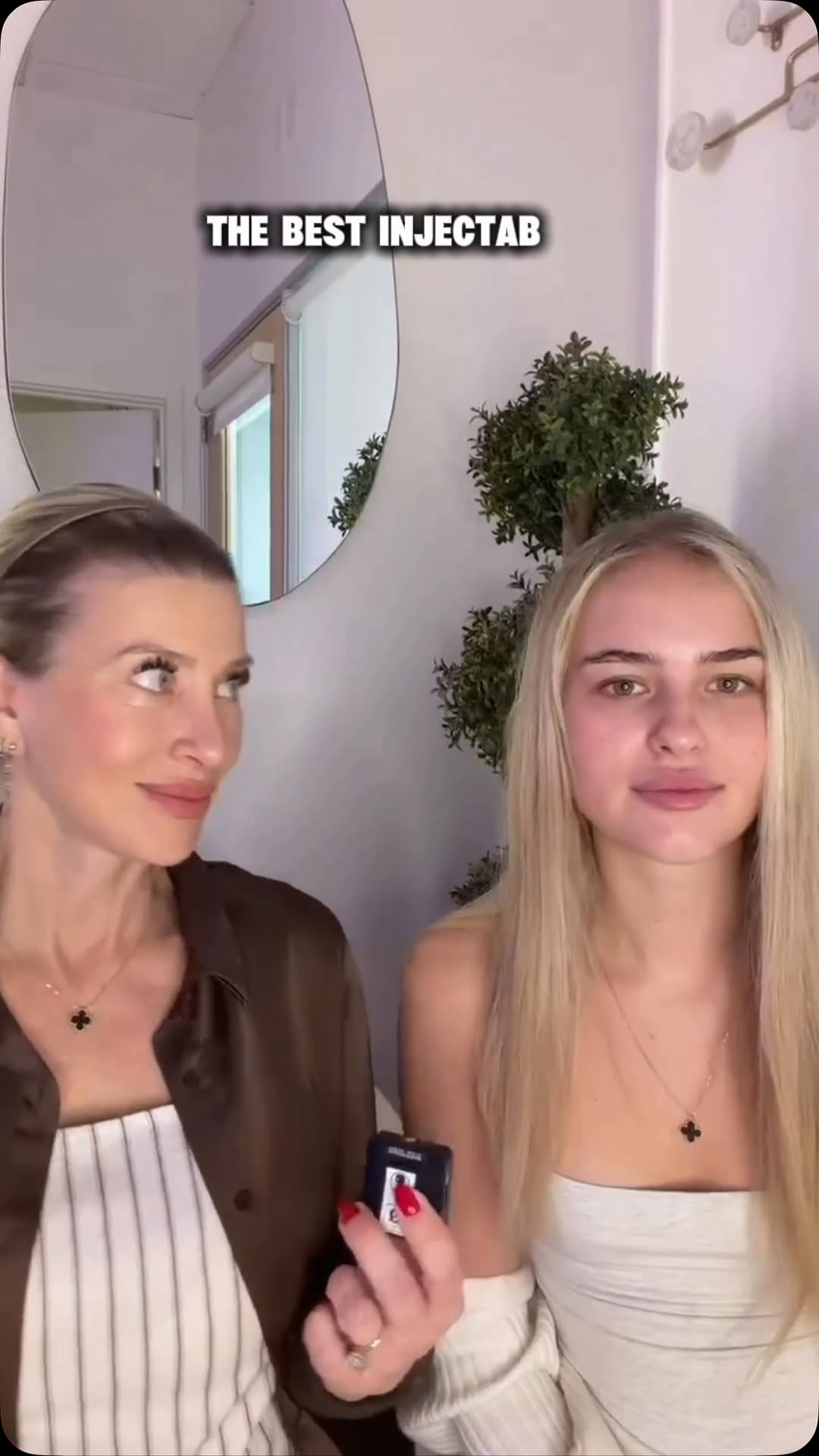
That philosophy shows up plainly in an ordinary moment between an injector and a patient, standing together near a mirror, one holding the device, both looking directly at the camera rather than at a reflection. No dramatic before or after, no exaggerated transformation. Just two people about to make a small, considered decision about what happens next on that particular face.
Our goal for every patient is the same regardless of age or concern: refreshed, balanced, and recognizably themselves. That is a narrower target than it sounds. It means resisting the instinct to treat every visible line or hollow as a problem requiring maximum correction. Sometimes the right amount of filler is less than a patient expects, and telling them so is part of the actual service.
Balanced also means proportion between features rather than perfection in any single one. A lip that is treated in isolation can look disconnected from the rest of a face that was never addressed. We look at the whole picture before deciding where product goes, which is slower than treating on request, but it is the difference between a result that reads as cohesive and one that reads as done.
Knowing when to say no is not a lesser skill than knowing how to inject. Patients sometimes ask for more because more feels like value, or because they are chasing a look they saw elsewhere that was never built for their face. Turning that request down, and explaining why, is part of what keeps results looking intentional rather than accumulated over too many appointments.
The question we keep coming back to is simple. Would you rather have someone clock the filler, or just notice that you look good and not be able to explain exactly why? Those are two very different outcomes from two very different approaches, and only one of them holds up months later when the swelling settles and the face just looks like the face, only rested.
That is the standard we hold every treatment plan against, not how much product was used, but whether the person leaves looking like a better version of themselves instead of a visibly altered one. It is a quieter kind of result, and it asks more discipline of us than simply saying yes. It is also the only version of this work we are interested in doing well.
Draft story for anastology.com · Skin & GLP-1
Waiting until a GLP-1 course of treatment ends to think about skin and facial balance can mean missing the window when support matters most.
A GLP-1 prescription changes the timeline for a lot of things, and skin is one of them. Most people think about their face only after the number on the scale has settled. We think about it earlier, while the change is still happening, because that is when the skin and the underlying facial structure are adjusting the most and when small, strategic support tends to go the furthest.
Weight loss does not stop at the body. As fat volume shifts throughout the face, the support structures underneath the skin shift too, often faster than skin itself can adapt. That gap between how quickly the weight moves and how slowly skin responds is exactly the stretch of time we want patients in front of us, not after the change is finished and the adjustment period has already passed.
We do not treat every GLP-1 patient the same way, but a few tools come up often. A PRX Peel is one of them, used to support skin quality without demanding significant downtime during a period when patients are already managing a lot of change. It is less about a dramatic reset and more about steadily maintaining texture and tone as the face continues to move.
Diluted Radiesse is another option we lean on, applied in a way that supports the skin itself rather than adding heavy volume. Alongside that, strategic filler placement helps address specific areas where facial balance has shifted, rather than treating the whole face as one uniform problem. The goal is always support that matches what the face is actually doing, not a fixed routine applied regardless of where someone is.
EvolveX rounds this out for patients focused on skin and body contour together. Used in combination with the other options, it reflects how we approach GLP-1 patients overall: not one treatment doing everything, but a set of tools chosen based on where someone is in their process and what their skin and facial structure need at that specific point.
The reason we say do not wait is straightforward. Supporting skin and facial balance while weight loss is still underway gives us more to work with than starting after the fact. Once the weight has fully stabilized, the structural shifts have already happened, and the same tools are working to correct rather than support. Starting earlier is simply a different, more responsive position to treat from.
None of this is about assuming a fixed outcome. Individual plans and results vary, and what makes sense for one person on a GLP-1 depends on their pace of change, their skin, and their goals. That variation is exactly why a consultation matters before assumptions are made about what a person needs or when they need it.
If you are on a GLP-1 and have been putting off any conversation about your skin until the weight is where you want it, that is the moment we would rather talk sooner. Comment GLP1 to book a consultation with us in Los Angeles, and we can talk through where you are in the process and what kind of support actually fits it.
Draft story for anastology.com · Lip Filler
Not every lip filler consultation should end at a full syringe, and knowing why starts with understanding what half a syringe actually does.
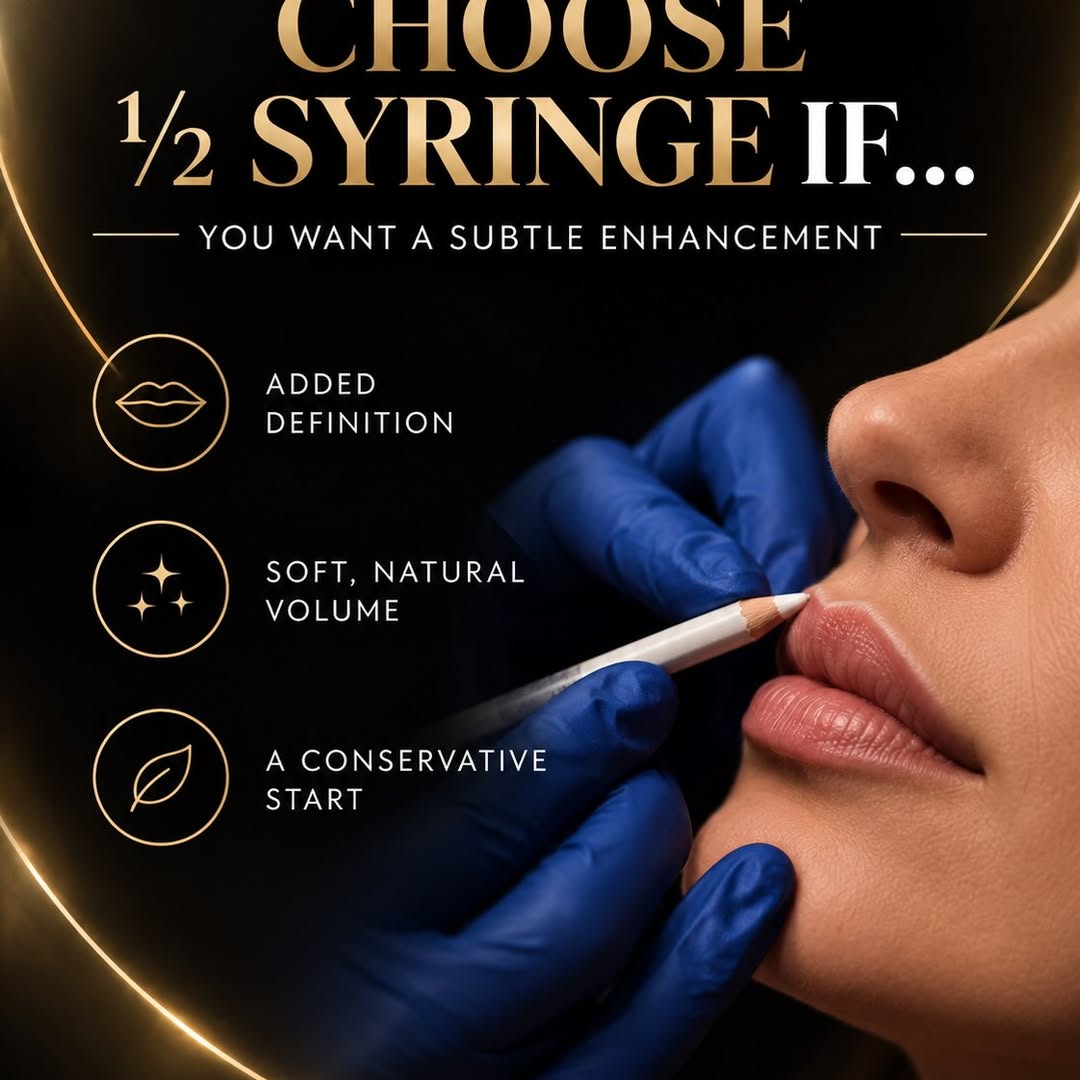
Someone sits back in the treatment chair, and before any filler is drawn up, a white lip pencil traces the natural line of the mouth. This is the quiet part of a lip consultation that people rarely see photographed: the mapping, the measuring, the conversation about what already exists before anything gets added. It is where the decision between half a syringe and a full syringe actually begins.
Half a syringe is not a smaller version of the same result. It is its own category of treatment, built for a specific kind of client. Someone who already has decent lip volume but wants sharper definition along the border. Someone who wants softness added without changing the overall shape of their smile. Someone who simply wants to test the water before committing to more product down the line.
We think of half a syringe as three things at once: added definition, soft natural volume, and a conservative starting point. Definition means the cupid's bow reads more clearly and the border holds a crisper line. Volume means a gentle lift through the body of the lip, not a dramatic change. And a conservative start means there is room to add more later if a client decides they want it.
That third point matters more than people expect. Filler is not something we want to talk someone out of adjusting later. Starting with half a syringe gives a client the chance to live with a subtle result for a while, see how it settles, and decide from there. It is a lower commitment way to test enhancement without locking into a look that feels too far from where they started.
The honest answer to which amount is right depends less on preference and more on anatomy. Thin lips with little natural structure often need more product just to establish shape before any subtlety is possible. Lips that already have decent volume and just need refinement along the edges are usually better candidates for a smaller amount. This is why the consultation matters more than the syringe count itself.
Goals play into it too. Someone chasing a fuller, rounder look is a different conversation than someone who wants their lips to look like themselves on a good day. We build every plan around the shape someone already has, not a standard target everyone gets pushed toward. Half a syringe and a full syringe are simply two different tools for two different outcomes, not a hierarchy of better and best.
There is no universal right answer here, which is exactly why we do not treat it like one. The amount that works for one client's lips will look completely wrong on someone else's, even with the same goal in mind. A consultation exists to figure out which category someone actually falls into before a needle is ever involved, based on their shape, their history with filler, and what they are hoping to see in the mirror afterward.
If you have been going back and forth between subtle and more defined, that hesitation is normal, and it is worth working through in person rather than guessing from a screen. We treat at our Woodland Hills location, and results vary from client to client depending on starting shape and goals. The conversation about half a syringe versus a full one starts there, not before.
Keep reading