Why fall is the right time to treat spider veins with sclerotherapy
As legs cover up for cooler weather, sclerotherapy quietly gets to work fading spider veins before summer returns.
ARIEL OSTAD MD STAFFTurn your social into search
We turn your posts into editorial stories that bring new search traffic to drarielostad.com. Three of yours will be on this page.
Book a demo
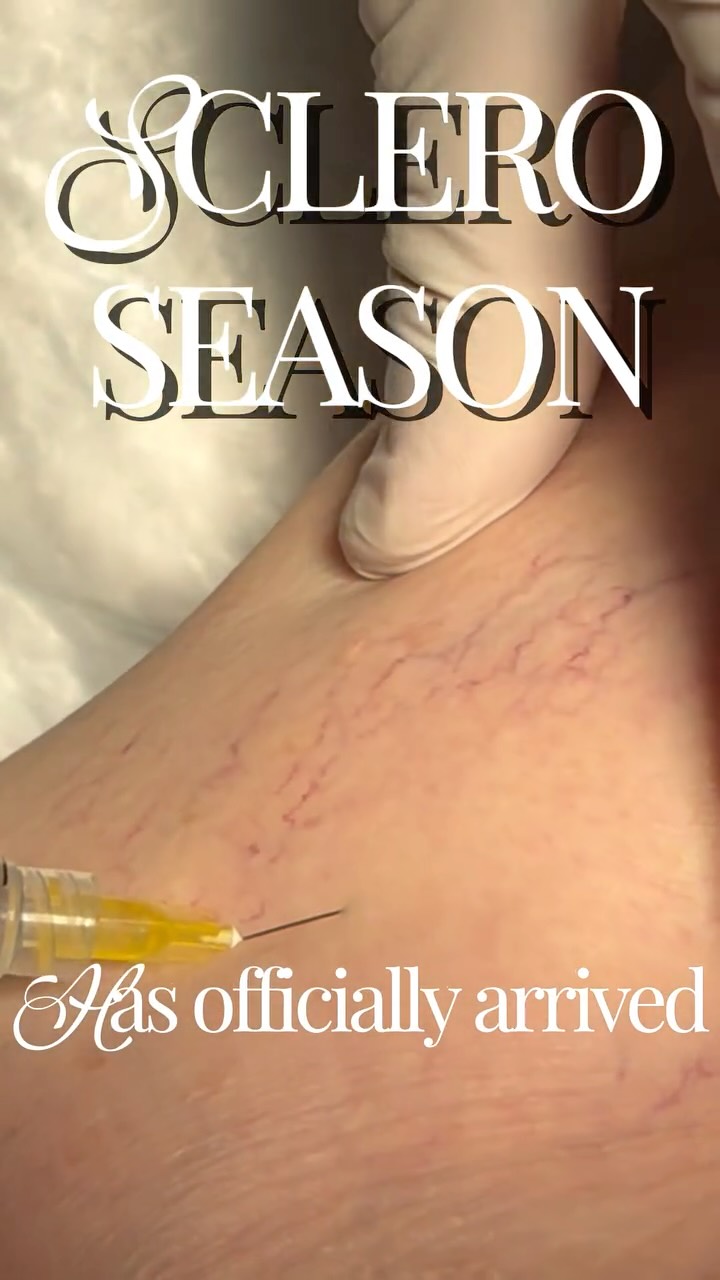
drarielostad Sclero season has officially arrived. 💉 Consider it a little disappearing act for unwanted spider veins on the legs. As temperatures cool and legs spend a little more time covered, fall is an ideal time to begin sclerotherapy. Through a series of precise injections, targeted spider veins are treated, allowing them to gradually fade from view over time. Typically 3 sessions are recommended month apart for maximum results. Compression stockings are worn post procedure for a duration of about 3 days depending on your providers instructions. Treat them now. Let them disappear. Show off your results later. Schedule your consultation to learn if sclerotherapy is right for you. 📍 Dr. Ariel Ostad | 897 Lexington Avenue, NYC 📞 212 517 7900
As legs cover up for cooler weather, sclerotherapy quietly gets to work fading spider veins before summer returns.
ARIEL OSTAD MD STAFFHow it works
Same as today. Nothing changes on Instagram.
We turn your post into a full story in your voice within the hour.
One click publishes it to drarielostad.com. Nothing goes live without you.
Your stories
Nothing was published anywhere. You decide that. Every word will come from your own posts, your own photos and your own treatments.
Sclero Season · From your post
As legs cover up for cooler weather, sclerotherapy quietly gets to work fading spider veins before summer returns.
“Sclero season has officially arrived. 💉 Consider it a little disappearing act for unwanted spider veins on the legs. As temperatures cool and legs spend a little more time covered, fall is an ideal time to begin sclerotherapy. Through a series of precise injections, targeted spider veins are treated, allowing them to gradually fade from view over time. Typically 3 sessions are recommended month apart for maximum results. Compression stockings are worn post procedure for a duration of about 3 days depending on your providers instructions. Treat them now. Let them disappear. Show off your results later. Schedule your consultation to learn if sclerotherapy is right for you. 📍 Dr. Ariel Ostad | 897 Lexington Avenue, NYC 📞 212 517 7900”
Vein Treatment · From your post
A closer look at how a fine needle and a simple solution fade spider veins over time.
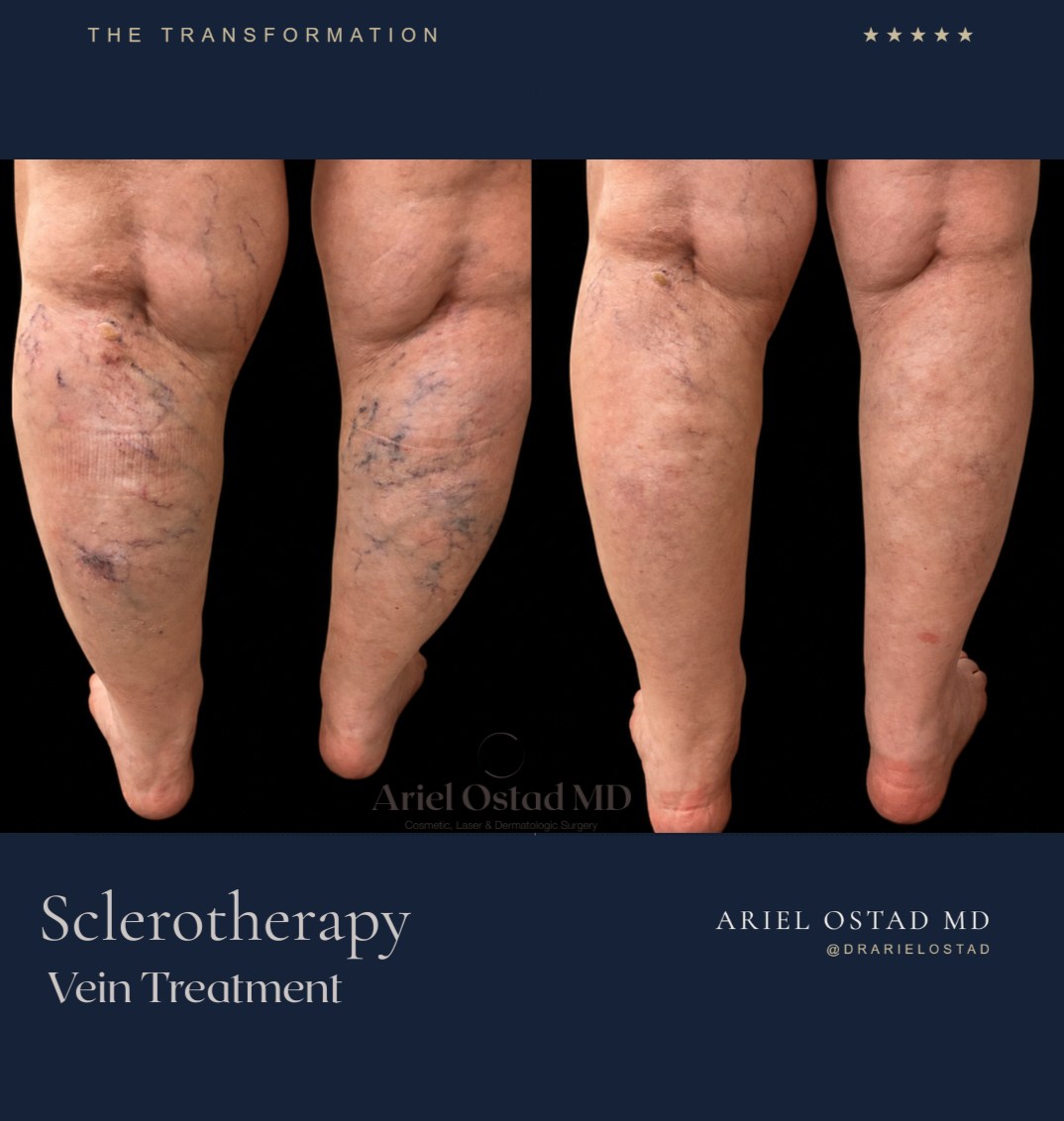
“A beautifully noticeable difference. Sclerotherapy is a precise, minimally invasive treatment designed to target unwanted spider veins by using a very fine needle to inject a solution (polidocanol) directly into the affected vessel, causing it to gradually close and fade from view. With cooler months ahead, now is an ideal time to begin treating the veins you’d rather not see next summer. No surgery. Minimal downtime. Smoother looking, more even toned legs. Schedule a consultation to learn if sclerotherapy is appropriate for you. 📍 Dr. Ariel Ostad | 897 Lexington Avenue, NYC 📞 212 517 7900”
Non Surgical Care · From your post
A customized mix of Morpheus8 and neuromodulators shows what thoughtful, non surgical planning can do for the jawline and neck.
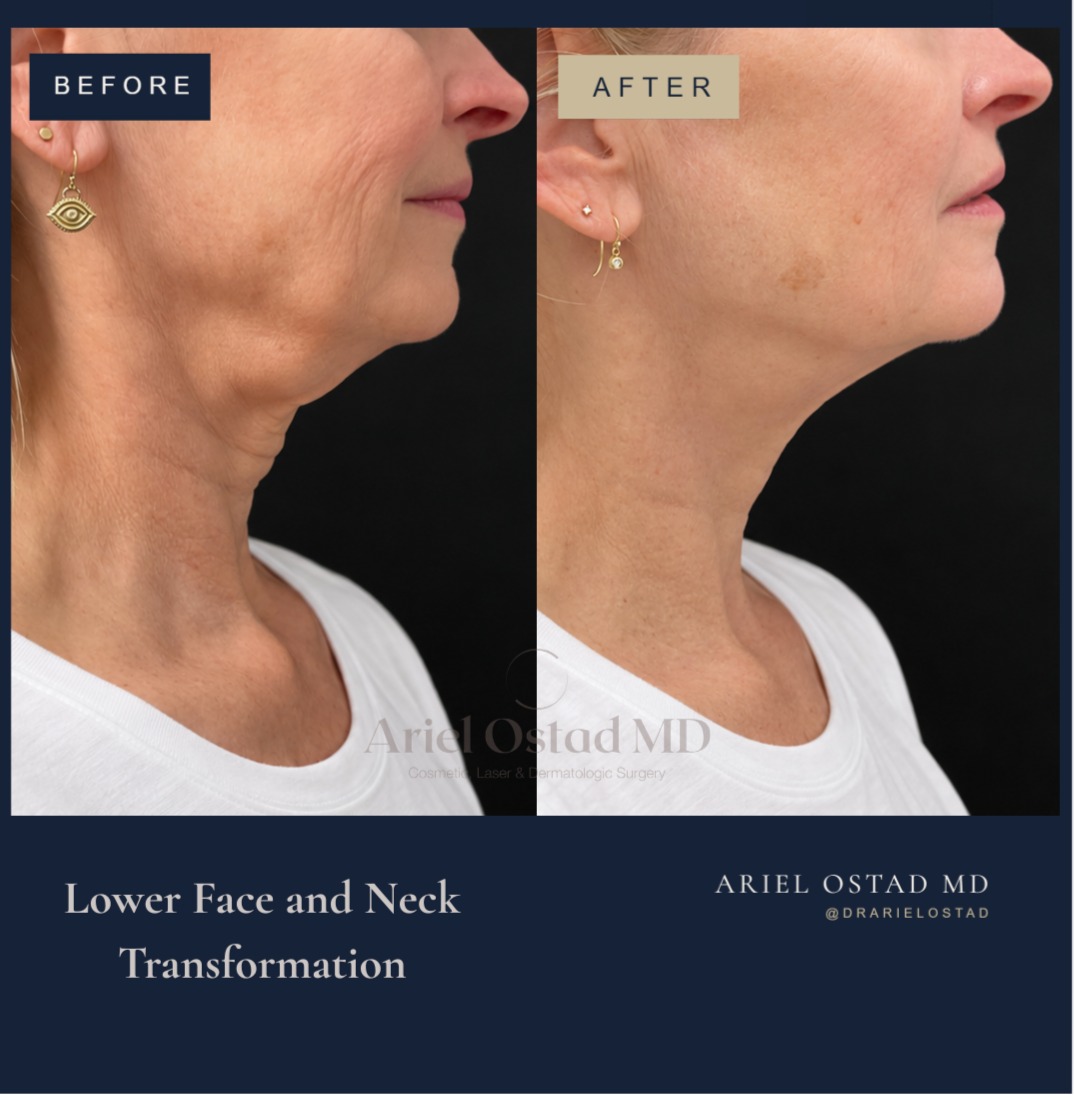
“Improving the lower face and neck doesn’t always require surgery. This result was achieved through a customized combination of non surgical modalities, including Morpheus8 and neuromodulators, selected specifically for this patient’s anatomy, skin quality and aesthetic goals. No two faces age in exactly the same way, which means no two treatment plans should look exactly the same. The goal is to understand where tightening, refinement, support or balance is needed and thoughtfully combine modalities to create a result that still feels natural to the patient. #CosmeticDermatology #NonSurgicalTreatment #necktreatment #jawlinetreatment #morpheus8 #Neuromodulators #AestheticMedicine #antiaging #drarielostad #nycdermatologist”
One social post becomes another searchable entry point to Ariel Ostad Md.
Our own magazine. Clicks and citations from Google Search Console, as of September 15, 2026.
Draft story for drarielostad.com · Sclero Season
As legs cover up for cooler weather, sclerotherapy quietly gets to work fading spider veins before summer returns.
Every year around this time, we start hearing the same question. Now that the weather is turning and legs are back in tights and trousers, is this a good time to finally deal with spider veins. The answer is yes, and the timing works in your favor. Fall gives sclerotherapy the exact conditions it needs to work well, out of sight and on its own schedule.
The treatment itself is straightforward. A fine needle delivers a precise injection directly into the targeted vein, and we work our way across the visible pattern, whether that is a cluster of fine red lines or a slightly larger blue vessel closer to the surface. There is no cutting and no downtime built into the appointment itself. The vein simply stops functioning and the body handles the rest gradually.
Once treated, a spider vein does not disappear immediately. It fades over the following weeks as the body reabsorbs it, which is why sclerotherapy rewards a little patience. This is exactly why cooler months make sense for starting the process. Nobody is checking their legs daily against a swimsuit, so the fading happens quietly in the background while you go about a normal fall and winter.
We typically recommend a series of three sessions, spaced about a month apart, to get the most complete results from the areas being treated. Spider veins do not always respond fully to a single pass, and spacing the sessions out gives each injection time to take effect before we reassess what still needs attention. It is a gradual process by design, not a single fix in one visit.
After each session, compression stockings are worn for about three days, though the exact duration depends on the specific guidance given by your provider. The compression helps the treated veins close properly and supports the legs while the body starts clearing the vessel. It is a small, temporary commitment that makes a real difference in how cleanly the results develop over the following weeks.
There is something practical about treating spider veins now rather than waiting until spring. Legs are already covered by tights, jeans, and boots, so there is no pressure to show results before they are ready. By the time warmer weather and bare legs return, the series of sessions and the fading process have had months to do their work undisturbed.
Not every vein pattern responds the same way, and that is exactly what a consultation is for. We look at the size, location, and depth of the veins you are concerned about and talk through what a realistic series of sessions would look like for your legs specifically. Spider veins vary enough from person to person that a plan built around your own pattern matters, and a consultation is where that plan actually takes shape.
If the fine red lines or small clusters on your legs have been on your list to deal with, sclero season is the moment to start rather than wait. Treat them now, let the fading happen on its own timeline, and the legs you show off later will reflect months of quiet progress instead of a rushed, last minute fix squeezed in right before summer arrives.
Draft story for drarielostad.com · Vein Treatment
A closer look at how a fine needle and a simple solution fade spider veins over time.
The difference between a before and after image of the same pair of legs is not subtle. Fine networks of blue and purple veins that once traced down the calf and behind the knee are visibly reduced, leaving skin that reads as smoother and more even in tone. That kind of change is the entire premise behind sclerotherapy.
Sclerotherapy works through a very fine needle and a solution called polidocanol, injected directly into the affected vessel. The vein does not disappear immediately. It closes gradually, and the body reabsorbs it over time, which is why the visible fading happens in stages rather than all at once after a single appointment.
We bring up the calendar for a reason. With cooler months ahead, now is a practical window to start addressing veins that bother you, well before bare legs are back in rotation next summer. Treating spider veins in autumn or winter gives the closed vessels time to fade with far less pressure to hide anything in the meantime.
There is no surgery involved and downtime is minimal, which is part of why this approach fits into an ordinary week rather than requiring real recovery time. Most people are back to their normal routine shortly after a session, which matters for anyone weighing a cosmetic concern against the disruption of an actual procedure.
In the paired images, both the front and back of the lower leg are visible, and the treated legs show a marked drop in the density of visible veins. What remains reads as ordinary skin rather than a map of vessels, which is precisely the outcome sclerotherapy is designed to produce over a series of treatments.
Spider veins tend to show up below the knee, along the calf, and behind it, exactly the areas captured here. They are common, they are not usually dangerous, and for many people the primary motivation to treat them is simply the appearance of smoother, more even toned skin when legs are on display.
Not every vein pattern responds the same way, and the right course of treatment depends on the size, number, and location of the vessels involved. That is the purpose of a consultation, to look at your legs specifically and determine whether sclerotherapy is the appropriate next step or whether another approach fits better.
If unwanted spider veins are something you would rather not see next summer, the conversation is worth having now. We see patients at 897 Lexington Avenue in New York, and a consultation is the most direct way to find out what a treatment plan built around your legs would actually look like.
Draft story for drarielostad.com · Non Surgical Care
A customized mix of Morpheus8 and neuromodulators shows what thoughtful, non surgical planning can do for the jawline and neck.
In profile, the jawline and neck can reveal age faster than almost anywhere else on the face. Loose skin along the jaw, softened definition under the chin, and vertical banding in the neck are common concerns we hear from patients who are not ready for surgery but still want visible, meaningful change in how they look from the side and in daily life.
This result came from a combination approach rather than a single treatment. Morpheus8 was used to address skin quality and tightening, while neuromodulators were selected to support balance along the lower face and neck. Neither treatment alone was the plan. The plan was how they worked together for this specific patient, based on their own anatomy and skin quality.
Comparing the two profile images, the difference sits mainly along the jawline and under the chin. The skin appears smoother, the neck shows less visible banding, and the transition from jaw to neck reads as more defined. The earrings and hairstyle stay the same in both images, which makes the change in contour along the neck and chin easier to see clearly.
We do not start with a fixed protocol. We start by evaluating skin quality, the degree of laxity, and how someone's anatomy is aging in its own particular way. That assessment determines whether the priority is tightening, refinement, support, or a mix of the three, and it shapes which modalities get combined and in what proportion for that person.
That is the reasoning behind pairing Morpheus8 with neuromodulators here instead of relying on one treatment to do everything. Morpheus8 works on the skin's texture and tightness, while neuromodulators help manage muscle activity that can affect the lower face and neck over time. Used together in a customized combination, they can address more than either one could address on its own.
A natural outcome is not an accident. It comes from restraint as much as from technique, choosing where to intervene and where to leave things alone so the face still moves and expresses the way it always has. The stated goal behind this approach is a result that still feels like the patient, not a version of someone else entirely.
No two faces age in exactly the same way, so no two treatment plans should look exactly the same either. This case is a useful reference point for what non surgical combination treatment can accomplish in the lower face and neck, and for why the evaluation before treatment matters just as much as the technology and modalities used during it.
Keep reading