A summer of teaching MD Codes on stages across the country
Live injections in front of an audience became a season long project in sharing technique with other injectors.
CHELSEA SKIN AND LASER STAFFTurn your social into search
We turn your posts into editorial stories that bring new search traffic to chelseaskincenter.com. Three of yours will be on this page.
Book a demo
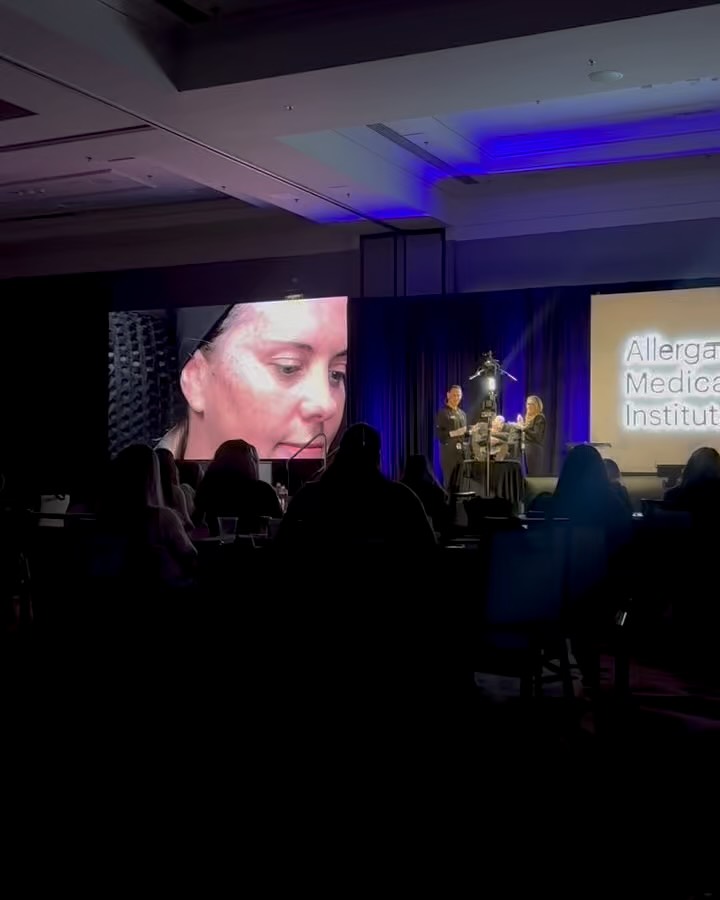
chelseaskinctr Summer has taken me all over the Northeast, to Nashville, and to Washington, DC. sharing my expertise in MD Codes and, more importantly, sharing what I’ve learned with other passionate injectors. I truly love teaching. There is something incredibly rewarding about inspiring others to think differently, refine their technique, and ultimately do their best work. One of the most memorable moments of the summer was an incredible live training in Hauppauge, NY, as part of AMI Advance. This one was especially meaningful. I injected my beautiful model live on stage in front of an audience, achieving full facial balancing with seven syringes of hyaluronic acid filler using the MD Codes approach. I had the privilege of sharing the stage with Dr. Sebastian Cotofana, Dr. Charles Boyd, Ken Ruiz, PA C (@kennethruiz_pa), and Filomena Abitiono, PA C (@boost_your_beauty_medispa) for a full day of live education and injection. Being able to teach while simultaneously performing the work I’m so passionate about is something I never take for granted. Grateful for the opportunities, the colleagues who continue to inspire me, and every injector who shows up ready to learn and grow. Here’s to a summer filled with elevating art and advancing science!🫀 #MDCodes #AMIAdvanced #allergan #aestheticmedicine #aestheticinjectables
Live injections in front of an audience became a season long project in sharing technique with other injectors.
CHELSEA SKIN AND LASER STAFFHow it works
Same as today. Nothing changes on Instagram.
We turn your post into a full story in your voice within the hour.
One click publishes it to chelseaskincenter.com. Nothing goes live without you.
Your stories
Nothing was published anywhere. You decide that. Every word will come from your own posts, your own photos and your own treatments.
Injector Education · From your post
Live injections in front of an audience became a season long project in sharing technique with other injectors.
“Summer has taken me all over the Northeast, to Nashville, and to Washington, DC. sharing my expertise in MD Codes and, more importantly, sharing what I’ve learned with other passionate injectors. I truly love teaching. There is something incredibly rewarding about inspiring others to think differently, refine their technique, and ultimately do their best work. One of the most memorable moments of the summer was an incredible live training in Hauppauge, NY, as part of AMI Advance. This one was especially meaningful. I injected my beautiful model live on stage in front of an audience, achieving full facial balancing with seven syringes of hyaluronic acid filler using the MD Codes approach. I had the privilege of sharing the stage with Dr. Sebastian Cotofana, Dr. Charles Boyd, Ken Ruiz, PA C (@kennethruiz_pa), and Filomena Abitiono, PA C (@boost_your_beauty_medispa) for a full day of live education and injection. Being able to teach while simultaneously performing the work I’m so passionate about is something I never take for granted. Grateful for the opportunities, the colleagues who continue to inspire me, and every injector who shows up ready to learn and grow. Here’s to a summer filled with elevating art and advancing science!🫀 #MDCodes #AMIAdvanced #allergan #aestheticmedicine #aestheticinjectables”
Injectables Explained · From your post
The two most requested injectables at Chelsea Skin And Laser work in different ways, and understanding the difference changes how you plan a treatment.
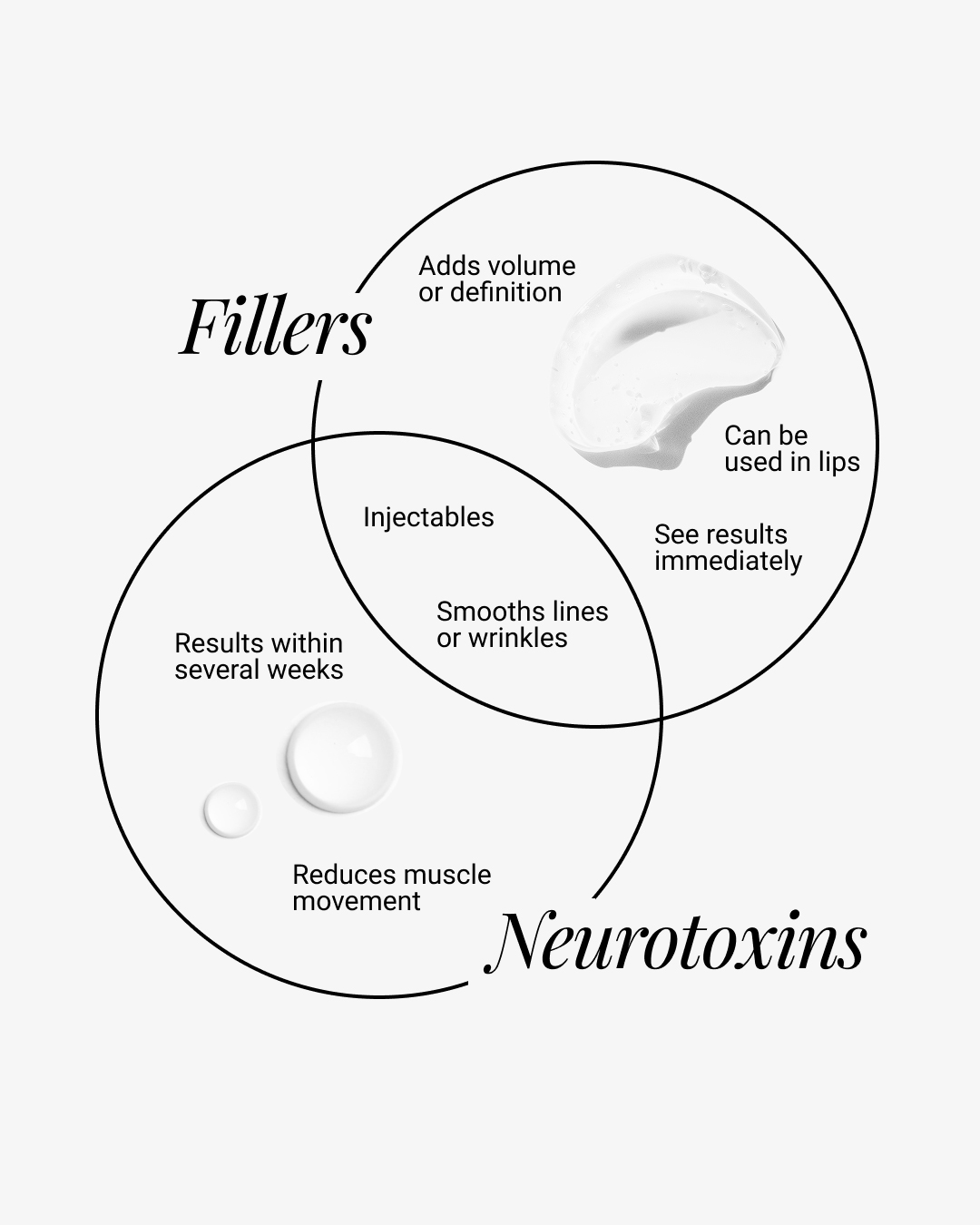
“Fillers are not the same thing as neurotoxins, (Ie. Botox) Fillers such as injectable hyaluronic acid (HA) add a touch of volume whereas, neurotoxins such as Botox reduce muscle movements to smooth facial lines/wrinkles. Filler and neurotoxins work differently to deliver different results. Together, they are synergistic treatments used in facial balancing. This is the most common aesthetic question at Chelsea Skin & Laser. What other related questions might you have?”
Injector Training · From your post
A hands on session in North Babylon focused on facial assessment, technique, and the kind of results that do not look done.
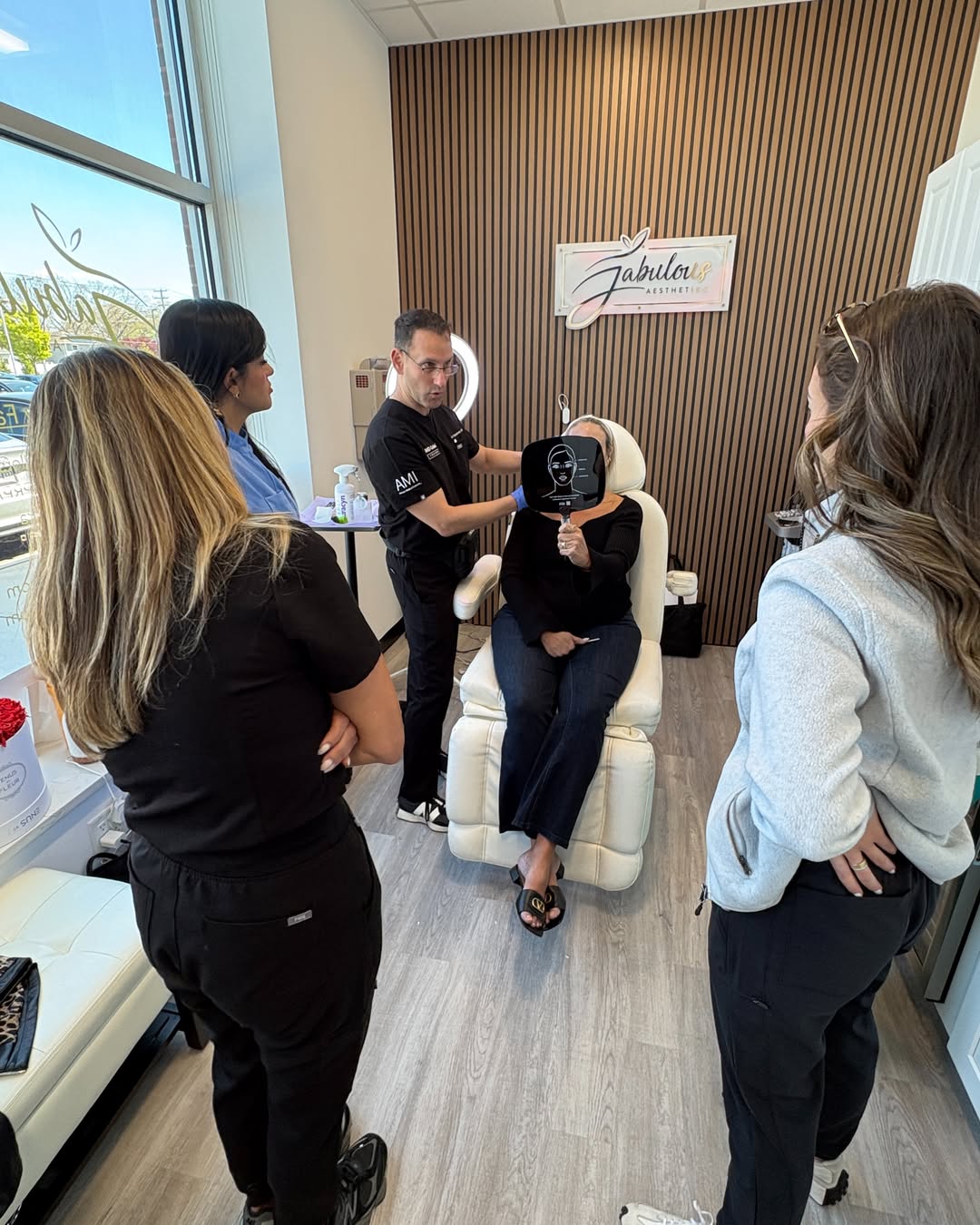
“An incredible day of advanced injectable MD Codes training education with Dr. Michael Eidelman in North Babylon. Hands on learning, facial assessment, technique refinement, and collaborative discussion focused on achieving natural, balanced results through thoughtful aesthetic medicine. Dr. Eidelman is back to seeing patients today, but is reflecting fondly on the opportunity to continue mentoring injectors to grow and learn. #MDCodes #InjectablesTraining #AestheticMedicine #FacialBalancing #MedicalAesthetics #Botox #DermalFillers #AestheticInjector #ContinuingEducation #NorthBabylon #LongIslandAesthetics #PatientFirst #NaturalResults”
One social post becomes another searchable entry point to Chelsea Skin And Laser.
Our own magazine. Clicks and citations from Google Search Console, as of September 15, 2026.
Draft story for chelseaskincenter.com · Injector Education
Live injections in front of an audience became a season long project in sharing technique with other injectors.
Summer sent us to the Northeast, to Nashville, and to Washington DC, sharing our approach to MD Codes with rooms full of working injectors. Each stop had a different audience and a different setting, but the same underlying purpose: showing other practitioners how we think through facial balancing, and why the sequence of a treatment matters as much as the product itself.
Teaching has become as central to our work as the injecting itself. There is a particular kind of satisfaction in watching another injector adjust their angle, reconsider a plane of the face, or ask a sharper question because of something demonstrated in front of them. That exchange, technique passed from one practitioner to another in real time, is what makes this kind of travel worth it.
One of the most memorable moments of the summer happened at a live training in Hauppauge, New York, part of AMI Advance. Instead of slides or a recorded case, the format called for a full facial balancing treatment performed live on stage, in front of an audience of injectors watching every decision unfold in real time rather than after the fact.
Working on a model in front of a live room changes the pace of everything. Seven syringes of hyaluronic acid filler went into a full facial balancing case using the MD Codes approach, with each placement narrated as it happened. There is no editing a live injection, which is exactly why the format works so well for teaching technique honestly.
The day belonged to a full lineup of educators rather than a single presenter. We shared the stage with Dr Sebastian Cotofana, Dr Charles Boyd, Ken Ruiz, a physician assistant, and Filomena Abitiono, also a physician assistant, each bringing a different angle to the same broader conversation about facial anatomy and injection strategy. A full day of live education and injection moved between all five perspectives.
That range mattered. Watching several experienced injectors work through their own approaches back to back gave the audience more than a single technique to take home. It gave them a comparison, a sense of where methods overlap and where they diverge, and a chance to ask questions of practitioners who each see the face slightly differently and explain their reasoning openly.
Performing live work while teaching forces a kind of precision that private practice does not always demand. Explaining a decision out loud, in front of peers who understand the material, means every choice has to hold up to scrutiny. That discipline carries back into daily practice long after the stage lights are off and the audience has gone home for the night.
What stays with us from a summer like this is not the travel itself but the injectors who showed up ready to learn, question, and refine their own work. Teaching MD Codes in front of a live audience is a small act each time, but repeated across cities and rooms full of colleagues, it adds up to something more durable than any single treatment or event.
Draft story for chelseaskincenter.com · Injectables Explained
The two most requested injectables at Chelsea Skin And Laser work in different ways, and understanding the difference changes how you plan a treatment.
This is the question we hear most often in consultations, and it deserves a real answer rather than a quick brush off. Fillers and neurotoxins get grouped together constantly because they are both injectable, both associated with smoother looking skin, and both commonly requested in the same appointment. But they are built from different materials and they solve different problems, which is worth understanding before you decide what your face actually needs.
Fillers, such as injectable hyaluronic acid, work by adding volume or definition to a specific area. That might mean softening a hollow, building structure along the cheek, or shaping the lips. Hyaluronic acid is a substance the body already produces, and when it is placed under the skin it adds fullness where fullness has been lost or was never quite there. The effect is structural. You are changing the physical volume of a space.
Neurotoxins, Botox being the familiar name, take a completely different approach. Rather than filling space, they reduce the muscle movement responsible for certain facial lines. Repeated expressions, a furrowed brow, squinting, smiling, eventually etch lines into the skin, and neurotoxins work by relaxing the muscle driving that specific movement. Less movement over time means those lines have less opportunity to deepen, which is why the result is about softening motion rather than adding shape.
The two treatments also behave differently once they are administered, and that timeline matters when you are planning around an event or simply setting expectations. Filler results tend to show up right away, since you are physically seeing added volume the moment it is placed. Neurotoxin results take longer to appear, generally within several weeks, because the muscle needs time to gradually relax before the smoothing effect becomes visible in the mirror.
That difference in onset is one of the most practical things to know going in. If you want to see a change before a specific date, filler gives you an immediate read on the outcome. Neurotoxin asks for more patience, since the muscle relaxation builds gradually rather than all at once. Neither timeline is better, they are simply suited to different goals and different windows of time.
Despite working through different mechanisms, filler and neurotoxins are frequently used together, and there is a real reason for that beyond convenience. Because one treatment addresses volume and the other addresses movement, combining them allows for a more complete approach to facial balancing. One is not a replacement for the other. They are complementary tools, each solving a piece of the puzzle that the other was never designed to solve on its own.
So the real question is not which treatment is better, it is which problem you are trying to address. If the concern is lost volume or the desire for more definition in a particular area, filler is the relevant conversation. If the concern is lines created by repeated muscle movement, neurotoxins are the more direct answer. Sometimes the honest answer involves both, used deliberately rather than interchangeably.
We get variations of this question constantly, which tells us it is worth explaining clearly rather than assuming everyone already knows the distinction. If you have a related question about how these treatments might apply to your own face, that is exactly the kind of conversation worth having directly, since the right approach depends entirely on what you are hoping to change.
Draft story for chelseaskincenter.com · Injector Training
A hands on session in North Babylon focused on facial assessment, technique, and the kind of results that do not look done.
A patient settles into a treatment chair, a handheld facial scanner held just in front of her jaw, while a small group watches closely from several angles in the room. This is not a routine appointment. It is a training session, and the details being studied here, the angle of a jawline, the balance of a profile, are the same details that shape decisions made on real patients every single day.
The session centers on MD Codes, a system of injectable technique built around facial assessment before anything else happens. Before a needle is involved, there is a conversation about structure: where volume has shifted, where support has been lost, and what a face actually needs rather than what a standard protocol assumes every face needs regardless of who is sitting in the chair.
Dr Michael Eidelman led the training in North Babylon, working directly with injectors on technique refinement and hands on practice. The room reflects that structure, several practitioners positioned around one chair, watching a single assessment unfold in real time rather than reading about facial anatomy or injection patterns secondhand from a manual or a slide.
Facial assessment is slower than it looks from the outside. It means studying symmetry, movement, and proportion before a single decision gets made about product or placement. That patience is the point of the exercise. Skipping ahead to injection without a clear read on the face is how results end up looking generic instead of specific to the actual person in front of you.
The group setting matters too. Training alongside other injectors means technique gets discussed out loud, questioned, and refined in front of peers rather than developed alone in a treatment room. Collaborative discussion, comparing notes on a single assessment, catching a detail someone else missed, is where small improvements in judgment tend to come from over the course of a career.
Natural, balanced results are the stated goal of this kind of training, and that phrase carries more weight than it might first suggest. It requires restraint, an eye trained to know when enough has been done, and a working knowledge of how a face moves and ages, rather than a fixed formula applied the same way to every patient who happens to sit down.
Dr Eidelman returned to seeing patients the same day, carrying that session directly back into daily practice. Mentoring injectors and treating patients are not kept as separate tracks here, they inform each other constantly and directly. A day spent refining technique alongside other practitioners becomes, almost immediately, part of how the very next patient is assessed, discussed, and treated.
That continuity is really the point of a day like this one. Growth for an injector does not happen only in the treatment room with a patient present, it also happens in a room full of colleagues comparing observations on a single face. The result is a practice that keeps sharpening its own standards for what balanced, natural work should actually look like.
Keep reading