Why hair still shows up after laser hair removal
A closer look at why treated follicles do not disappear overnight and what that means for how the treatment actually works.
DELRAY DERMATOLOGY + COSMETIC CENTER STAFFTurn your social into search
We turn your posts into editorial stories that bring new search traffic to delrayskin.com. Three of yours will be on this page.
Book a demo
delrayderm Had laser hair removal and still seeing hair afterward? That doesn’t mean the treatment didn’t work. Treated hairs can gradually shed after your appointment, while other hairs may continue growing because not every follicle is in the same growth phase at the same time. That’s why laser hair removal is typically performed as a series rather than a one and done treatment. #DelrayBeach #SouthFlorida #DelrayLife #DelraySkin #DelrayDerm
A closer look at why treated follicles do not disappear overnight and what that means for how the treatment actually works.
DELRAY DERMATOLOGY + COSMETIC CENTER STAFFHow it works
Same as today. Nothing changes on Instagram.
We turn your post into a full story in your voice within the hour.
One click publishes it to delrayskin.com. Nothing goes live without you.
Your stories
Nothing was published anywhere. You decide that. Every word will come from your own posts, your own photos and your own treatments.
Skin Notes · From your post
A closer look at why treated follicles do not disappear overnight and what that means for how the treatment actually works.
“Had laser hair removal and still seeing hair afterward? That doesn’t mean the treatment didn’t work. Treated hairs can gradually shed after your appointment, while other hairs may continue growing because not every follicle is in the same growth phase at the same time. That’s why laser hair removal is typically performed as a series rather than a one and done treatment. #DelrayBeach #SouthFlorida #DelrayLife #DelraySkin #DelrayDerm”
Skin Health · From your post
Sun damage builds quietly for years before it ever shows up as a spot you can see.
“Sun damage doesn’t begin the day you notice your first brown spot. Years of UV exposure can gradually show up as freckles, uneven pigmentation, brown spots, and changes in overall tone. IPL targets areas of unwanted pigment and visible photodamage to help create a clearer, more even looking complexion in appropriate patients. #DelrayBeach #SouthFlorida #DelrayLife #DelraySkin #DelrayDerm”
Skin Treatments · From your post
Exfoliation, extraction, and infusion combine into one facial designed to go past a surface level cleanse.
“Cleanse. Extract. Infuse. DiamondGlow combines exfoliation, extraction, and the infusion of a selected SkinMedica® Pro Infusion Serum in one treatment. It’s a facial designed to go beyond a surface level cleanse and leave skin looking fresh and renewed. Three steps. One treatment. #DelrayBeach #SouthFlorida #DelrayLife #DelraySkin #DelrayDerm”
One social post becomes another searchable entry point to Delray Dermatology + Cosmetic Center.
Our own magazine. Clicks and citations from Google Search Console, as of September 15, 2026.
Draft story for delrayskin.com · Skin Notes
A closer look at why treated follicles do not disappear overnight and what that means for how the treatment actually works.
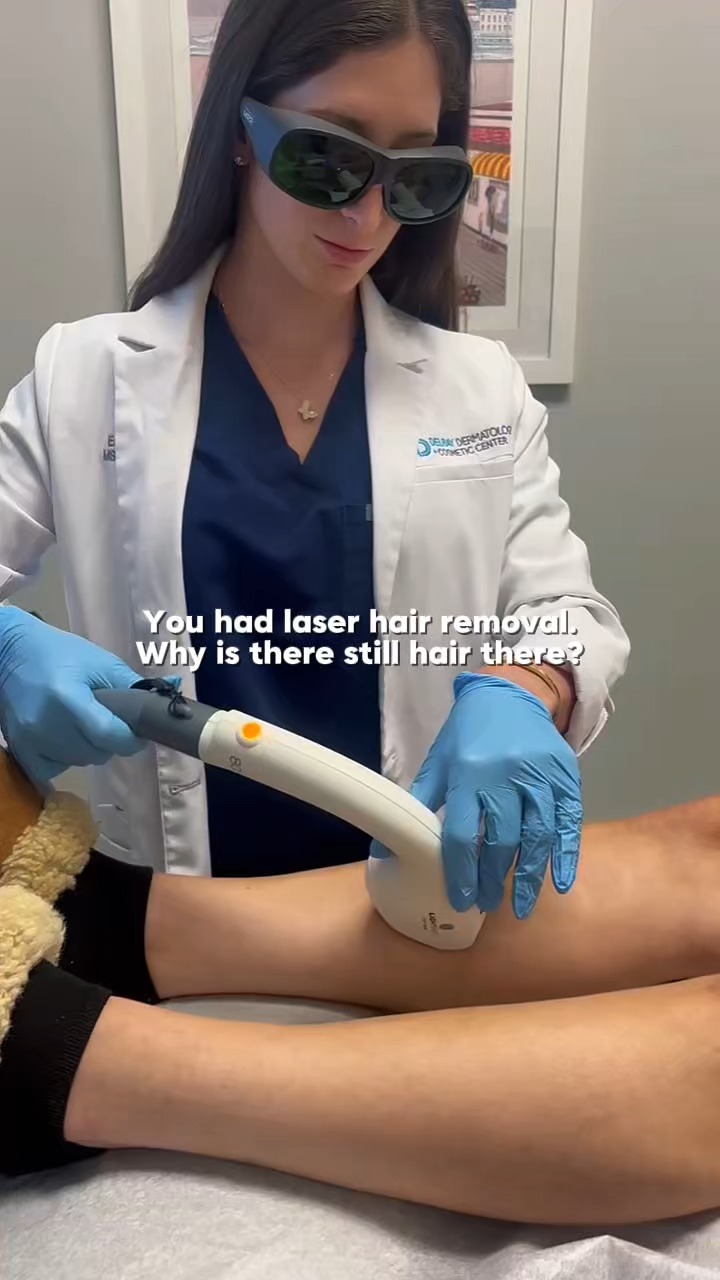
A patient stretches out on the treatment table, one leg extended, while our provider works a handheld laser device along the shin in slow, deliberate passes. Blue gloves, protective goggles, a steady hand. It looks simple from the outside, but the question we hear afterward is almost always the same. If the treatment worked, why is there still hair there.
The short answer is that visible hair after a session does not mean the laser missed its mark. Hair that has been treated does not vanish the moment you leave the room. It sheds gradually over the days and weeks that follow, which means some of what you are seeing on your skin is already on its way out rather than evidence that nothing happened.
The more important piece is what is happening underneath, at the follicle level. Not every hair on a treated area is in the same growth phase at the same time. Some follicles are active and responsive to the laser, while others are dormant and will not become reachable until they cycle into a new growth stage weeks later.
That staggered timing is the reason a single pass over an area can look successful on some hairs and untouched on others in the very same session. It is not inconsistency in the treatment itself. It is biology working on its own timeline, one that no single appointment can override no matter how thorough that appointment is.
This is exactly why laser hair removal is performed as a series rather than a one and done treatment. Each session is timed to catch a fresh set of follicles as they enter their active phase, gradually covering more of the hair that was dormant during earlier visits. Progress builds appointment by appointment rather than arriving all at once.
Watching the process up close, session after session, reinforces how much patience the biology requires. The handheld device, the careful positioning of the leg, the repeated passes over the same small stretch of skin, all of it is part of a rhythm that plays out over time rather than in a single visit, however precise that visit is.
So if hair is still visible after your appointment, it is worth resisting the urge to read that as a failed treatment. Some of it is shedding on schedule. Some of it belongs to follicles that simply were not in reach yet. Both are normal, expected parts of how laser hair removal actually progresses from one session to the next.
Understanding that rhythm changes how the whole process feels. Instead of judging results after a single visit, you start to see each appointment as one step in a longer sequence, one that follows the hair's own growth pattern rather than a fixed calendar. That shift in expectation is often what makes the series easier to stick with.
Draft story for delrayskin.com · Skin Health
Sun damage builds quietly for years before it ever shows up as a spot you can see.
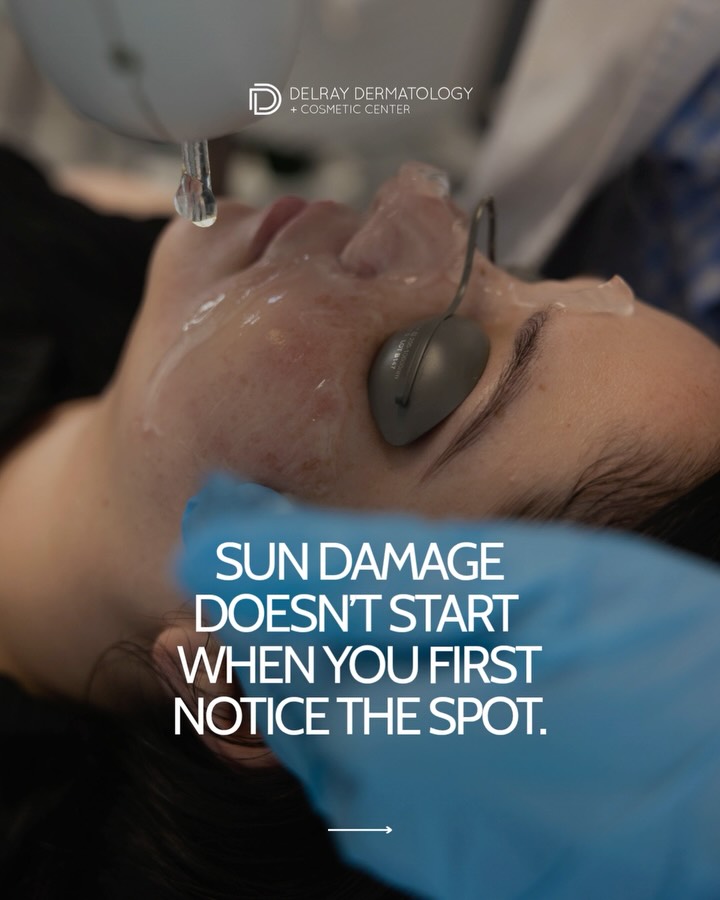
By the time a brown spot is visible enough to bother you, it has usually been forming for years. Sun damage does not begin the day you notice it. It begins with ordinary exposure that adds up slowly, long before freckles, uneven pigmentation, or tone changes become obvious enough to point to in the mirror.
That gap between cause and visibility is part of what makes sun damage tricky to treat well. The skin absorbs UV exposure over seasons and years, and the pigment changes that follow are a delayed record of that exposure rather than a sudden event. Understanding that timeline matters as much as treating what is currently visible.
IPL works by targeting areas of unwanted pigment and visible photodamage sitting in the skin. Rather than treating the surface generally, it addresses the specific concentrations of pigment that have built up over time, whether that shows up as scattered freckling, brown spots, or broader unevenness across the complexion.
In appropriate patients, that targeted approach is what allows IPL to help create a clearer, more even looking complexion. The goal is not to erase history from the skin but to address the visible signs of it directly, working with what UV exposure has actually done rather than treating tone as one uniform problem.
The phrase appropriate patients is doing real work here. Skin tone, pigment depth, and the type of photodamage present all factor into whether IPL is the right approach for a given person. That is part of why this kind of treatment is evaluated individually rather than applied as a blanket solution for anyone with visible sun damage.
It also reflects how we think about treating pigmentation generally. The same brown spot can have different depths and causes depending on the person, and matching the right tool to the right presentation is what separates a treatment that actually improves tone from one that simply passes energy over the skin.
What stands out about sun damage is how invisible its early stages are. Years of UV exposure accumulate quietly under skin that still looks even, until pigment finally surfaces in a way that gets noticed. Treating that spot means addressing what has been building underneath it, not just the mark that finally became visible.
That is the real reframe worth sitting with. A brown spot is not a new problem showing up out of nowhere. It is old exposure finally becoming visible, and understanding that timeline is part of what makes treating it, and preventing more of it, worth taking seriously going forward.
Draft story for delrayskin.com · Skin Treatments
Exfoliation, extraction, and infusion combine into one facial designed to go past a surface level cleanse.
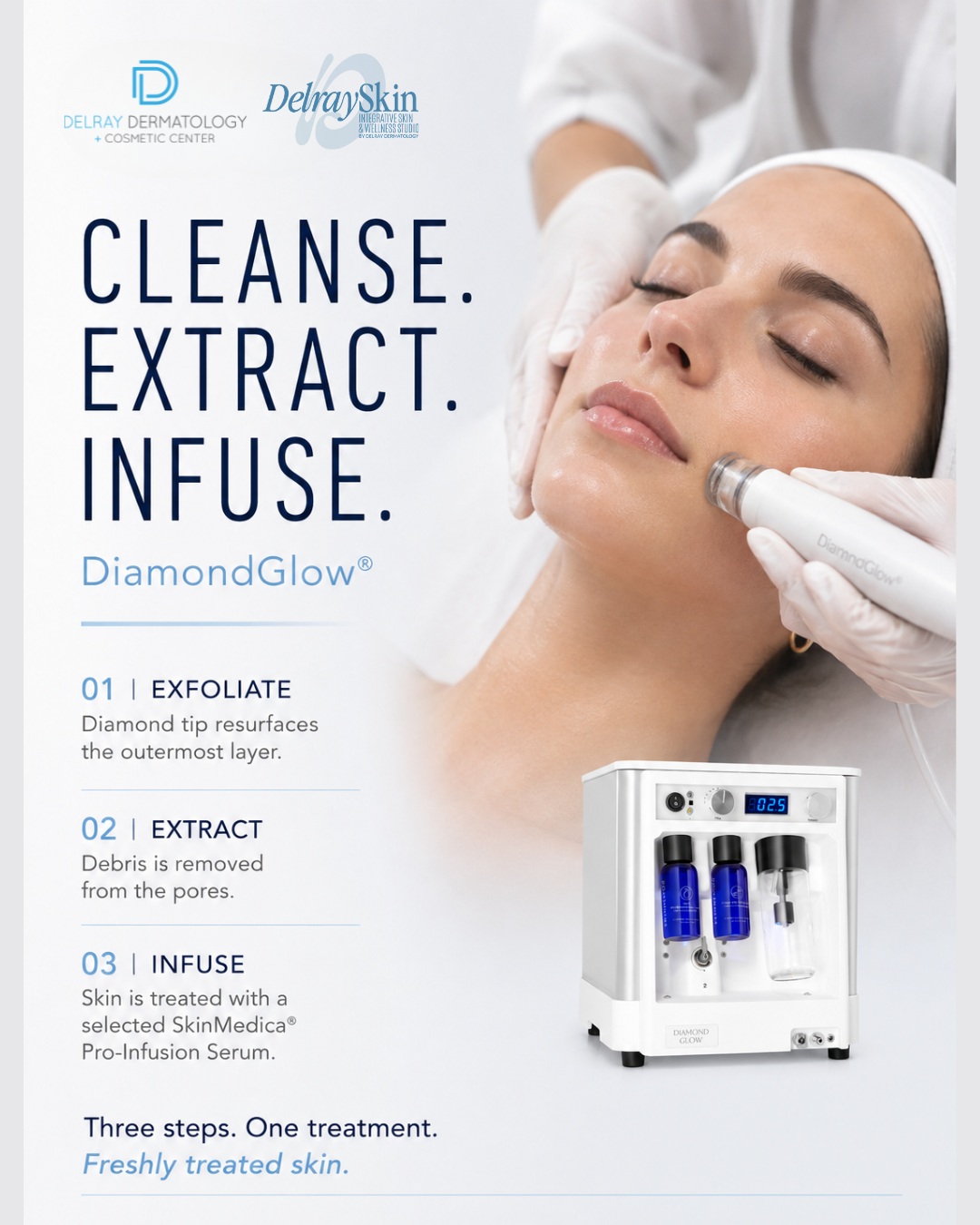
We think of DiamondGlow as a facial built on sequence rather than any single step. Cleanse, extract, infuse. Each stage depends on the one before it, and that order is the entire point. A treatment that skips straight to hydration without clearing the pores first is working against itself, which is exactly the gap this facial is designed to close.
The diamond tip does the first job, resurfacing the outermost layer of skin before anything else happens. It is a mechanical step, not a chemical one, which means the exfoliation is even and controlled. That evenness matters because it sets up everything that follows. Skin that has been properly resurfaced is in a better position to actually absorb what comes next, rather than sitting on the surface.
Extraction is the step that gets overlooked in a lot of facials, but it is central here. Debris gets removed from the pores once the outer layer has already been resurfaced, so the extraction is working on skin that has been opened up rather than skin that is still congested. That sequencing is what separates a surface level cleanse from something that actually reaches the pore.
Only after exfoliation and extraction does infusion happen, and that timing is deliberate. Skin that has just been cleared of debris is in a far better state to take in a serum than skin that has not been prepped at all. It is the difference between applying a product to clean skin versus applying it on top of everything the skin was already holding onto.
The infusion itself uses a selected SkinMedica Pro Infusion Serum, and that word selected matters. The serum is chosen for the treatment rather than applied as a single default formula, which means the infusion step can be matched to what the skin actually needs that day. It is the part of the treatment that turns a resurfacing procedure into something closer to a targeted finish.
What makes DiamondGlow distinct isn't any one of these three steps on its own. Exfoliation alone is common. Extraction alone is common. Infusion alone is common. It's the fact that all three happen in a single treatment, in a specific order, that gives the result its shape. Three steps, one treatment, is a simple way of describing something that is actually fairly layered.
We describe the result as freshly treated skin rather than reaching for bigger language, because that phrase is accurate to what the process delivers. It is not a transformation claim. It is a description of skin that has been resurfaced, cleared, and treated with a serum in the same sitting, which reads on the skin as renewed rather than simply moisturized.
There is something practical about a facial that treats exfoliation, extraction, and hydration as one continuous process instead of three separate appointments. It reflects how skin actually behaves, layer by layer, rather than treating the surface and the pores as unrelated problems. That is the idea we keep coming back to with DiamondGlow: the sequence is the treatment.
Keep reading