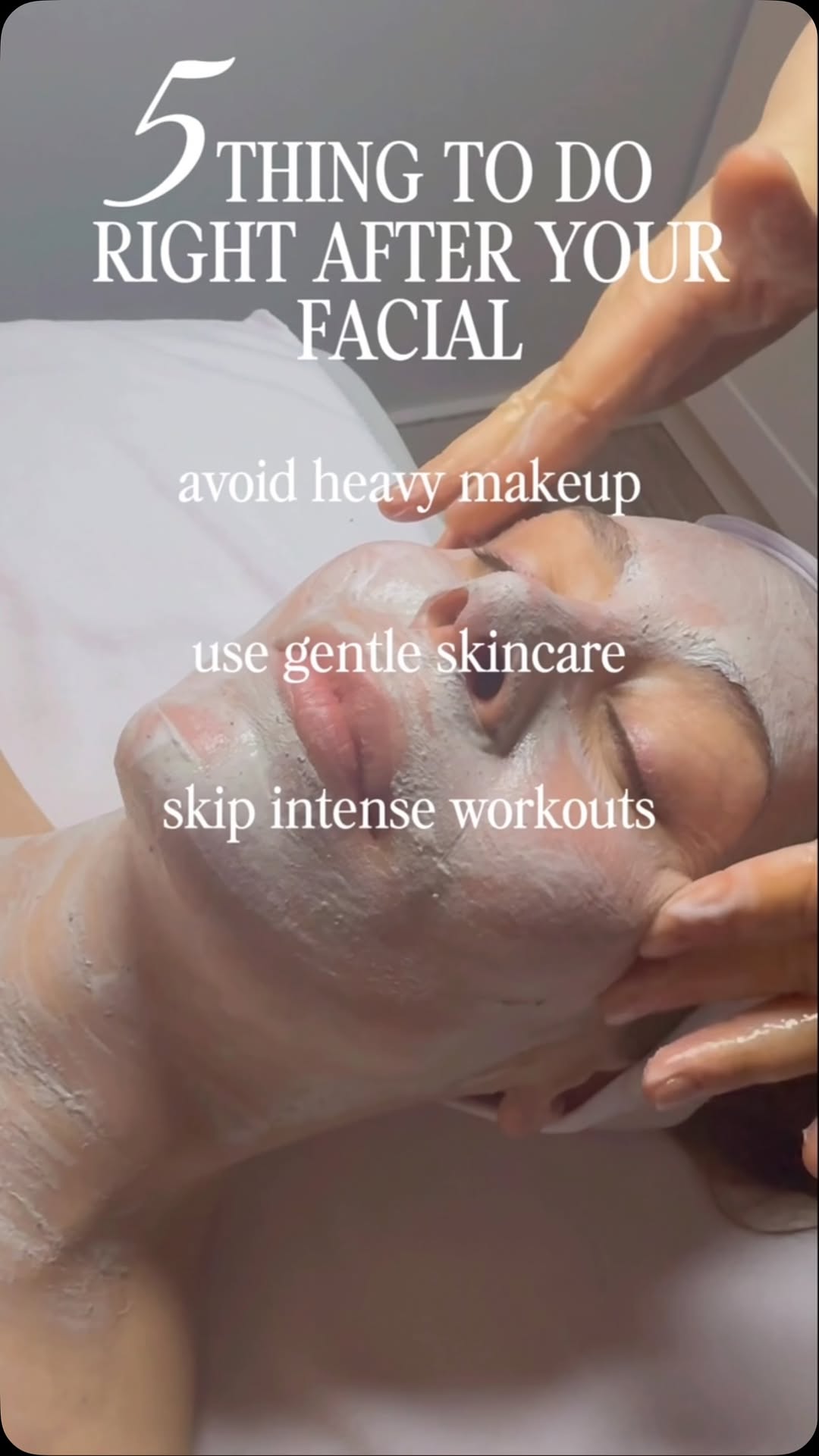
What to actually do with your skin in the 24 hours after a facial
The treatment does the work in the room, but the next day decides how long the results last.
DERMASTAR SKIN & LASER STAFFTurn your social into search
We turn your posts into editorial stories that bring new search traffic to dermastarspa.com. Three of yours will be on this page.
Book a demo
dermastarnyc ✨ 5 Things to Do After Your Facial for the Best Results ✨ Your facial doesn’t end when you leave the spa! Follow these simple tips to keep your skin glowing. 💧 1. Stay Hydrated Drink plenty of water to keep your skin hydrated from the inside out. ☀️ 2. Wear SPF Every Day Your skin is more sensitive after a facial. Protect it with a broad spectrum sunscreen. 🚫 3. Skip Makeup for 24 Hours Let your freshly treated skin breathe and fully absorb all the benefits. 🧴 4. Keep Your Skincare Gentle Avoid retinol, exfoliants, acids, and harsh scrubs for 2. 3 days unless instructed otherwise. 🤍 5. Don’t Pick or Touch Your Skin Resist the urge to squeeze or pick. Let your skin heal naturally for the best results. ✨ Healthy skin is a journey, not a one time treatment. Take care of it, and it will thank you! 📍Book your next facial at DermaStar Skin & Laser and keep your glow going! #FacialAftercare #HealthySkin #GlowingSkin #FacialTips #SkincareRoutine
The treatment does the work in the room, but the next day decides how long the results last.
DERMASTAR SKIN & LASER STAFFHow it works
Same as today. Nothing changes on Instagram.
We turn your post into a full story in your voice within the hour.
One click publishes it to dermastarspa.com. Nothing goes live without you.
Your stories
Nothing was published anywhere. You decide that. Every word will come from your own posts, your own photos and your own treatments.
Aftercare · From your post
The treatment does the work in the room, but the next day decides how long the results last.
“✨ 5 Things to Do After Your Facial for the Best Results ✨ Your facial doesn’t end when you leave the spa! Follow these simple tips to keep your skin glowing. 💧 1. Stay Hydrated Drink plenty of water to keep your skin hydrated from the inside out. ☀️ 2. Wear SPF Every Day Your skin is more sensitive after a facial. Protect it with a broad spectrum sunscreen. 🚫 3. Skip Makeup for 24 Hours Let your freshly treated skin breathe and fully absorb all the benefits. 🧴 4. Keep Your Skincare Gentle Avoid retinol, exfoliants, acids, and harsh scrubs for 2. 3 days unless instructed otherwise. 🤍 5. Don’t Pick or Touch Your Skin Resist the urge to squeeze or pick. Let your skin heal naturally for the best results. ✨ Healthy skin is a journey, not a one time treatment. Take care of it, and it will thank you! 📍Book your next facial at DermaStar Skin & Laser and keep your glow going! #FacialAftercare #HealthySkin #GlowingSkin #FacialTips #SkincareRoutine”
Skin Treatments · From your post
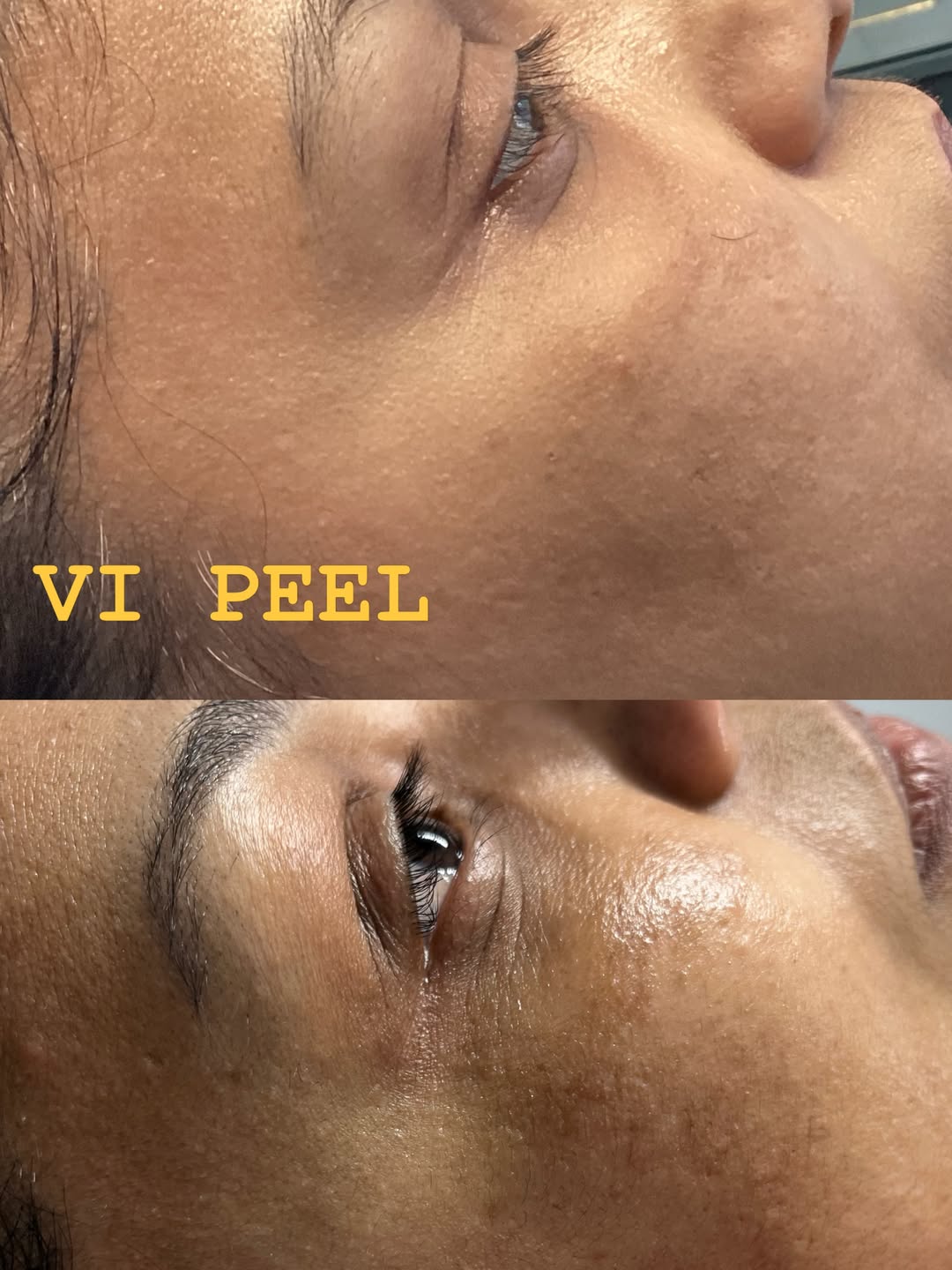
A closer look at how this medical grade chemical peel targets discoloration around the eyes and cheeks.
“✨ Fade Melasma. Reveal Brighter, More Even Skin. ✨ Struggling with stubborn melasma, sun damage, or uneven skin tone? The VI Peel is a powerful medical grade chemical peel designed to target hyperpigmentation, discoloration, and melasma while improving skin texture and radiance. ✔ Helps reduce melasma and dark spots ✔ Promotes a brighter, more even complexion ✔ Stimulates collagen production ✔ Improves skin texture and tone ✔ Safe for many skin types #VIPeel #MelasmaTreatment #Hyperpigmentation #SkinRejuvenation”
Skin Treatments · From your post
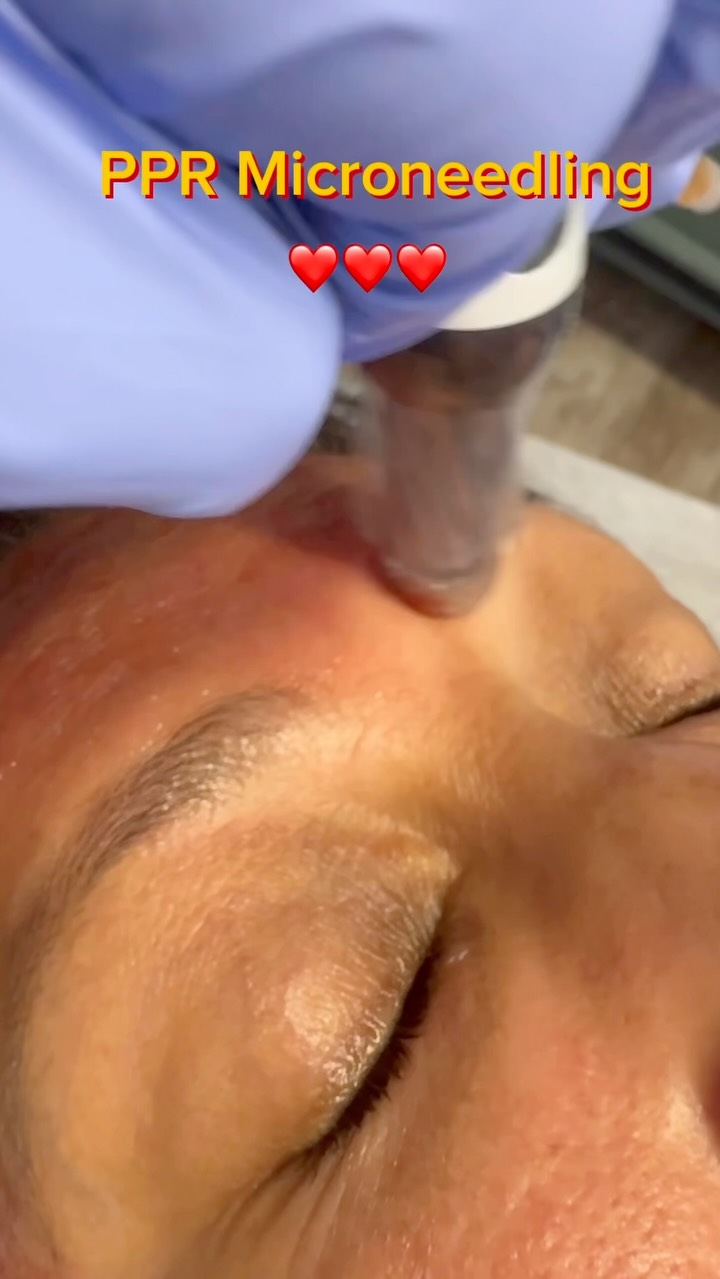
A closer look at how we pair the body's own platelet rich plasma with microneedling to work on skin texture from the inside out.
“✨ Reveal Healthier, More Radiant Skin with PRP Microneedling ✨ Ready to rejuvenate your skin naturally? PRP Microneedling combines your body’s own platelet rich plasma with advanced microneedling technology to stimulate collagen production, improve skin texture, and promote healthier, glowing skin. #PRPMicroneedling #VampireFacial #CollagenBoost #SkinRejuvenation #AntiAging”
One social post becomes another searchable entry point to Dermastar Skin & Laser.
Our own magazine. Clicks and citations from Google Search Console, as of September 15, 2026.
Draft story for dermastarspa.com · Aftercare
The treatment does the work in the room, but the next day decides how long the results last.
A facial changes the surface of your skin before it changes anything else. Fresh, a little pink, and noticeably softer, it is also more porous and more reactive than it was an hour earlier. What happens in the twenty four hours right after matters almost as much as the treatment itself, because that window is when your skin is absorbing, healing, and deciding how the next few days will go.
The instinct after a good facial is to want to show it off immediately, which usually means makeup. We tell clients to wait. Skip makeup entirely for the first twenty four hours. Your pores are open and your skin is primed to absorb whatever you put on it next, so let that absorption go toward hydration and recovery rather than foundation and powder sitting on top of freshly treated skin.
Water matters more than people expect. Facials draw a lot out of the skin during extraction and exfoliation, and staying hydrated from the inside helps the skin recover its balance faster. It sounds simple, almost too simple to repeat, but the difference between a client who drinks water steadily that day and one who does not is visible in how quickly the redness settles and the glow evens out.
Sunscreen is not optional the day after a facial, even indoors, even in New York in weather that does not feel sunny. Skin that has just been exfoliated or treated is more sensitive to UV exposure than usual, and a broad spectrum SPF is the simplest way to protect the results you just paid attention to and invested time in during the appointment.
This is also not the moment to bring out retinol, acids, or exfoliating scrubs. For two to three days, skincare should get gentler, not stronger, unless we have told you otherwise for your specific treatment. Layering active ingredients onto skin that is already working to repair itself tends to cause irritation rather than progress, undoing some of what the facial was meant to accomplish in the first place.
The hands off rule is the hardest one for people to follow and the most important. Picking, squeezing, or touching treated skin, especially if there is any flaking or small breakouts as it purges, slows healing and can leave marks that outlast the facial itself. Let the skin do its own work. Resisting the urge to touch it is genuinely part of the treatment, not separate from it.
None of this is about being precious with your skin for the sake of it. A facial starts a process, and the days that follow are where that process either finishes properly or gets interrupted. Hydration, sun protection, gentler products, and a bit of restraint are what let the treatment settle in fully instead of getting undone by makeup, sun, or an overeager skincare routine the next morning.
We think of skin care as ongoing rather than a single appointment that resets everything on its own. The facial gives your skin a real head start, but the twenty four to seventy two hours afterward are what carry that momentum forward. Treat that window with a little patience, and the glow you walked out of the spa with has a much better chance of sticking around.
Draft story for dermastarspa.com · Skin Treatments
A closer look at how this medical grade chemical peel targets discoloration around the eyes and cheeks.
Melasma tends to settle in the same places, along the cheekbones, under the eyes, across the bridge of the nose, and it rarely responds to concealer alone. The two images taken from the same angle, brow to jaw, show that shift directly. In the first, the skin along the under eye and upper cheek carries visible discoloration and a dull, uneven tone. In the second, that same stretch of skin looks brighter and noticeably more even.
We use the VI Peel because it is built specifically to address this kind of stubborn pigmentation. It is a medical grade chemical peel, which means it works at a deeper level than an at home exfoliant or a surface facial. The goal is not just to lighten dark spots temporarily but to interrupt the pigmentation pattern at its source while also improving the overall texture of the skin.
Melasma is not the same as an ordinary sunspot or a single blemish. It develops in patches, often symmetrically, and it can be triggered or worsened by sun exposure, hormones, or heat. That is part of why it resists lighter treatments and why a peel formulated for hyperpigmentation and discoloration, rather than a general glow treatment, tends to be the more effective route for reducing it over time.
What the VI Peel is doing underneath the surface is just as important as what shows up in the mirror. Along with fading dark spots, it stimulates collagen production, which supports the skin's structure and tone as the discoloration clears. That combination, addressing pigment while also improving texture, is why the results tend to look like healthier skin overall rather than just a lightened patch.
Look closely at the two photos and the difference is not dramatic makeup or lighting, it is the skin itself. The under eye area, the cheek, and the skin near the nose all show a more uniform tone in the second image. The brightness is more consistent from the brow line down to the jaw, which is exactly the kind of change a peel aimed at tone and radiance is meant to produce.
Texture matters here too. Uneven skin tone often comes paired with uneven texture, small variations that catch light differently and make discoloration look even more pronounced. Improving texture alongside pigment is part of what makes the results in the second photo read as more even overall, not just lighter in isolated spots but smoother and more consistent across the whole area.
One detail worth noting from our own guidance is that the VI Peel is formulated to be safe for many skin types, which matters given how often melasma and hyperpigmentation show up differently depending on complexion. It is not a one size fits all fix, but its design accounts for a broader range of skin tones than some older peel formulas, which is part of why we recommend it for this specific concern.
Fading melasma is rarely a single session outcome, and it is not treated as one here. What the comparison shows is a realistic marker of progress: reduced discoloration, a brighter complexion, and skin that looks more even under close, unflattering light. For anyone dealing with stubborn pigmentation around the eyes or cheeks, that kind of visible, incremental change is the more honest measure of what a peel can do.
Draft story for dermastarspa.com · Skin Treatments
A closer look at how we pair the body's own platelet rich plasma with microneedling to work on skin texture from the inside out.
The handpiece hovers just above closed eyes, a small device with fine needles moving in short passes across the skin. It looks precise because it is. Every pass is controlled, applied section by section across the face, working around the delicate area near the brow and lid where skin is thinner and needs a gentler hand.
PRP microneedling starts with something drawn from the client's own body rather than a jar or a serum. The platelet rich plasma comes from the client, and it gets reintroduced into the skin through the same tiny channels the microneedling device creates. The needling alone has a job to do, and the plasma gives it something more to work with.
The idea is straightforward even if the science behind it is not. Microneedling creates controlled, microscopic points of entry in the skin. Those points prompt the skin to respond and repair. Layering platelet rich plasma into that process means the skin is rebuilding with material it already recognizes, rather than something applied purely on the surface.
Platelet rich plasma is concentrated from the client's own blood, which is what separates this from standard microneedling. It carries growth factors that play a role in how skin repairs itself. Introducing it during microneedling means those growth factors reach the skin at the same moment the needling is opening pathways, rather than sitting on top waiting to absorb.
That combination is why the treatment is positioned around collagen. Collagen production is what gives skin its structure and firmness over time, and it naturally slows as skin ages. Microneedling is one of the more direct ways to prompt the skin to produce more of it, and adding the client's own plasma is meant to support that response rather than replace it.
In the moment, the skin shows a flushed, warm tone across the treated areas, a normal response to the needling itself. The face stays relaxed throughout, eyes closed, while the device is guided slowly and methodically. There is no rushing through it. Each section gets its own pass before the tool moves to the next.
The appeal of PRP microneedling is that it works with tissue that is already there instead of introducing something foreign to sit on top of the skin. For clients interested in texture, tone, and a more rejuvenated look without altering the shape of anything, it offers a treatment built around encouraging the skin's own repair process to do more of the work.
PRP microneedling is not a single universal fix, and results depend on the individual skin being treated. What it offers is a way to target texture and radiance using a process rooted in the body's own biology. For anyone curious about it, a conversation with our team is the right starting point to understand whether it fits your skin's needs.
Keep reading