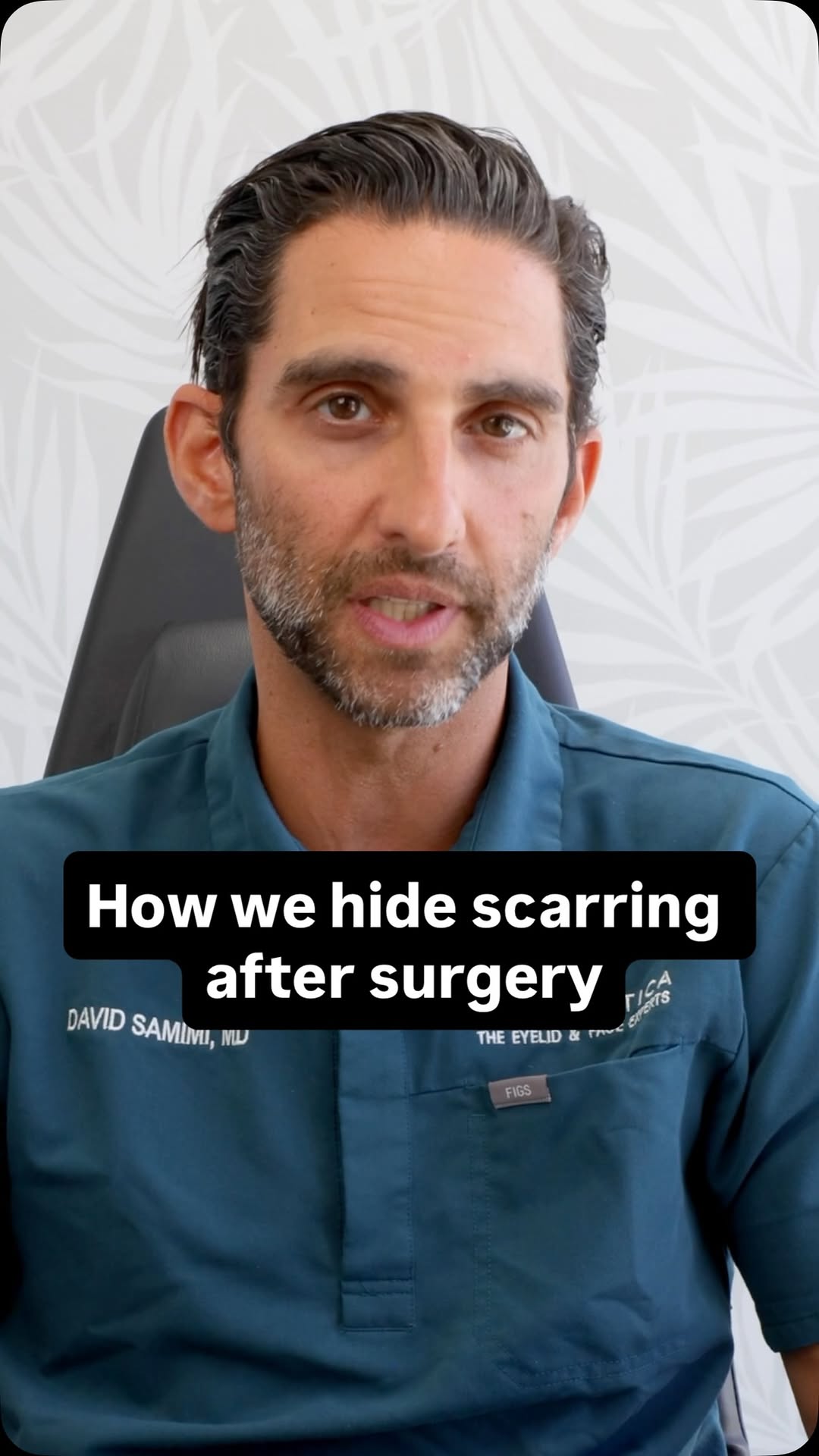
Why scar placement starts before the first incision is ever made
At Eyesthetica, hiding a scar begins with anatomy, not with what happens after surgery is done.
DR. CHRISTOPHER C. LO, MD STAFFTurn your social into search
We turn your posts into editorial stories that bring new search traffic to eyesthetica.com. Three of yours will be on this page.
Book a demo
eyesthetica Incisions are planned around natural creases, hairlines, and transition zones of the face so they can heal where a line already makes sense anatomically. For brow lifts, that may mean placing the incision at or behind the hairline. For upper eyelid surgery, it can sit within the natural eyelid crease. For lower eyelid surgery, fat can often be addressed from inside the eyelid, leaving no visible external incision. When skin needs to be removed, the incision can be placed just beneath the lash line, where it blends into the natural transition of the eyelid. Even with larger festoons, placing the incision within an existing skin tension line can create a more direct correction while still allowing the scar to blend as it heals. Scar placement is part of the surgical plan from the beginning.
At Eyesthetica, hiding a scar begins with anatomy, not with what happens after surgery is done.
DR. CHRISTOPHER C. LO, MD STAFFHow it works
Same as today. Nothing changes on Instagram.
We turn your post into a full story in your voice within the hour.
One click publishes it to eyesthetica.com. Nothing goes live without you.
Your stories
Nothing was published anywhere. You decide that. Every word will come from your own posts, your own photos and your own treatments.
Surgical Planning · From your post
At Eyesthetica, hiding a scar begins with anatomy, not with what happens after surgery is done.
“Incisions are planned around natural creases, hairlines, and transition zones of the face so they can heal where a line already makes sense anatomically. For brow lifts, that may mean placing the incision at or behind the hairline. For upper eyelid surgery, it can sit within the natural eyelid crease. For lower eyelid surgery, fat can often be addressed from inside the eyelid, leaving no visible external incision. When skin needs to be removed, the incision can be placed just beneath the lash line, where it blends into the natural transition of the eyelid. Even with larger festoons, placing the incision within an existing skin tension line can create a more direct correction while still allowing the scar to blend as it heals. Scar placement is part of the surgical plan from the beginning.”
In Office Surgery · From your post
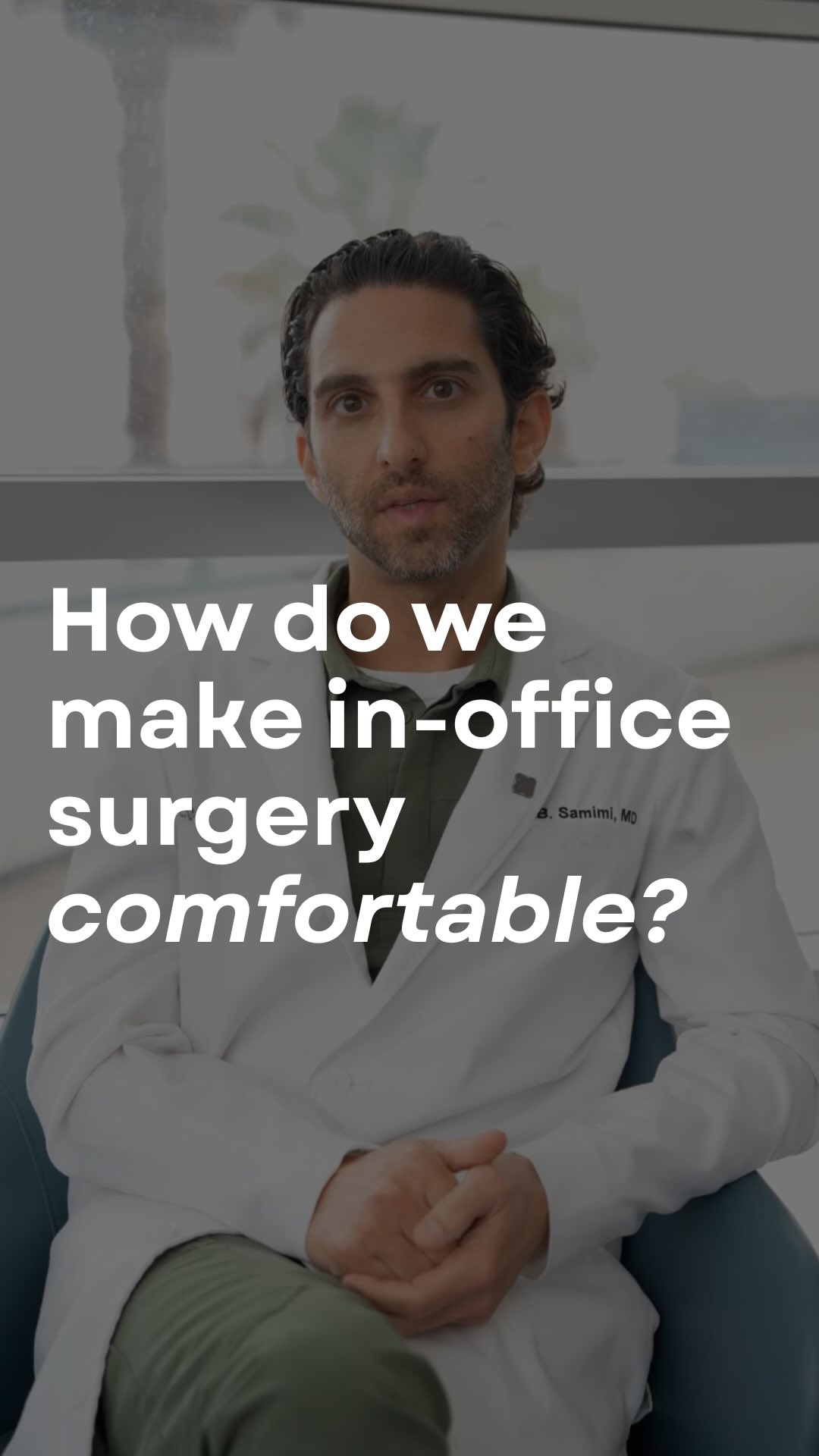
Oral sedation and a familiar setting can make certain surgeries feel less intimidating without changing the outcome.
“One thing we’ve gotten very good at in our practice is making in office surgery surprisingly comfortable for the right patient. When I tell patients that certain procedures can be performed in the office with oral sedation rather than in an operating room with IV sedation, I often get the same reaction. “Wait, I can be awake for this?” The answer is yes, and we’ve actually studied and published on the patient experience. For appropriately selected patients, our research found that those who chose in office surgery were just as satisfied with their experience as those who had their procedure in the operating room. Sometimes knowing exactly what to expect is one of the most effective ways to make surgery feel a lot less intimidating.”
Patient Results · From your post
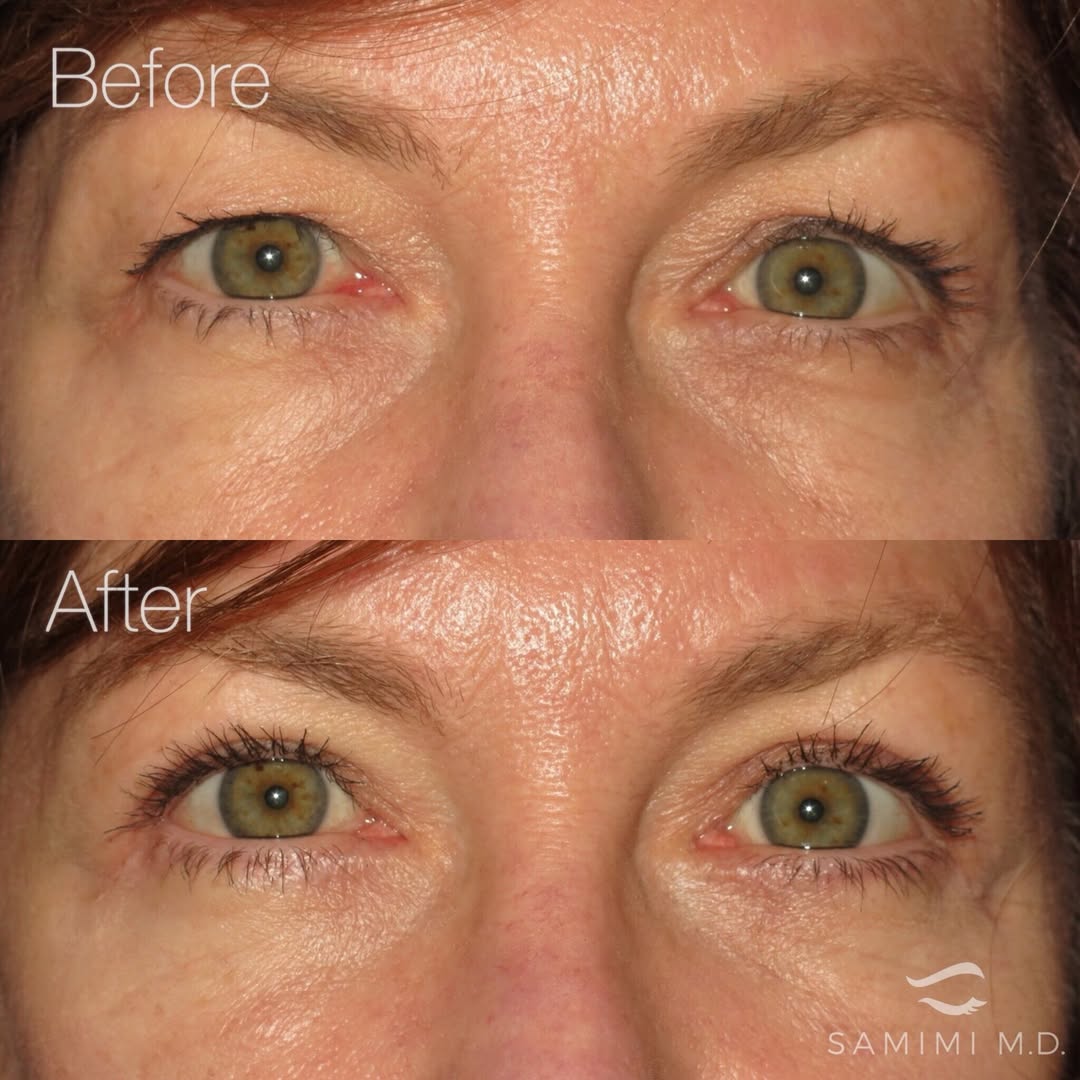
A close look at one patient's before and after shows what restoring volume around the eyes can do without changing their shape.
“Excellent results for this patient following my signature Health Blink™ Blepharoplasty, designed to restore volume and achieve a refreshed, natural appearance.”
One social post becomes another searchable entry point to Dr. Christopher C. Lo, MD.
Our own magazine. Clicks and citations from Google Search Console, as of September 15, 2026.
Draft story for eyesthetica.com · Surgical Planning
At Eyesthetica, hiding a scar begins with anatomy, not with what happens after surgery is done.
Every incision has a location, and that location is a decision made well before surgery starts. For facial procedures around the eyes and brow, we plan incisions around creases, hairlines, and natural transition zones that already exist on a person's face. The goal is to let healing happen along a line the face was going to have anyway, rather than introducing a new one.
A brow lift is a clear example of this thinking. Instead of placing the incision somewhere visible on smooth forehead skin, it can sit at or behind the hairline. Hair covers the site as it heals, and the transition point between scalp and forehead does a lot of the concealing work on its own, simply because that boundary already reads as natural to the eye.
Upper eyelid surgery follows a similar logic. The eyelid already folds along a crease every time a person blinks, so an incision placed within that crease heals inside a line the eye is used to seeing move. It is not hidden by trickery. It is hidden because the fold was already doing that visual job before surgery ever happened.
Lower eyelid work can go a step further. When the goal is addressing fat rather than removing excess skin, that fat can often be reached from inside the eyelid itself, through what is called a transconjunctival approach. Done this way, there is no external incision at all on the outside of the eyelid, which removes the question of visible scarring almost entirely for that portion of the correction.
Some cases do require skin removal, and here the incision is placed just beneath the lash line. That location matters because it sits exactly where the eyelid already transitions from one texture and tone to another. A scar in that specific spot has a natural line to blend into as it matures, rather than sitting on a flat, uninterrupted stretch of skin where any mark would stand out.
Festoons, the looser pouches of skin and fluid that can form lower on the eyelid or upper cheek, present a harder case simply because they are larger corrections. Even then, the same principle applies. Placing the incision within an existing skin tension line allows for a more direct correction of the festoon itself, while still giving the resulting scar a natural crease to settle into during healing.
None of this is something added on after surgery is finished. Scar placement is part of the surgical plan from the very beginning, decided alongside where fat needs to move, how much skin needs to come off, and how the eyelid or brow needs to function afterward. The incision location is treated as seriously as any other part of the procedure.
The common thread across brow lifts, upper eyelid surgery, lower eyelid work, and festoon correction is the same: work with the face's own architecture instead of against it. Hairlines, creases, and transition zones already exist for a reason, and using them as incision sites means healing has somewhere sensible to happen, long before anyone is thinking about how a scar will look months later.
Draft story for eyesthetica.com · In Office Surgery
Oral sedation and a familiar setting can make certain surgeries feel less intimidating without changing the outcome.
The first question is almost always the same one. A patient hears that their procedure can happen in the office rather than in an operating room, and the reaction is some version of disbelief. Wait, I can be awake for this? It is a fair thing to wonder, since most people assume surgery automatically means a hospital gown, an IV line, and a slower, more involved recovery process.
The distinction comes down to sedation. Certain procedures do not require the deeper unconsciousness that IV sedation provides. For the right patient, oral sedation is enough to keep things calm and manageable while the surgery happens in a familiar room rather than an operating suite. That difference changes the entire feel of the appointment, from how it starts to how quickly someone can leave afterward.
We did not just assume patients would be comfortable with this approach. We studied it directly, comparing satisfaction between patients who had appropriate procedures done in office under oral sedation and those who had similar procedures done in the operating room under IV sedation. The question we wanted answered was simple: does the setting itself change how satisfied someone feels afterward.
For appropriately selected patients, it did not. Satisfaction levels between the two groups were essentially the same. That finding matters because it takes the decision out of the realm of guesswork. Choosing office based surgery is not a compromise for people who qualify for it. It is simply a different, well supported path to the same result, with fewer of the steps that make surgery feel heavier than it needs to be.
A lot of the anxiety around surgery has nothing to do with the procedure itself. It comes from uncertainty: not knowing what the room will look like, what sedation will feel like, or how much control a patient will have while it happens. Being able to explain, clearly and specifically, that someone will be awake, aware, and mildly sedated removes a lot of that unknown before it has a chance to build up.
Patient selection is the part that makes this work. Not every procedure is a candidate for oral sedation, and not every patient is either. Part of the evaluation is figuring out who is genuinely well suited to an office based approach, so that comfort is achieved by matching the right method to the right case from the start rather than by cutting corners anywhere along the way.
There is a version of this kind of surgery that sounds informal, almost casual, and that is not the goal here. The setting is quieter and less clinical in feel, but the standards behind it are not lowered. What changes is the experience surrounding the procedure, not the seriousness with which it is approached or the outcome a patient can reasonably expect from it in the end.
For patients who qualify, that combination, oral sedation, a familiar setting, and a clear explanation of what is coming, tends to lower the temperature on something that otherwise feels intimidating. Surgery does not stop being surgery. It simply becomes something a patient can walk into with fewer questions and a better sense of what the next hour actually looks like from start to finish.
Draft story for eyesthetica.com · Patient Results
A close look at one patient's before and after shows what restoring volume around the eyes can do without changing their shape.
The two photographs here are cropped tight for a reason. Nothing below the brow and above the cheek is hidden, which means every change has to hold up under direct comparison. That is the standard we set for our Health Blink Blepharoplasty, a procedure built around restoring volume to the eye area rather than simply removing skin or tissue for a tighter look.
In the top photograph, the hollowing beneath both eyes reads as shadow more than skin. That kind of hollowing happens gradually, and it tends to make people look tired even when they are not. The lower lid sits lower on the left eye than the right, and there is a visible asymmetry in how much white shows beneath each iris.
By the second photograph, that lower lid asymmetry has evened out. Both eyes now show a similar amount of iris coverage, and the shadow beneath each eye has softened considerably. The eyes themselves have not changed shape or size. What changed is the support structure around them, which is the entire premise behind calling this a volume restoring approach rather than a removal based one.
That distinction matters clinically. A lot of blepharoplasty conversations focus on excess skin, but hollowing and volume loss create their own kind of aged appearance, one that skin removal alone does not fix and can sometimes worsen. Addressing volume directly, as we do with this technique, targets the actual cause of that tired look rather than just tightening the surface over it.
The name Health Blink is deliberate. The goal was never a dramatic transformation or a new eye shape. It was a refreshed, natural appearance, meaning the eyes should look like a rested version of themselves rather than a visibly altered one. Judged against that goal, the comparison holds up: the eyes in the second photograph look like the same eyes, just without the shadowing that had been sitting underneath them.
Skin texture is worth noting too. The fine lines at the outer corners and along the lower lids are still present in both photographs. This was never presented as a wrinkle treatment, and it is not being sold as one here. The change is isolated to volume and contour beneath the eye, which is exactly where this patient's concern was concentrated.
Lighting and angle are identical in both frames, which is what makes the comparison useful rather than just flattering. Same distance, same framing, same neutral expression. That consistency is what lets a viewer trust what they are seeing instead of wondering how much of the difference came from staging.
Results like this come from matching the technique to what is actually causing the tired appearance in the first place, rather than defaulting to the same procedure for every patient. For this individual, the hollowing under the eyes was the primary concern, and addressing it directly produced a change that reads as rest rather than surgery, which was the intended outcome from the start.
Keep reading