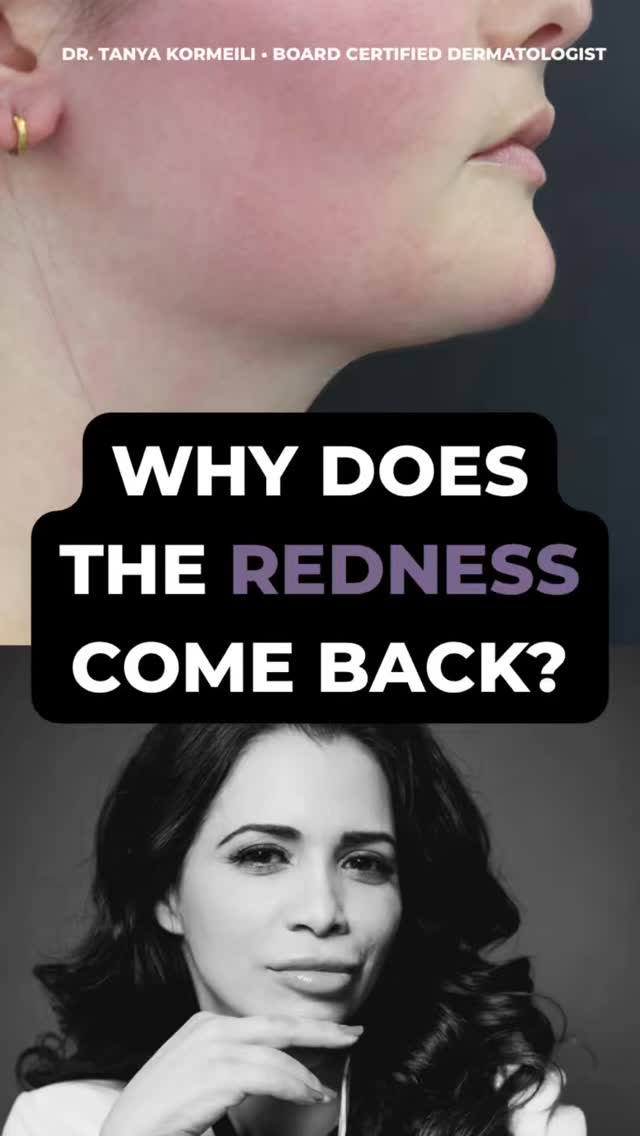
Persistent facial redness can outlast any concealer, and the reason often lives beneath the skin rather than on top of it.
Some redness is not a coverage problem at all. Patients tell us they have tried heavier foundation, green tinted primer, every trick suggested online, and the flush still shows through by midday. That pattern is a clue. When makeup keeps failing in the same spots, on the cheeks, around the nose, along the jaw, it usually means the color is coming from underneath the skin rather than sitting on the surface where concealer can reach it.
Redness like this often has a vascular component, meaning small visible vessels or persistent flushing that skincare products are not built to address. A serum can calm irritation and support the skin barrier, but it cannot shrink a vessel that has become visible. Understanding that distinction changes how we think about treatment, because it shifts the conversation from what to put on the skin to what is actually happening inside it.
Matching the tool to the cause
Voeam is a pulsed dye laser we use specifically to target vascular redness in patients who are appropriately selected for it. It is designed to work on the vessels themselves, which is why it can help in cases where topical treatment has plateaued. But a laser built for vascular concerns is only useful when vascular redness is actually the diagnosis, and that determination has to come before any device gets involved.
That is because redness is not always vascular. It can come from rosacea, from irritation, from inflammation, or from other underlying skin conditions that present with similar coloring but need a completely different approach. Treating the wrong cause with the right sounding tool rarely helps and can sometimes aggravate the skin further, which is why we spend real time identifying what is driving the redness before recommending anything.
Why the identification step comes first
In practice, that means asking when the redness shows up, whether it flares with heat, alcohol, spicy food, or stress, whether it fades and returns, and whether visible vessels are part of the picture. Those details point toward vascular causes versus inflammatory ones. It is a slower first step than jumping straight to a laser, but it is the step that determines whether a treatment plan will actually work rather than just temporarily calm the surface.
Persistent redness can be frustrating precisely because it resists the usual fixes. Concealer sits on top of it, sunscreen and gentle cleansers do not touch it, and by afternoon it often looks the same as it did that morning. That resistance to ordinary skincare is often the strongest sign that something more specific is happening beneath the surface, whether that turns out to be vascular, inflammatory, or related to an underlying skin condition.
The goal is never to make redness disappear from a photo. It is to understand why it is there in the first place, so that whatever we recommend next, whether that is a vascular laser, a change in daily skincare, or treatment for an underlying condition like rosacea, is actually built around the real cause instead of guessing at it from the color alone.
If facial redness has been a long running frustration, we put together a Facial Redness Checklist to help make sense of what might be driving it. Comment REDNESS and we will send it over, or reach our Santa Monica office directly at 310 526 8301 or staff@drkormeili.com to talk through what you are seeing and whether a closer look makes sense.