A trip to Australia and a US approval collided in the same week
One dermatologist's suitcase find lines up with the first American sunscreen built on a filter she has waited years to see approved.
JANE YOO, MD, PLLC STAFFTurn your social into search
We turn your posts into editorial stories that bring new search traffic to janeyoomd.com. Three of yours will be on this page.
Book a demo
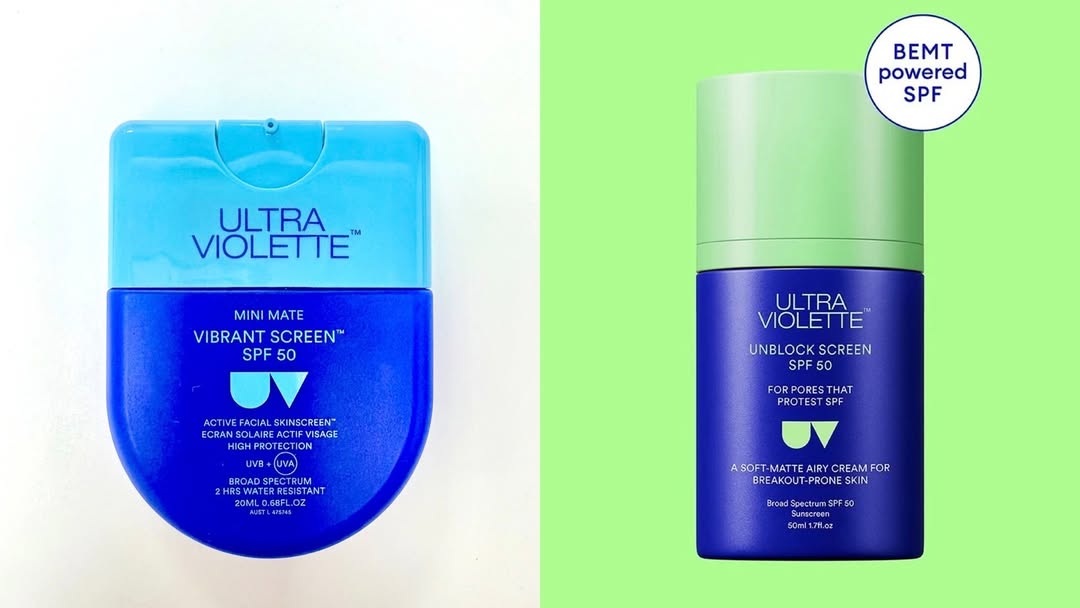
janeyoomd Sunscreen history was made and I discovered it mid trip. I was recently in Australia and picked up @ultravioletteau Mini Mate Vibrant Screen SPF 50 while I was there. Around the same time, I learned Ultra Violette had launched Unblock Screen SPF 50 in the US, the first sunscreen in the United States to contain bemotrizinol (BEMT), the first new sunscreen filter the FDA has approved in more than 25 years. It was a full circle moment. Ultra Violette has formulated with BEMT in its Australian and international range for close to a decade. Meanwhile, as a dermatologist, I've spent years advocating for US sunscreen filter modernization so American consumers could finally access what the rest of the world already had. Now that gap is closing, and I got to hold the "before" and read about the "after" in the same week. BEMT is broad spectrum, photostable, and effective at lower concentrations, which means lighter textures, less white cast, and more room in a formula for actual skincare benefits. Here is a link to my running list of every US bemotrizinol sunscreen as they launch. https.//www.janeyoomd.com/which sunscreens have bemotrizinol tinosorb s parsol shield full buying guide/ Here is a link to my FDA sunscreen filter approval tracker to see what's coming next. https.//www.janeyoomd.com/fda sunscreen filter approval tracker/ #Bemotrizinol #FDA #SPF #Dermatologist #UltraViolette
One dermatologist's suitcase find lines up with the first American sunscreen built on a filter she has waited years to see approved.
JANE YOO, MD, PLLC STAFFHow it works
Same as today. Nothing changes on Instagram.
We turn your post into a full story in your voice within the hour.
One click publishes it to janeyoomd.com. Nothing goes live without you.
Your stories
Nothing was published anywhere. You decide that. Every word will come from your own posts, your own photos and your own treatments.
Sunscreen Filters · From your post
One dermatologist's suitcase find lines up with the first American sunscreen built on a filter she has waited years to see approved.
“Sunscreen history was made and I discovered it mid trip. I was recently in Australia and picked up @ultravioletteau Mini Mate Vibrant Screen SPF 50 while I was there. Around the same time, I learned Ultra Violette had launched Unblock Screen SPF 50 in the US, the first sunscreen in the United States to contain bemotrizinol (BEMT), the first new sunscreen filter the FDA has approved in more than 25 years. It was a full circle moment. Ultra Violette has formulated with BEMT in its Australian and international range for close to a decade. Meanwhile, as a dermatologist, I've spent years advocating for US sunscreen filter modernization so American consumers could finally access what the rest of the world already had. Now that gap is closing, and I got to hold the "before" and read about the "after" in the same week. BEMT is broad spectrum, photostable, and effective at lower concentrations, which means lighter textures, less white cast, and more room in a formula for actual skincare benefits. Here is a link to my running list of every US bemotrizinol sunscreen as they launch. https.//www.janeyoomd.com/which sunscreens have bemotrizinol tinosorb s parsol shield full buying guide/ Here is a link to my FDA sunscreen filter approval tracker to see what's coming next. https.//www.janeyoomd.com/fda sunscreen filter approval tracker/ #Bemotrizinol #FDA #SPF #Dermatologist #UltraViolette”
Skin Health · From your post
For Hispanic Heritage Month, a look at melasma, hyperpigmentation, and the case for care built around deeper skin tones.
“As a dermatologist, this month always brings me back to something I talk about often but that doesn't get nearly enough airtime. skin of color deserves skin of color. specific care. Melasma. Post inflammatory hyperpigmentation. Sun protection that doesn't leave a white cast. These aren't niche concerns, they're everyday realities for so many of my Latina patients, and yet so much of mainstream skincare advice still defaults to research done on lighter skin types. A few things I want more people to know. Melasma is incredibly common in Hispanic/Latina skin and often worsens with sun + hormones. It's manageable, not something to just live with. SPF is non negotiable regardless of skin tone (melanin built in sun protection). Hyperpigmentation from acne or irritation heals differently in deeper skin tones and needs a gentler, more strategic approach Representation in dermatology research and imagery matters, and so does having derms who actually understand your skin's unique needs. #HispanicHeritageMonth #SkinOfColor #Melasma #Dermatology #EvidenceBasedSkincare”
Marathon Majors · From your post
A year after a DNF at mile 24, Dr. Jane Yoo returned to the Sydney Marathon and crossed the finish line beneath the Opera House.
“Star #7. 🌟 Last year, Sydney and I had unfinished business. I stopped at mile 24. This year, I went back and finished what I started. 7 of 8 Abbott World Marathon Majors down. Cape Town is the last one on my list, but Sydney was the one I needed to return to first after last year’s DNF. 26.2 miles has a way of reminding you that finishing is never guaranteed. Sometimes the most important part is simply being willing to show up again. To anyone sitting with an unfinished race, a failed attempt, or a “not yet,” go back for it. Mile 24 wasn’t the end of this story. This time, I made it to the finish line. #SydneyMarathon #AbbottWMM #MarathonMajors #WorldMarathonMajors”
One social post becomes another searchable entry point to Jane Yoo, Md, Pllc.
Our own magazine. Clicks and citations from Google Search Console, as of September 15, 2026.
Draft story for janeyoomd.com · Sunscreen Filters
One dermatologist's suitcase find lines up with the first American sunscreen built on a filter she has waited years to see approved.
A small blue travel size sunscreen picked up in Australia turned into something bigger than a souvenir. The bottle, Ultra Violette Mini Mate Vibrant Screen SPF 50, contains bemotrizinol, a filter Ultra Violette has used across its Australian and international range for close to a decade. Around the same time it came home in a suitcase, a related formula was clearing a milestone thousands of miles away in the United States.
That milestone is Unblock Screen SPF 50, now the first sunscreen sold in the United States to contain bemotrizinol, known as BEMT. It also carries the first new sunscreen filter the FDA has approved in more than twenty five years. Holding the well established Australian version and reading about the newly approved American one in the same week made the timing impossible to ignore.
For years, advocating for modernized US sunscreen filters has meant explaining why American shoppers were stuck without options long available elsewhere. Other countries approved bemotrizinol long ago, and formulas built around it became standard on shelves outside the United States. Watching that gap persist while patients asked why certain textures or protection levels were not available here made this particular approval feel less like industry news and more like something worth marking.
The two products sitting side by side make the comparison concrete rather than abstract. One is a compact, water resistant facial screen built for travel, broad spectrum and rated two hours of water resistance in a 20 milliliter case. The other is a soft matte, airy cream formulated for pores prone to breakout, also broad spectrum SPF 50, sized at 60 milliliters. Different jobs, same filter underneath both.
Bemotrizinol earns attention because of what it allows a formula to do, not just because it is new. It is broad spectrum and photostable, meaning it holds up under sun exposure rather than breaking down quickly. It also works at lower concentrations than many existing filters, which frees up room in a formula for lighter textures, less white cast, and additional skincare ingredients that would otherwise compete for space.
Those formulation advantages are exactly why so many international sunscreens have felt different in hand than their US counterparts for years. Lower required concentrations mean chemists can build thinner, less greasy bases without sacrificing protection. That difference is often the first thing people notice when comparing a sunscreen bought abroad to one bought at home, even before they know a specific filter is responsible for it.
Because bemotrizinol approval opens the door for more sunscreens to follow, a running list now tracks every US formula that contains it as each one launches, available at janeyoomd.com. A separate FDA sunscreen filter approval tracker follows what additional filters may be under review next, since Unblock Screen is unlikely to remain the only bemotrizinol option on American shelves for long.
What started as a travel pickup turned into a real time before and after, one bottle representing years of formulation happening elsewhere, the other representing the moment that finally caught up here. The two sit together now as a small but clear marker of where US sunscreen regulation has been and where the next few approvals might take it.
Draft story for janeyoomd.com · Skin Health
For Hispanic Heritage Month, a look at melasma, hyperpigmentation, and the case for care built around deeper skin tones.
Every year around this time, the same conversation comes up in our practice, and it still does not get enough attention outside it. Skin of color deserves skin of color specific care. That is not a slogan, it is a clinical reality we see constantly in Latina patients dealing with melasma, post inflammatory hyperpigmentation, and the frustration of sunscreens that leave a chalky white cast on deeper tones.
These are not rare or niche concerns. They are everyday realities for a huge number of our patients, and yet so much of mainstream skincare guidance is still built on research conducted primarily on lighter skin types. That gap shows up in exam rooms constantly, when a treatment plan designed for one skin type simply does not translate to another without real adjustment.
Melasma is incredibly common in Hispanic and Latina skin, and it tends to worsen with a combination of sun exposure and hormonal shifts. We want that understood clearly: melasma is manageable. It is not a condition patients need to quietly live with or assume is permanent. With the right strategy, consistent sun protection, and patience, it can be meaningfully improved over time.
Sun protection is non negotiable no matter your skin tone, even though melanin does offer some built in defense against UV damage. That natural protection is not a substitute for daily SPF. It simply changes how damage shows up, often as pigmentation issues rather than visible burns, which is part of why melasma and dark spots are such persistent concerns in our Latina patient population specifically.
Hyperpigmentation left behind by acne or irritation heals differently in deeper skin tones than it does in lighter ones. It often takes longer to fade and responds poorly to aggressive or one size fits all treatments. What it actually needs is a gentler, more strategic approach, one that treats the underlying inflammation carefully instead of just trying to bleach or scrub the discoloration away.
Representation in dermatology research and in the images used to teach and market skincare matters more than it gets credit for. When studies and marketing default to lighter skin, treatment guidance quietly narrows with it, and patients with deeper skin tones are left translating advice that was never built with them in mind in the first place.
That is why having dermatologists who genuinely understand the unique needs of skin of color is not a bonus, it is a basic standard of care. This month is a good moment to say that plainly. Melasma, hyperpigmentation, and sun protection deserve to be discussed with the same seriousness and specificity for every skin tone, not treated as an afterthought to the mainstream conversation.
Draft story for janeyoomd.com · Marathon Majors
A year after a DNF at mile 24, Dr. Jane Yoo returned to the Sydney Marathon and crossed the finish line beneath the Opera House.
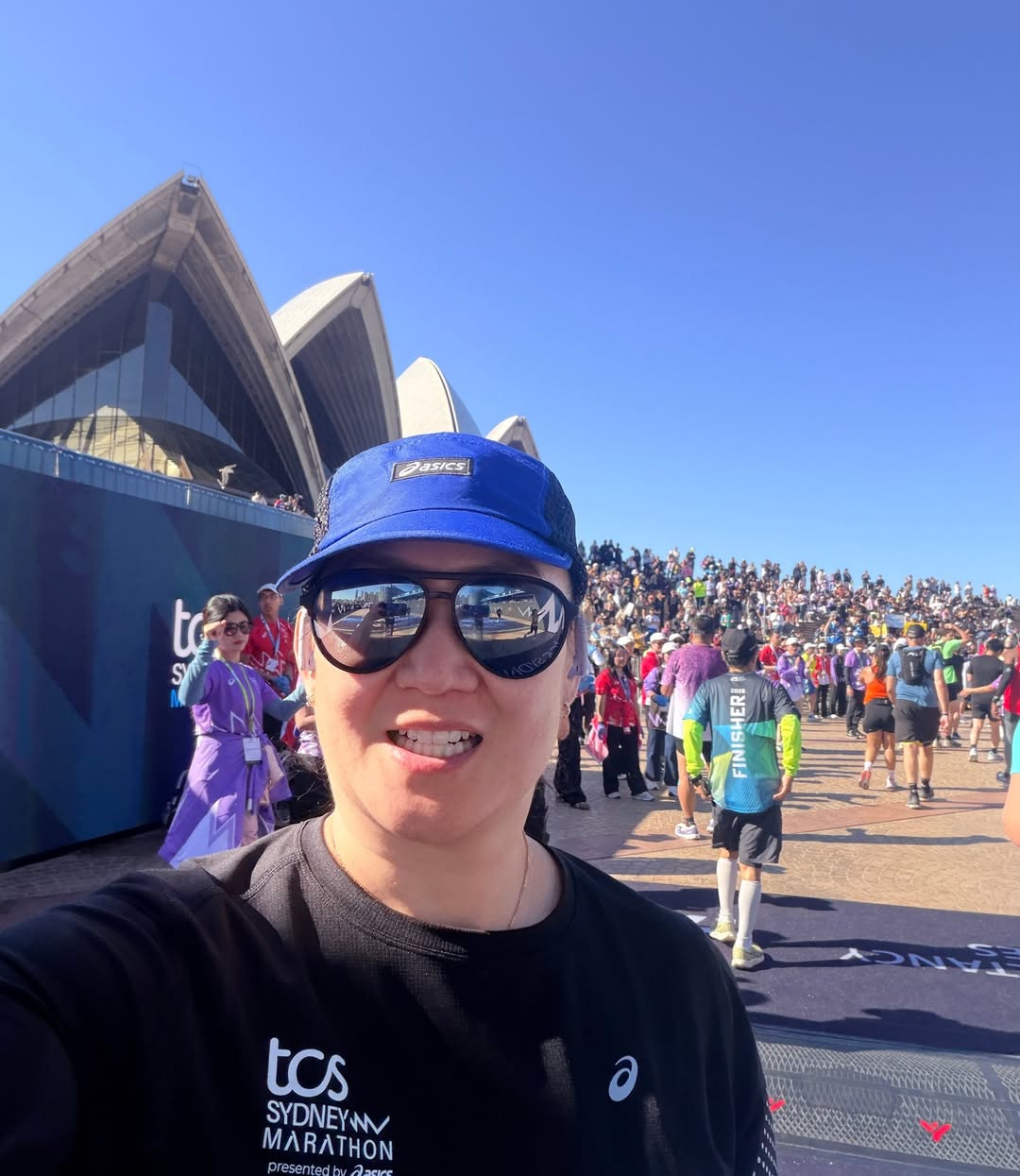
The Sydney Opera House sits behind me in the finisher area, its white shells catching the late morning light while runners in TCS Sydney Marathon gear move past in every direction. A blue ASICS cap, sunglasses, a plain black race shirt. Nothing about the scene looks dramatic. But this finish line meant something different this year than it would have to almost anyone else standing on that pavement.
Last year, Sydney and I had unfinished business. I stopped at mile 24. Anyone who runs marathons knows what that number means. It is close enough to see the end and far enough away that the body can still fail you before you get there. I did not finish. I flew home with that fact sitting somewhere I could not quite put down.
Cape Town is still the last stop on my Abbott World Marathon Majors list, star number eight. But Sydney had to come first. Finishing all six original majors is one kind of goal. Going back to the race that beat me is a different one, and it mattered more to me this year than checking off a new city I had never tried before.
Marathons are long enough that they strip away most of the noise. Twenty six point two miles has a way of reminding you that finishing is never guaranteed, no matter how much training goes into the start line. Fitness helps. Weather helps. But somewhere past mile twenty, it comes down to whether the legs and the mind are still willing to keep moving forward together.
This time I made it. Star number seven is done, seven of eight Abbott World Marathon Majors now behind me. The crowds stretched up the grandstands near the finish, runners in recovery ponchos and finisher shirts filling the plaza, the harbor light behind all of it. I stood in that same city that handed me a DNF and left with a different result.
A failed attempt is information, not a verdict. Mile 24 last year told me something true about that particular day, not about whether I was capable of finishing Sydney. Sitting with that distinction took longer than the marathon itself. It is easier to say a race did not work out than to admit you plan on trying it again.
To anyone sitting with an unfinished race, a failed attempt, or a firm not yet, I would say the same thing I told myself this year: go back for it. Mile 24 was not the end of the story, it was just the point where last year's race ran out. This year had room for a different ending, and I got to it.
One marathon major is left. Cape Town will close out a list I have been working through race by race, but Sydney was never going to be just another stop along the way. It was the one I needed to return to first, on my own terms, before adding anything new to the count.
Keep reading