What four sessions of combination hair restoration actually looked like
A patient's thinning crown changed over four months of combination treatment, supplements, and serum, one visible stage at a time.
KHROM MEDSPA AND WELLNESS STAFFTurn your social into search
We turn your posts into editorial stories that bring new search traffic to khrommedspa.com. Three of yours will be on this page.
Book a demo
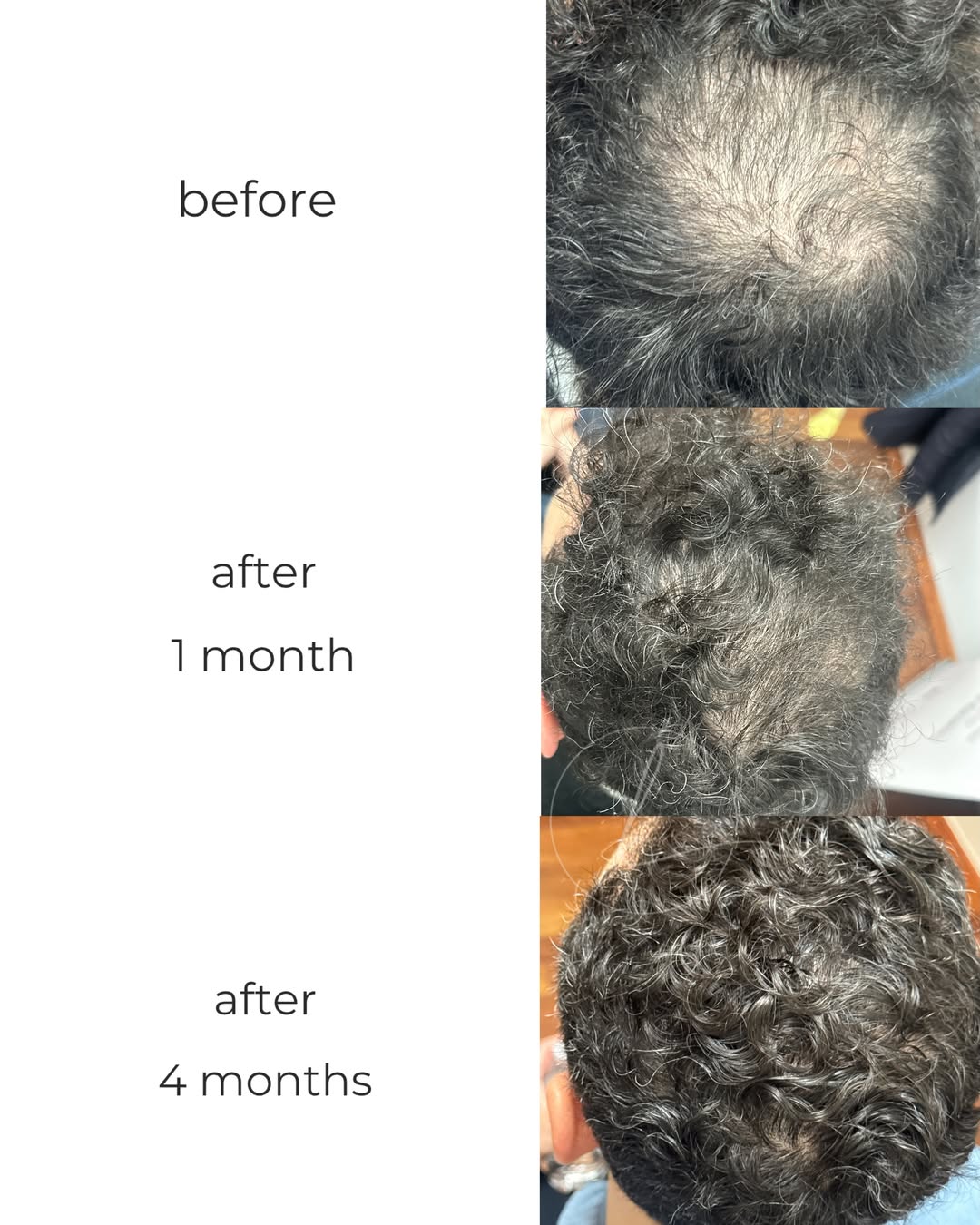
khromaesthetics BEFORE & AFTER. Combination Hair Restoration 4 combination sessions + XTRESSE supplements + KHROM Hair Serum Hair restoration is rarely about a single treatment. This patient completed a customized combination protocol over 4 sessions, supported by XTRESSE supplements and KHROM Hair Serum to address ongoing thinning and support healthier looking hair and density. A comprehensive approach allows us to target multiple factors that may contribute to hair loss while supporting the scalp and hair throughout the treatment process. Results shown after 4 combination sessions. Every patient is different. The recommended treatment plan and number of sessions depend on the type, cause, and severity of hair loss. Schedule a consultation to find out which hair restoration approach may be appropriate for you. by Elena Chyzh, NP KHROM AESTHETICS 2797 Ocean Pkwy, 2nd Floor Brooklyn, NY 11229 📞 718 615 4002 KHROM MEDSPA & WELLNESS 239 Court St Brooklyn, NY 11201 📞 718 408 6100 #HairRestoration #HairLossTreatment #HairThinning #HairGrowth #HairRegrowth KhromAesthetics
A patient's thinning crown changed over four months of combination treatment, supplements, and serum, one visible stage at a time.
KHROM MEDSPA AND WELLNESS STAFFHow it works
Same as today. Nothing changes on Instagram.
We turn your post into a full story in your voice within the hour.
One click publishes it to khrommedspa.com. Nothing goes live without you.
Your stories
Nothing was published anywhere. You decide that. Every word will come from your own posts, your own photos and your own treatments.
Hair Restoration · From your post
A patient's thinning crown changed over four months of combination treatment, supplements, and serum, one visible stage at a time.
“BEFORE & AFTER. Combination Hair Restoration 4 combination sessions + XTRESSE supplements + KHROM Hair Serum Hair restoration is rarely about a single treatment. This patient completed a customized combination protocol over 4 sessions, supported by XTRESSE supplements and KHROM Hair Serum to address ongoing thinning and support healthier looking hair and density. A comprehensive approach allows us to target multiple factors that may contribute to hair loss while supporting the scalp and hair throughout the treatment process. Results shown after 4 combination sessions. Every patient is different. The recommended treatment plan and number of sessions depend on the type, cause, and severity of hair loss. Schedule a consultation to find out which hair restoration approach may be appropriate for you. by Elena Chyzh, NP KHROM AESTHETICS 2797 Ocean Pkwy, 2nd Floor Brooklyn, NY 11229 📞 718 615 4002 KHROM MEDSPA & WELLNESS 239 Court St Brooklyn, NY 11201 📞 718 408 6100 #HairRestoration #HairLossTreatment #HairThinning #HairGrowth #HairRegrowth KhromAesthetics”
Hair Restoration · From your post
We are pairing microneedling with an amniotic fluid derived exosome complex to support the environment around hair follicles.
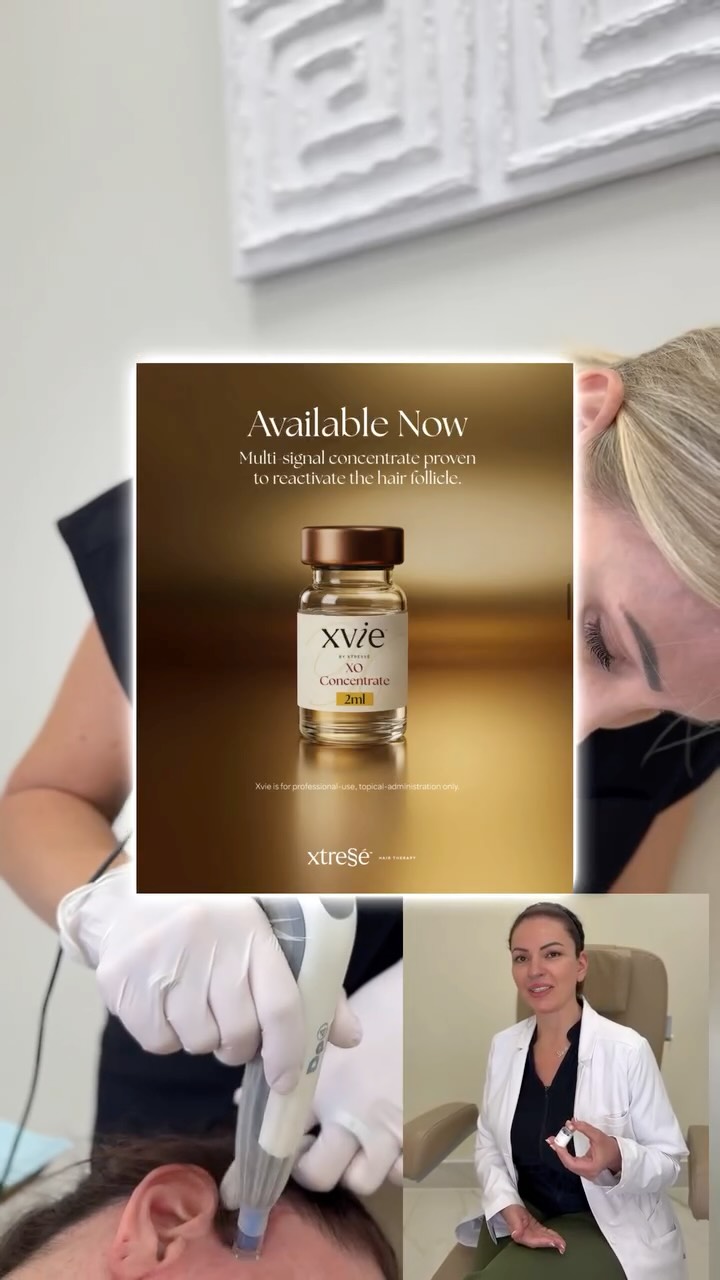
“Can exosomes help support hair growth? Here, we’re combining microneedling with an amniotic fluid. derived exosome complex to deliver signaling molecules to the scalp and support the environment around the hair follicles. Exosome therapies are still an evolving area of research and are not FDA approved for hair restoration. Watch the full video as Dr. Khrom explains the treatment and the science behind it. #HairRestoration #HairLoss #Exosomes #Microneedling #HairGrowth ScalpHealth Dermatologist KhromAesthetics”
Hair Restoration · From your post
Dr. Khrom explains a regenerative scalp treatment built on exosomes, copper peptides, and growth factors, with no injections involved.
“Can we support hair growth without needles or downtime? For male pattern hair loss, regenerative treatments are evolving. This approach uses a combination of exosomes, copper peptides, and growth factors designed to support the scalp and hair follicle environment. without injections. Watch the full video as Dr. Khrom explains how it works and who may be a candidate. #MalePatternHairLoss #HairLoss #HairRestoration #Exosomes #HairRegeneration ScalpHealth Dermatologist KhromAesthetics”
One social post becomes another searchable entry point to Khrom Medspa and Wellness.
Our own magazine. Clicks and citations from Google Search Console, as of September 15, 2026.
Draft story for khrommedspa.com · Hair Restoration
A patient's thinning crown changed over four months of combination treatment, supplements, and serum, one visible stage at a time.
A bare patch at the crown rarely responds to one product or one appointment. That is the starting point in this case: visible scalp showing through at the top of the head, the kind of thinning that patients often describe as the moment they started paying attention. There is no single fix here. There is a sequence, documented stage by stage, because that is how this particular protocol was built.
The plan combined four hair restoration sessions with two supporting elements: XTRESSE supplements taken throughout treatment and KHROM Hair Serum applied to the scalp. None of these pieces was meant to carry the result on its own. Together they were designed to work on different parts of the same problem, from the follicle itself to the broader conditions that let hair grow in stronger.
By the one month mark, the crown shows noticeably more density than the starting point. The hair reads curlier and denser overall, and while the scalp is still visible in places, the bare patch has clearly begun filling in. This is the stage where change is real but incomplete, which matters because it shows what mid treatment progress actually looks like rather than a finished result.
That middle stage is worth sitting with. Patients considering hair restoration often want to know what week four or week six feels like, not just the final comparison. Here, the scalp is less exposed, the strands look thicker at the root, and the overall shape of the hairline has started to even out, even though the treatment plan still had three more sessions to go.
The four month result shows a full head of dense, curly hair with no visible scalp at the crown. The transformation from the starting point is substantial: what was an open, thinning patch is now covered edge to edge. This is the outcome of the complete four session protocol, not a single treatment, and it reflects the cumulative effect of combining procedural sessions with daily supplement and serum use.
We built this protocol around the idea that hair loss is rarely caused by one factor, so it rarely responds to one intervention. Combination approaches let us work on the scalp environment, support the hair through supplementation, and address the follicle directly across multiple visits. It is more involved than a single treatment, but it gives us more places to intervene along the way.
This patient's plan, including the number of sessions and the specific combination used, was built around their own type, cause, and severity of hair loss. That is why we do not prescribe a standard protocol before an evaluation. What worked here reflects one starting point and one response to treatment, not a fixed formula that applies the same way to every patient who walks in.
If thinning at the crown, a receding hairline, or overall density loss is something you have been watching change over months or years, a consultation is where we figure out what is actually driving it. From there we can talk through whether a combination approach, a single treatment, or a different plan entirely makes sense for your hair and your timeline.
Draft story for khrommedspa.com · Hair Restoration
We are pairing microneedling with an amniotic fluid derived exosome complex to support the environment around hair follicles.
A gold toned vial sits under a spotlight in our treatment room, and behind it is a real question a lot of patients bring to us: can exosomes actually help support hair growth. It is not a simple yes or no. It is a newer area of aesthetic medicine, and we think it deserves a real explanation rather than a quick answer in passing during an appointment.
The treatment itself starts with microneedling across the scalp, the same handheld device you would see used to create controlled micro injuries anywhere else on the body. Those tiny channels are the mechanism. They allow us to deliver an amniotic fluid derived exosome complex directly to the scalp, where it can interact with the tissue surrounding the hair follicles rather than just sitting on the surface.
Exosomes are signaling molecules. Once they are introduced to the scalp through microneedling, the goal is to communicate with the surrounding environment, the tissue and cells that support each follicle. We are not claiming the exosomes regrow hair on their own. We are supporting the conditions around the follicle, which is a more accurate and more honest way to describe what this treatment is designed to do.
We want to be direct about where the science currently stands. Exosome therapies for hair restoration are still an evolving area of research. They are not FDA approved for this specific use, and we say that plainly to every patient who asks about it, because informed consent starts with understanding what is proven and what is still being studied in real time.
Dr. Khrom walks through the treatment and the science behind it directly, standing in her white coat holding a vial the same size as the one used on the patient. That decision is intentional. A scalp treatment involving a handheld device and a golden vial can look intimidating without context, and we would rather a patient understand the reasoning before they ever sit in the chair for it.
The treatment room itself is simple: a reclined chair, gloved hands holding the microneedling pen steady against the scalp, a patient lying face down with her hair parted to expose the treatment area. There is no theater to it. It is a clinical process, applied methodically section by section across the scalp, which is exactly how a treatment built around research should be handled.
This is for anyone dealing with hair thinning who has already heard the word exosomes online and wants an actual explanation instead of a promise. We would rather walk someone through the mechanism, the current research limitations, and what microneedling contributes to the process than let a vial and a spotlight speak for themselves without context behind them.
If you are curious whether this approach fits your situation, that conversation starts with us, not with a search result. Dr. Khrom's explanation exists because the questions are legitimate and the field is genuinely still developing. We would rather you leave informed about the science than simply impressed by a gold vial under good lighting.
Draft story for khrommedspa.com · Hair Restoration
Dr. Khrom explains a regenerative scalp treatment built on exosomes, copper peptides, and growth factors, with no injections involved.
Male pattern hair loss is one of the most common concerns we hear about at our Brooklyn practice, and it is also one of the most misunderstood. Patients often assume the only paths forward are pharmaceuticals with side effects or surgical transplants with real downtime. We wanted to offer something that sits between those two extremes, addressing the scalp environment itself rather than masking the problem or committing to a permanent procedure before exploring gentler options first.
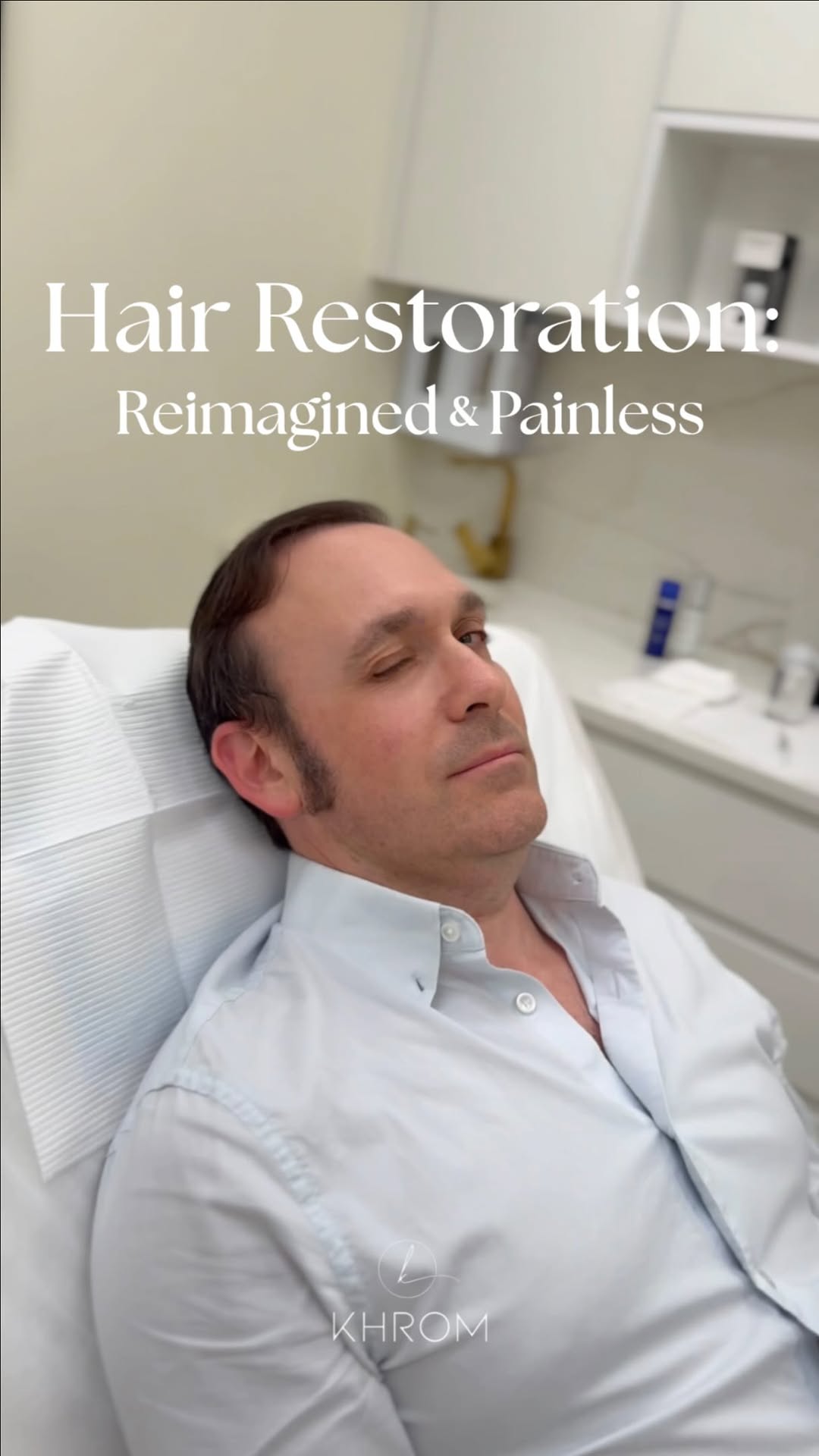
That is the thinking behind the regenerative approach Dr. Khrom walks through with a patient reclined comfortably in our treatment room, eyes closed, shirt collar open, clearly at ease during a session that involves no needles at all. The setting is deliberately unremarkable: a clean chair, a headrest, good lighting. The point is not spectacle. The point is that a treatment aimed at something as personal as hair loss can also be quiet and low stress.
The formulation combines exosomes, copper peptides, and growth factors, each chosen for a specific role in supporting the scalp and the follicle environment around it. Exosomes carry signaling molecules that can help cells communicate more effectively. Copper peptides have long been studied for their role in tissue support. Growth factors are included to help reinforce the conditions hair follicles need to function well over time, rather than forcing a single mechanism to do all the work.
None of this requires injections. That detail matters more than it might first appear, because it removes a barrier that keeps a lot of people from ever starting treatment. Fear of needles, worry about bruising, or simply not wanting to explain marks on the scalp afterward are real reasons patients delay care. A topical, needle free option changes the calculus for someone who has been putting off addressing hair loss for exactly those reasons.
This approach is specifically discussed in the context of male pattern hair loss, which follows a fairly predictable pattern of thinning and recession over time. Dr. Khrom's explanation is meant to help viewers understand not just how the treatment works mechanically, but whether their own pattern of loss makes them a reasonable candidate. That kind of specificity is useful, because hair loss treatments are rarely one size fits all, and timing relative to progression matters.
We think it is worth saying plainly that this is regenerative support, not a guarantee, and not a substitute for a proper evaluation. The value of watching Dr. Khrom's explanation is in understanding the reasoning: why these particular ingredients, why this combination, and why the absence of needles does not mean the absence of a real clinical rationale behind the formulation itself.
No downtime also means no disruption to the rest of a person's week. There is no recovery period to plan around, no visible sign that treatment happened, and no need to rearrange a schedule to accommodate healing. For a concern that many men already feel reluctant to discuss openly, removing the logistical friction around treatment can be just as meaningful as the biology behind the exosomes and peptides themselves.
Regenerative medicine in this space keeps moving, and we expect the tools available for treating scalp health to keep improving alongside it. What matters right now is that patients have an option that respects both their time and their comfort while still being grounded in a real mechanism. That combination is the reason this particular approach earned its own explanation from Dr. Khrom rather than a passing mention.
Keep reading