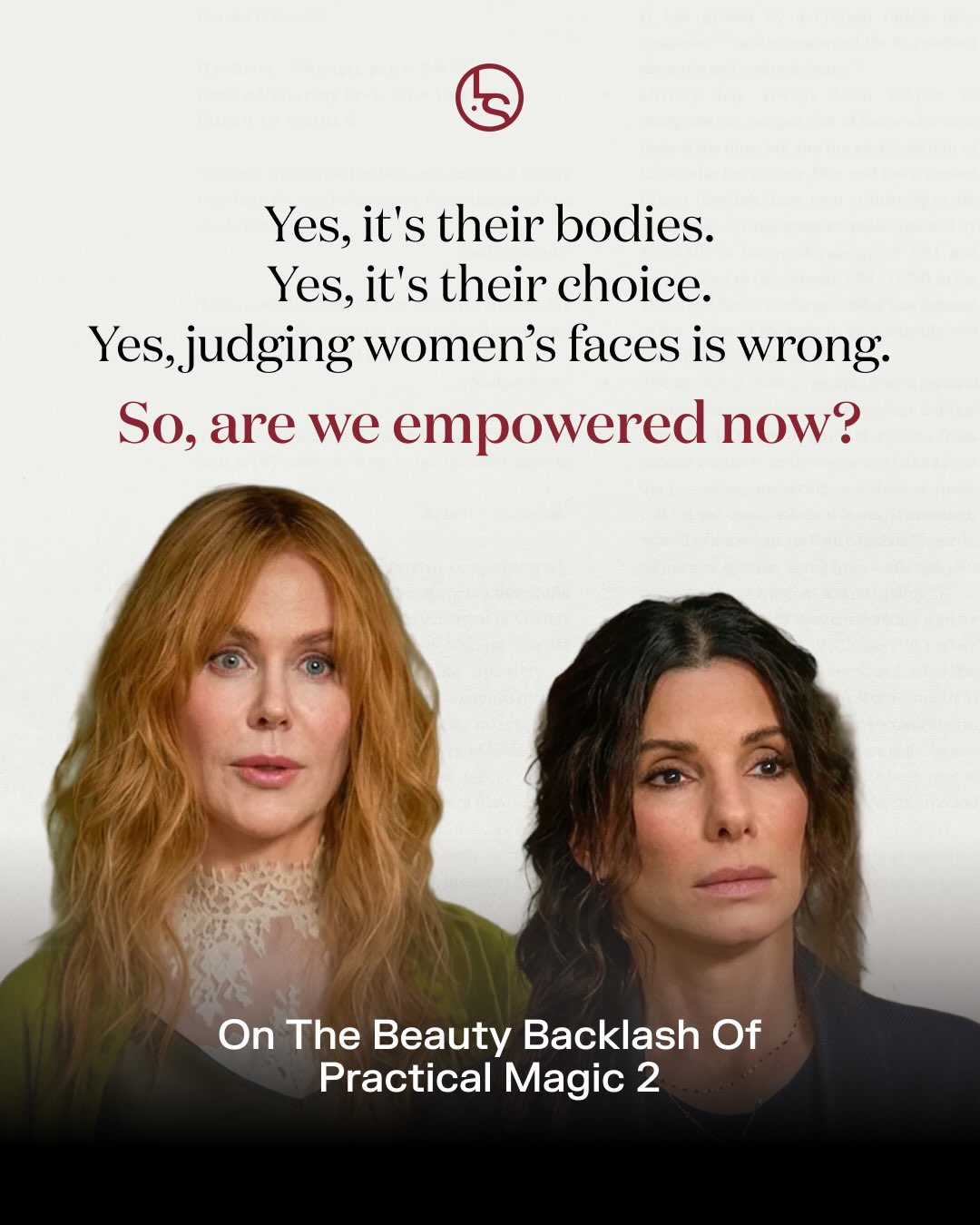
The comment wars over Practical Magic 2 miss the actual choice at hand
The backlash to two familiar faces reveals a false binary between natural and intervention, and there is a third way worth naming.
LANSHIN STAFFTurn your social into search
We turn your posts into editorial stories that bring new search traffic to lanshin.com. Three of yours will be on this page.
Book a demo
treatmentbylanshin In the comment wars, I often hear from people who feel judged by the “natural face only” crowd. And you know what? I see that. As someone deeply committed to my natural, Original Face, I don’t like the way some comments come off toward people who get things like Botox and filler, as if they are doing aging wrong and natural forward folks are doing it right. I don’t agree with that. When it comes to fillers and Botox, my goal is to share the TCM perspective and the other side of these interventions that I don’t think gets discussed nearly enough. It’s also to let people know those interventions aren’t the only choices out there. As a doctor of Chinese medicine, I work within a whole world of TCM well aging that offers a very different way of thinking about and working with our faces as we age. Once I’ve shared that information, my job is done. What you choose from there is your choice, your agency and your right. I can believe deeply in the Original Face without believing that every woman has to make the same choices I do. I’d love to know your thoughts on this. And if you have strong opinions against Botox, fillers, etc., please make sure your comments are free of judgment toward the people who choose them for their aging journey. It’s rough out there in this culture. At the end of the day, we’re all doing our best ❤️ #practicalmagic2 #botoxface #instagramface
The backlash to two familiar faces reveals a false binary between natural and intervention, and there is a third way worth naming.
LANSHIN STAFFHow it works
Same as today. Nothing changes on Instagram.
We turn your post into a full story in your voice within the hour.
One click publishes it to lanshin.com. Nothing goes live without you.
Your stories
Nothing was published anywhere. You decide that. Every word will come from your own posts, your own photos and your own treatments.
Well Aging · From your post
The backlash to two familiar faces reveals a false binary between natural and intervention, and there is a third way worth naming.
“In the comment wars, I often hear from people who feel judged by the “natural face only” crowd. And you know what? I see that. As someone deeply committed to my natural, Original Face, I don’t like the way some comments come off toward people who get things like Botox and filler, as if they are doing aging wrong and natural forward folks are doing it right. I don’t agree with that. When it comes to fillers and Botox, my goal is to share the TCM perspective and the other side of these interventions that I don’t think gets discussed nearly enough. It’s also to let people know those interventions aren’t the only choices out there. As a doctor of Chinese medicine, I work within a whole world of TCM well aging that offers a very different way of thinking about and working with our faces as we age. Once I’ve shared that information, my job is done. What you choose from there is your choice, your agency and your right. I can believe deeply in the Original Face without believing that every woman has to make the same choices I do. I’d love to know your thoughts on this. And if you have strong opinions against Botox, fillers, etc., please make sure your comments are free of judgment toward the people who choose them for their aging journey. It’s rough out there in this culture. At the end of the day, we’re all doing our best ❤️ #practicalmagic2 #botoxface #instagramface”
Face Reading · From your post
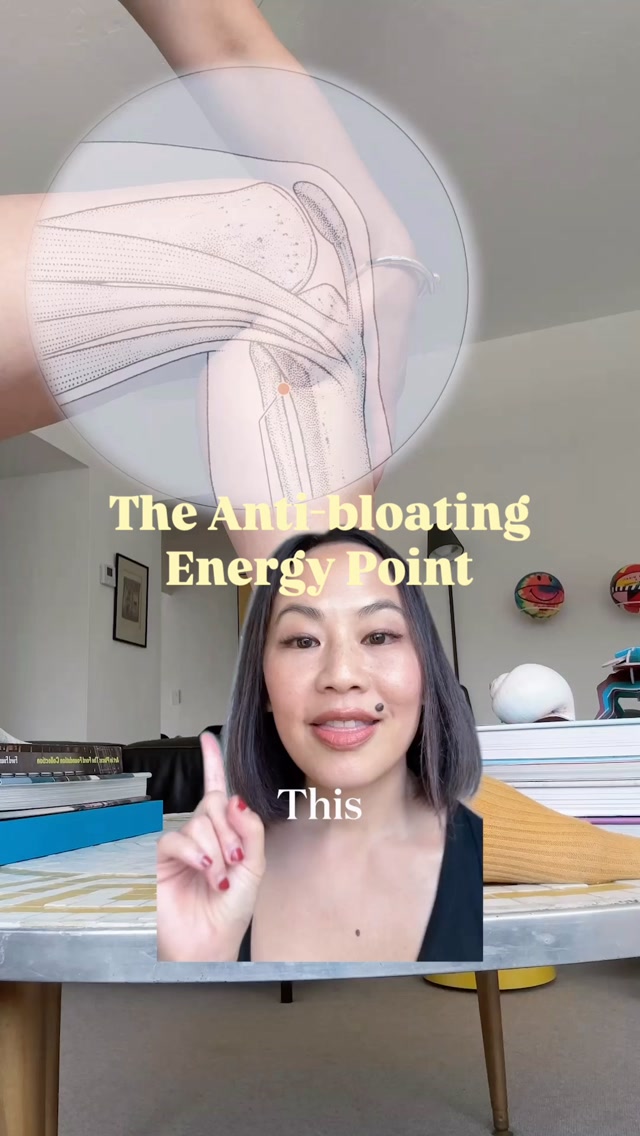
A closer look at Spleen 9, the acupuncture point we turn to when bloating shows up in the face and the body at once.
“If your face is getting puffier as you age, don’t just blame aging if you also deal with belly bloating, water retention, heaviness, loose stools or that tired, sluggish feeling after you eat. I made a more detailed tutorial on how to work with Spleen 9 at home. Let me know if you want it and I’ll send you the link. 💛 In Chinese medicine, a lot of cosmetic aging concerns are actually signs of a growing imbalance or dysfunction happening deeper inside the body. Facial bloating is a perfect example. It’s the type of symptom that concerns me more than wrinkles because it can be a sign that your body is struggling to manage and move fluids properly. This makes me want to examine the health of your Spleen energy system, because in TCM your Spleen is basically the boss of water in your body. It plays a major role in fluid metabolism, making sure fluids get where they need to go instead of just hanging out where they don’t belong. I love Spleen 9, “Yin Ling Quan.” It’s like the master acupuncture point for helping the body move excess fluid and clear Dampness. Questions? Lmk! Not medical advice. Always consult your LAc or physician if you have persistent, unexplained or concerning symptoms.”
Skin Notes · From your post
A closer look at why under eye skin takes longer to change, and what we do about it at home and in the treatment room.
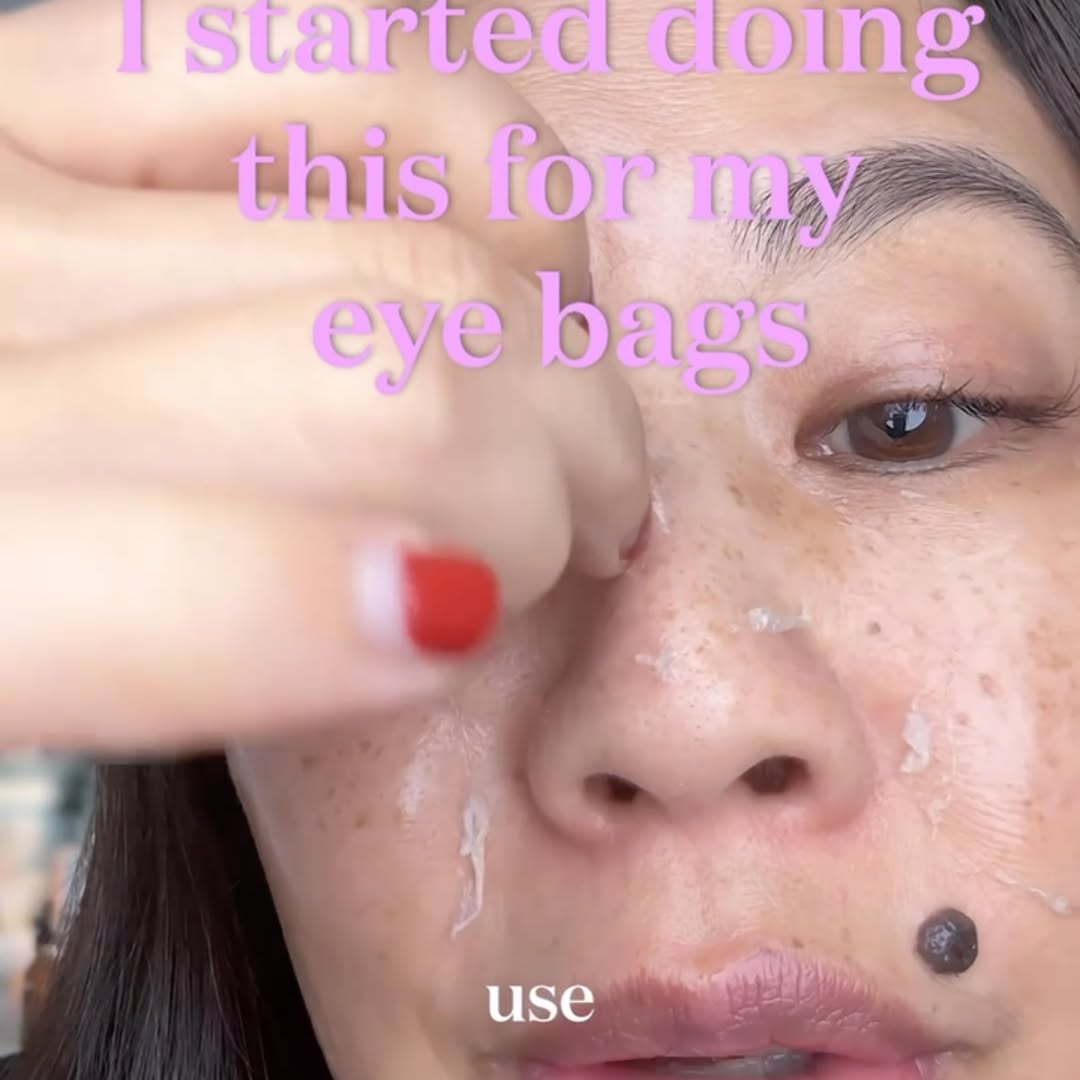
“Do you struggle with your under eyes too? If so, tell me exactly what you need help with. I also made a cheat sheet with my full routine + product list if you’re interested. 🚨 This routine might be too rich for those of you with oily, acne prone skin so you can DM me for a link to my Gua Sha cleaning routine video where you do Gua Sha with your cleansing oil, then wash off and use your moisturizers that work for you. Also consult with your practitioner first if you’re prone to milia. Under eyes take time and patience. Even in clinic, this is one of the areas that can take the longest to improve. But there’s actually a lot you can do at home if you’re consistent, especially if you’re not interested in expensive treatments or surgery. I focus first on improving blood flow and healthy fluid movement (gua sha), and keeping the skin deeply hydrated and nourished so it stays strong and resilient (skincare). Then it’s really about consistency over time. And don’t forget that under eyes reflect what’s happening inside too. Sleep, nutrition and hydration all matter here. ❤️”
One social post becomes another searchable entry point to Lanshin.
Our own magazine. Clicks and citations from Google Search Console, as of September 15, 2026.
Draft story for lanshin.com · Well Aging
The backlash to two familiar faces reveals a false binary between natural and intervention, and there is a third way worth naming.
A press image resurfaces every few years in a new form: two famous faces, one read as untouched and one read as worked on, placed side by side for the internet to judge. This time it is Practical Magic 2. The commentary follows a script we already know, praising one face for aging naturally and criticizing the other for not, as if either woman owes the public an explanation for her own skin.
We work in facial care rooted in Traditional Chinese Medicine, so we sit inside these comment wars often, and we hear from people on both sides who feel judged. Someone who chooses Botox and filler and gets called a cautionary tale. Someone who chooses neither and gets called brave for it, which is its own kind of pressure. Neither framing is generous, and neither one is ours to hand out.
We are deeply committed to what we call the Original Face, the idea that a face can age on its own terms without correction. But commitment to that idea does not require judgment of the people who choose differently. Believing in one path does not mean every other path is a mistake. Aging is not a competition with a right answer, no matter how the comment section wants to score it.
What we actually want to add to this conversation is not another verdict on Botox or filler. It is the TCM perspective on aging faces, a framework that rarely gets airtime next to the injectable versus natural argument. That perspective treats the face as connected tissue, circulation, and structure built over years, not a surface to be paused or reversed with a single intervention.
Once that information is shared, our part is finished. What someone does with it, whether they pursue Botox, filler, TCM facial work, or nothing at all, is entirely their decision to make. We can hold our own approach with conviction without insisting it is the only legitimate one. Agency means the choice belongs to the person living in that face every day, not to us.
The natural face crowd can be just as harsh as the filler crowd, and that deserves saying plainly. Telling someone they are doing aging wrong because they chose an injectable is not empowerment, it is just a different flavor of judgment aimed at the same target: women's faces, and the choices attached to them. Nobody wins when the conversation becomes about scoring purity points.
It is worth naming why this particular image draws so much heat. Two women, one culturally coded as having intervened and one as having not, standing together on a poster becomes a referendum nobody asked to run. The faces did not ask to represent a debate. The debate exists because we keep needing a visual shorthand for an argument that is really about control over women as they age.
We would rather use this moment to widen the options than narrow the judgment. If you have opinions about Botox, fillers, or forgoing both, that is fair and worth discussing. What is not fair is aiming that opinion at the individual women who made a private choice about their own face. There is room for TCM well aging, for injectables, and for neither, without ranking any of them.
Draft story for lanshin.com · Face Reading
A closer look at Spleen 9, the acupuncture point we turn to when bloating shows up in the face and the body at once.
Puffiness in the face is often filed under aging, something to smooth over or wait out. But at Lanshin we tend to ask a different question first. If the puffiness shows up alongside belly bloating, water retention, loose stools, or that heavy, sluggish feeling after eating, aging is probably not the whole story. Something deeper is worth examining.
In Chinese medicine, the face is treated as a readable surface, a place where internal imbalance tends to show up early. Facial bloating in particular gets our attention faster than wrinkles do, because it often signals that the body is struggling to manage fluid the way it should. That is a functional issue, not just a cosmetic one, and it points somewhere specific.
In TCM, the Spleen is considered the organ in charge of fluid metabolism. It is responsible for moving water through the body efficiently, making sure it reaches the tissues that need it and does not pool in places it should not. When Spleen energy is weak or overworked, fluid starts to sit still instead of circulating, and that stagnation can surface as puffiness, especially in the face.
This is why we do not look at facial swelling in isolation. If someone mentions bloating, water retention, or feeling tired and heavy after meals in the same breath as facial puffiness, those symptoms are treated as connected threads rather than separate complaints. The face becomes one more data point in a larger picture of how well the body is moving fluid day to day.
One of the points we rely on most for this is Spleen 9, known in Chinese medicine as Yin Ling Quan. It sits along the Spleen meridian and is regarded as a master point for moving excess fluid and clearing what TCM calls Dampness, the accumulation that shows up as heaviness, puffiness, or sluggish digestion. Working with it is a direct way to support the system responsible for fluid balance.
Spleen 9 is not a point you need a treatment room to access. It can be worked with at home, which is part of why we wanted to walk through it on video rather than just naming it in passing. Understanding where it sits and how to engage it gives people a practical tool for addressing puffiness at its source instead of only managing how it looks.
The larger habit worth building here is not about one acupuncture point. It is about treating cosmetic symptoms as information. Puffiness, bloating, and fatigue after eating are not isolated annoyances to mask individually. They are signals from a system that is asking for support, and following that thread tends to be more useful than treating each symptom as its own separate problem.
If facial puffiness has been a recurring pattern for you, especially alongside digestive heaviness or water retention, it may be worth looking at Spleen health rather than only the mirror. We are glad to share the fuller tutorial on working with Spleen 9 for anyone who wants to go deeper. As always, persistent or concerning symptoms deserve a conversation with your acupuncturist or physician, not a home remedy alone.
Draft story for lanshin.com · Skin Notes
A closer look at why under eye skin takes longer to change, and what we do about it at home and in the treatment room.
Under eye skin is thinner and more delicate than almost anywhere else on the face, which is exactly why it shows fatigue, fluid, and time so quickly. It is also, frustratingly, one of the slowest areas to respond to any kind of care. We see this in clinic constantly. People want fast results here more than almost anywhere else, and this is the area that asks for the most patience in return.
That mismatch between expectation and biology is worth naming honestly. Under eyes are not going to shift in a week, and they are not going to shift with one product alone. What we have found, both on our own faces and in treating clients, is that consistency matters more than intensity. Small actions repeated daily outperform occasional intensive efforts, especially in skin this thin and this reactive.
That is why our approach starts with two separate jobs, not one. The first is mechanical: encouraging blood flow and healthy fluid movement so puffiness and stagnation have less chance to settle in. The second is about the skin barrier itself, keeping it hydrated and nourished enough to stay resilient under all that daily movement, expression, and rubbing.
We reach for gua sha before anything else in this routine, working it gently along the under eye and cheekbone to support circulation and drainage rather than to add pressure or pull. Fluid tends to collect in this area more than people realize, and gentle mechanical movement is one of the more accessible ways to address that without needing a clinical treatment to do it.
After movement comes moisture, and this is where the routine gets deliberately rich. A thicker layer helps hold onto hydration through the day and supports a skin barrier that is already thinner and more prone to losing water than the rest of the face. The goal is not to mask the area, but to give it enough reinforcement that it can hold its own.
That richness is also where we ask people to pause and consider their own skin. If you run oily or acne prone, a heavier routine built for dryness and fragility is not going to serve you the same way, and it may sit poorly under the eyes specifically. Anyone prone to milia should talk to their practitioner before adding richer products into this part of their routine.
Under eyes are also one of the more honest parts of the face, in that they reflect what is happening elsewhere in the body. Sleep debt, dehydration, and nutrition all show up here before they show up anywhere else, which means no gua sha routine or moisturizer is working in isolation. Skincare supports the skin, but it cannot substitute for rest or hydration the body is missing.
None of this is about chasing a dramatic before and after. It is about giving under eye skin the two things it actually needs, better circulation and steady reinforcement, and giving that combination enough time to work. The people who see change here are usually the ones who stopped looking for a fast fix and started showing up for the slow one.
Keep reading