What a skin cancer screening at Manhattan Dermatology actually looks like
A closer look at the simple exam that helps our dermatologists catch concerns early and give patients peace of mind.
MANHATTAN DERMATOLOGY STAFFTurn your social into search
We turn your posts into editorial stories that bring new search traffic to dermatologistnewyork.org. Three of yours will be on this page.
Book a demo
manhattandermatologynyc Your skin health matters at every stage of life. At Manhattan Dermatology, scheduling a skin cancer screening allows our experienced dermatologists to carefully evaluate your skin, detect concerns early, and provide peace of mind with expert care. Contact our office or visit our website to schedule your skin cancer screening today. https.//www.dermatologistnewyork.org/
A closer look at the simple exam that helps our dermatologists catch concerns early and give patients peace of mind.
MANHATTAN DERMATOLOGY STAFFHow it works
Same as today. Nothing changes on Instagram.
We turn your post into a full story in your voice within the hour.
One click publishes it to dermatologistnewyork.org. Nothing goes live without you.
Your stories
Nothing was published anywhere. You decide that. Every word will come from your own posts, your own photos and your own treatments.
Skin Health · From your post
A closer look at the simple exam that helps our dermatologists catch concerns early and give patients peace of mind.
“Your skin health matters at every stage of life. At Manhattan Dermatology, scheduling a skin cancer screening allows our experienced dermatologists to carefully evaluate your skin, detect concerns early, and provide peace of mind with expert care. Contact our office or visit our website to schedule your skin cancer screening today. https.//www.dermatologistnewyork.org/”
Skin Care · From your post
A closer look at how this common ingredient targets acne bacteria and how to use it without overdoing it.
“Benzoyl peroxide kills P. acnes bacteria; use it all over to prevent breakouts. A 2.5 or 5.5 percent formula works without flaky side effects. If skin becomes irritated, simply cut down the frequency of use. #acne #ancemeds”
Skin Health · From your post
Moles, skin tags, and lesions can be removed in office with local anesthesia and little discomfort.
“A dermatologist may perform a surgical excision to remove growths like moles, skin tags, and lesions. This is usually done with local anesthesia, so you don’t feel pain! #dermatology #excision”
One social post becomes another searchable entry point to Manhattan Dermatology.
Our own magazine. Clicks and citations from Google Search Console, as of September 15, 2026.
Draft story for dermatologistnewyork.org · Skin Health
A closer look at the simple exam that helps our dermatologists catch concerns early and give patients peace of mind.
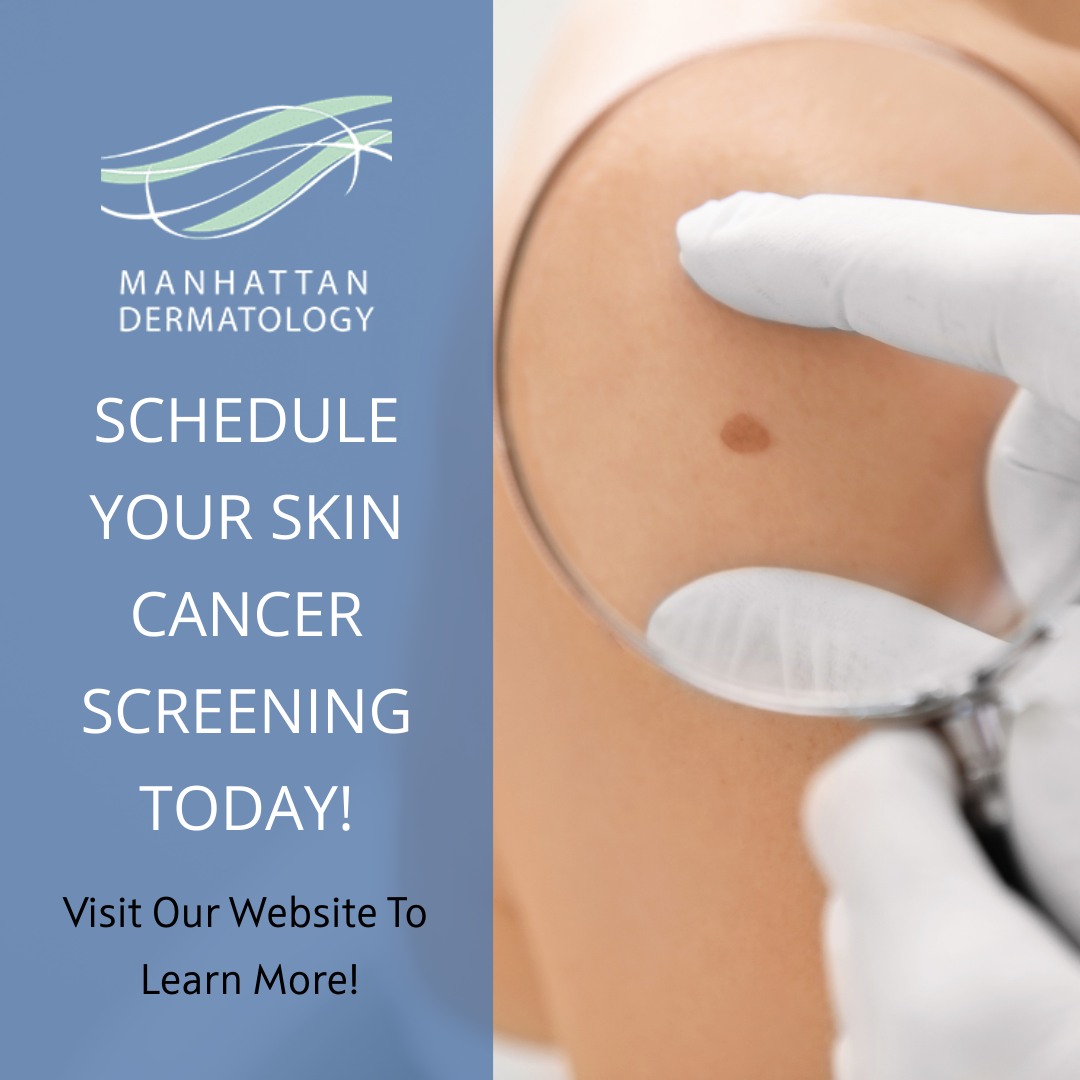
A skin cancer screening sounds like a big appointment, but the actual exam is quiet and methodical. A gloved hand, a magnifying tool, and a patch of skin under close light. That is the whole scene. Nothing dramatic happens in the room, which is precisely the point. The goal is simply to look carefully, at every mark, before anything has the chance to become a bigger concern later.
At Manhattan Dermatology, that close look is done with a handheld magnifier held directly over the skin, the kind of tool that lets a dermatologist see a mole in more detail than the naked eye ever could. A single brown spot on a shoulder, unremarkable to most people passing a mirror, becomes something worth studying properly under that lens. That is the habit we want every patient to build.
Skin health is not a concern reserved for one age group or one skin type. It shifts over the years, shaped by sun exposure, genetics, and simply time. A screening today is not about assuming something is wrong. It is about creating a baseline, so that if anything does change later, our dermatologists already know what your skin normally looks like and can spot the difference immediately.
That is why we describe screenings as something that matters at every stage of life, not just for patients with an obvious spot they are worried about. Early detection depends on regular looking, not on waiting for a mark to become painful or alarming. The earlier a concern is found, the more options exist for handling it simply and directly, without added stress.
Walking in for a screening does not require special preparation beyond showing up. Our experienced dermatologists carefully evaluate the skin from head to toe, checking areas patients often overlook themselves, like the back, scalp, or backs of the legs. Every mole, freckle, and spot gets the same attention, examined for shape, color, and texture the same careful way that shoulder mark is being studied in the exam room.
The exam itself is brief and direct. There is no guesswork involved and no rushed glance across the room. A dermatologist takes the time to look closely, ask questions about anything new or changing, and document what they see so future visits have something to compare against. Patients leave with clear answers rather than lingering questions about a spot they had been quietly watching.
Peace of mind is not a small benefit of a screening, it is central to why we offer it. Many patients arrive anxious about a specific spot and leave reassured once a dermatologist has actually examined it properly. Others learn something is worth monitoring or treating early, which is its own form of relief. Either outcome is better than continuing to wonder without any real answer.
Scheduling a skin cancer screening is a straightforward step, whether through our office directly or through our website. We would rather see a patient for a spot that turns out to be nothing than have them delay a visit over something that needed attention. That simple willingness to check, calmly and early, is the whole foundation of the care we practice every day.
Draft story for dermatologistnewyork.org · Skin Care
A closer look at how this common ingredient targets acne bacteria and how to use it without overdoing it.
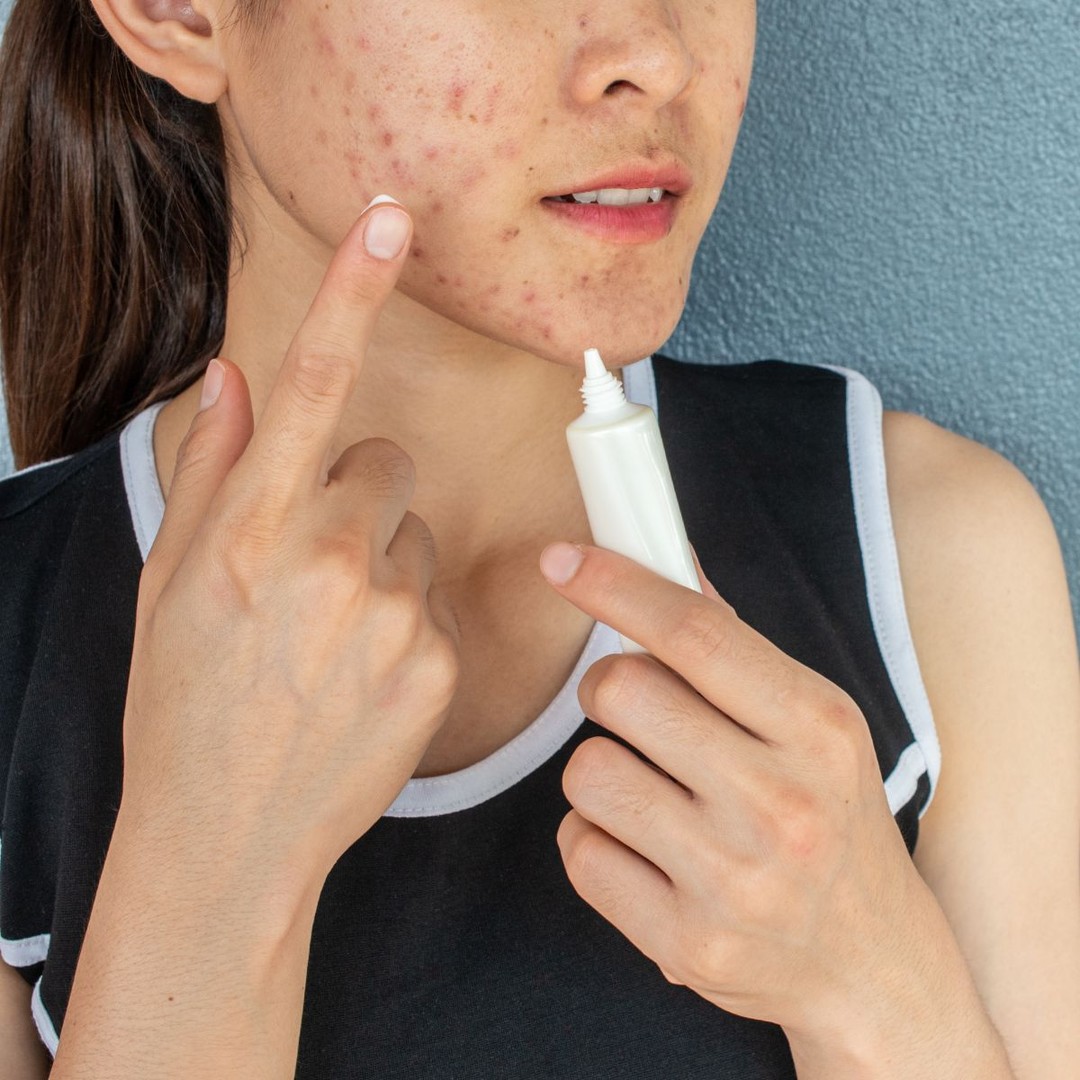
A tube of white cream, a finger pointing to a cheek marked with active breakouts. It is an honest image, the kind that reflects what a lot of people actually deal with rather than a filtered version of skin. That honesty is exactly where the conversation about treating acne should start, with what is really on the skin and what actually helps it.
Benzoyl peroxide has stayed a go to option for a reason. It works by killing P. acnes, the bacteria that contributes to breakouts, rather than simply calming redness on the surface. That distinction matters. Treating the bacteria directly is part of why this ingredient keeps showing up in acne routines even as newer products come and go.
One detail worth paying attention to is strength. A 2.5 or 5.5 percent formula can do the job without the flaking and dryness that higher concentrations sometimes cause. Choosing a lower percentage is not a compromise, it is a way to get the antibacterial benefit while keeping the skin barrier more comfortable, especially for anyone using it regularly rather than as a rare spot treatment.
Applying it all over, not just on individual spots, is part of what makes it effective for prevention. Acne bacteria are not confined to the pimples that are already visible, so treating the broader area helps address breakouts before they fully form. It is a shift in thinking from reactive spot treatment to a more consistent, preventive approach.
Irritation is a real possibility with any active ingredient, and benzoyl peroxide is no exception. If the skin starts to feel tight, look flaky, or turn red, the fix is not to stop altogether. Cutting back on frequency, using it every other day instead of daily, gives the skin room to adjust while still getting the benefit of the treatment over time.
This kind of adjustment is normal and expected, not a sign that the product has failed. Skin tolerance to active ingredients builds gradually, and starting slower is often the reason a routine sticks long term. Rushing frequency before the skin has adapted is one of the more common reasons people give up on a treatment that would have worked with a little patience.
What comes through in a routine like this is that acne treatment is rarely about one dramatic step. It is closer to a steady, low key habit, applying a well chosen formula consistently and adjusting based on how the skin actually responds day to day. That kind of attentiveness tends to matter more than chasing the strongest version of any ingredient.
Breakouts do not respond to guesswork, and consistency paired with the right percentage tends to outperform an aggressive approach. Paying attention to strength, coverage, and frequency turns benzoyl peroxide from a single product into part of a longer, more reliable process for managing acne over time.
Draft story for dermatologistnewyork.org · Skin Health
Moles, skin tags, and lesions can be removed in office with local anesthesia and little discomfort.
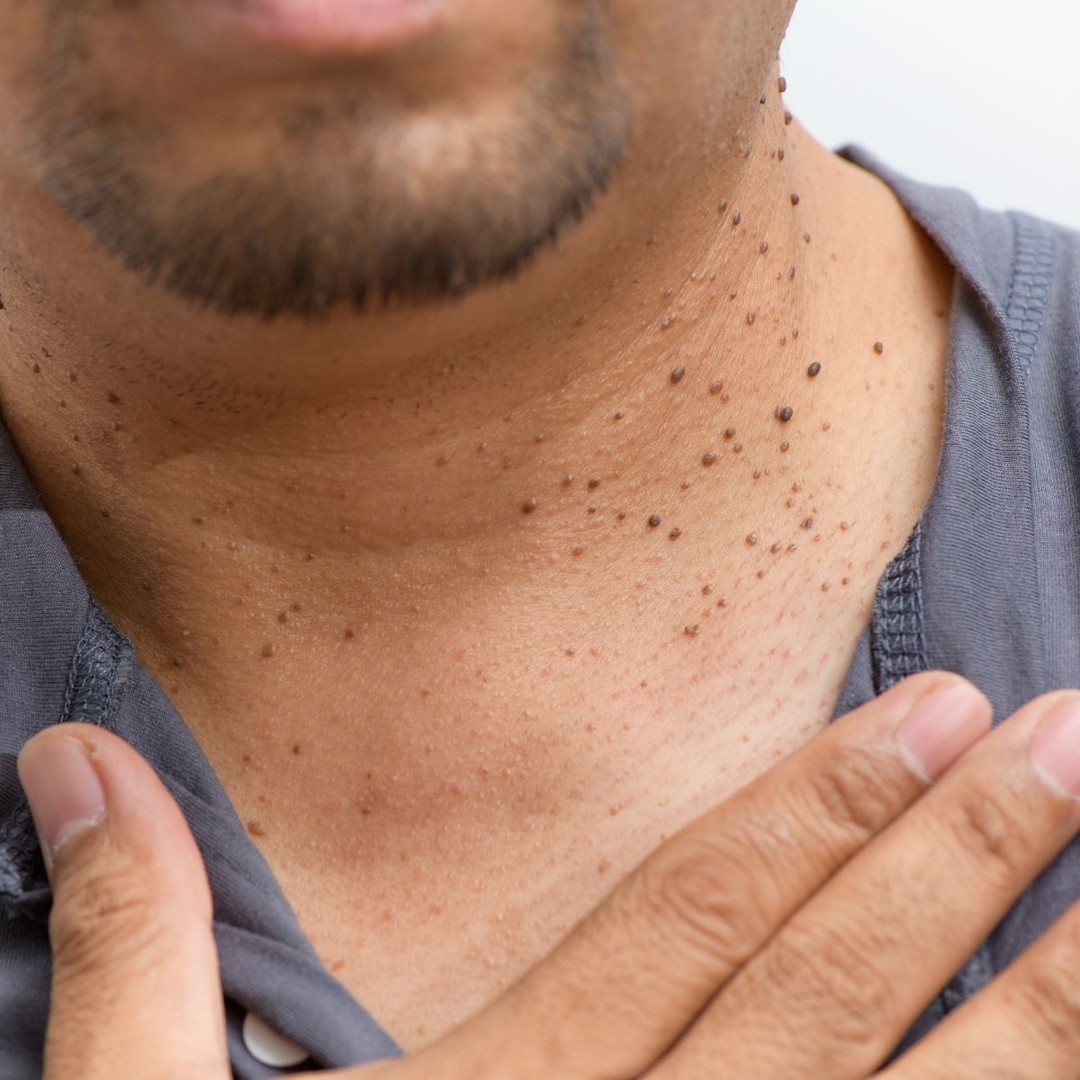
A cluster of small skin growths along the neck and collarbone is one of the most common reasons patients come to see us. Skin tags and small lesions tend to gather in areas where skin folds or rubs against fabric, which is exactly why the neck, the collar line, and the chest show up so often in these conversations during a visit.
When a growth needs to come off rather than simply be monitored, we often turn to a surgical excision. This is a straightforward procedure where the growth, whether it is a mole, a skin tag, or another lesion, is removed directly from the skin. It is a precise, controlled way to take care of something that does not belong there.
The word surgical can sound intimidating, but the reality is far less dramatic. We are not talking about an operating room or a lengthy recovery. An excision is typically a quick, in office procedure. The setup is simple: clean the area, numb it, remove the growth, and close things up if needed.
The part patients ask about most is pain, and it is worth being direct about it. Excisions are usually performed with local anesthesia, which numbs only the specific area being treated. That means the patient stays fully awake and aware throughout, but the sensation of pain is blocked at the source before we ever begin removing anything.
This matters because it removes the biggest source of anxiety before the procedure even starts. Instead of bracing for discomfort, patients can expect pressure or slight tugging at most. The numbing takes effect quickly, and once it has, the actual removal of the growth is often the fastest part of the entire appointment.
Not every mole, tag, or lesion needs to be removed. Some are removed for medical reasons, others simply because they are irritating, catch on clothing or jewelry, or bother the patient cosmetically. A dermatologist evaluates the growth first, since how it looks and behaves informs whether excision, rather than another approach, is the right method.
After a growth is excised, the area is typically small and manageable. Depending on size and depth, it may be closed with stitches or simply left to heal on its own with proper care. Aftercare instructions are usually simple: keep it clean, keep it protected, and give the skin time to do what it does naturally.
The bigger takeaway is that a cluster of tags or a mole that has changed does not have to be something a person just lives with indefinitely. A surgical excision is a routine, well understood tool in dermatology, and knowing that it is done with local anesthesia and minimal discomfort tends to make the decision to act much easier.
Keep reading