How to tell if that foot pain is actually a fracture
The signs of a foot fracture are often easy to miss until walking becomes impossible.
MANHATTAN FOOT SPECIALISTS STAFFTurn your social into search
We turn your posts into editorial stories that bring new search traffic to footdoctorpodiatristnyc.com. Three of yours will be on this page.
Book a demo
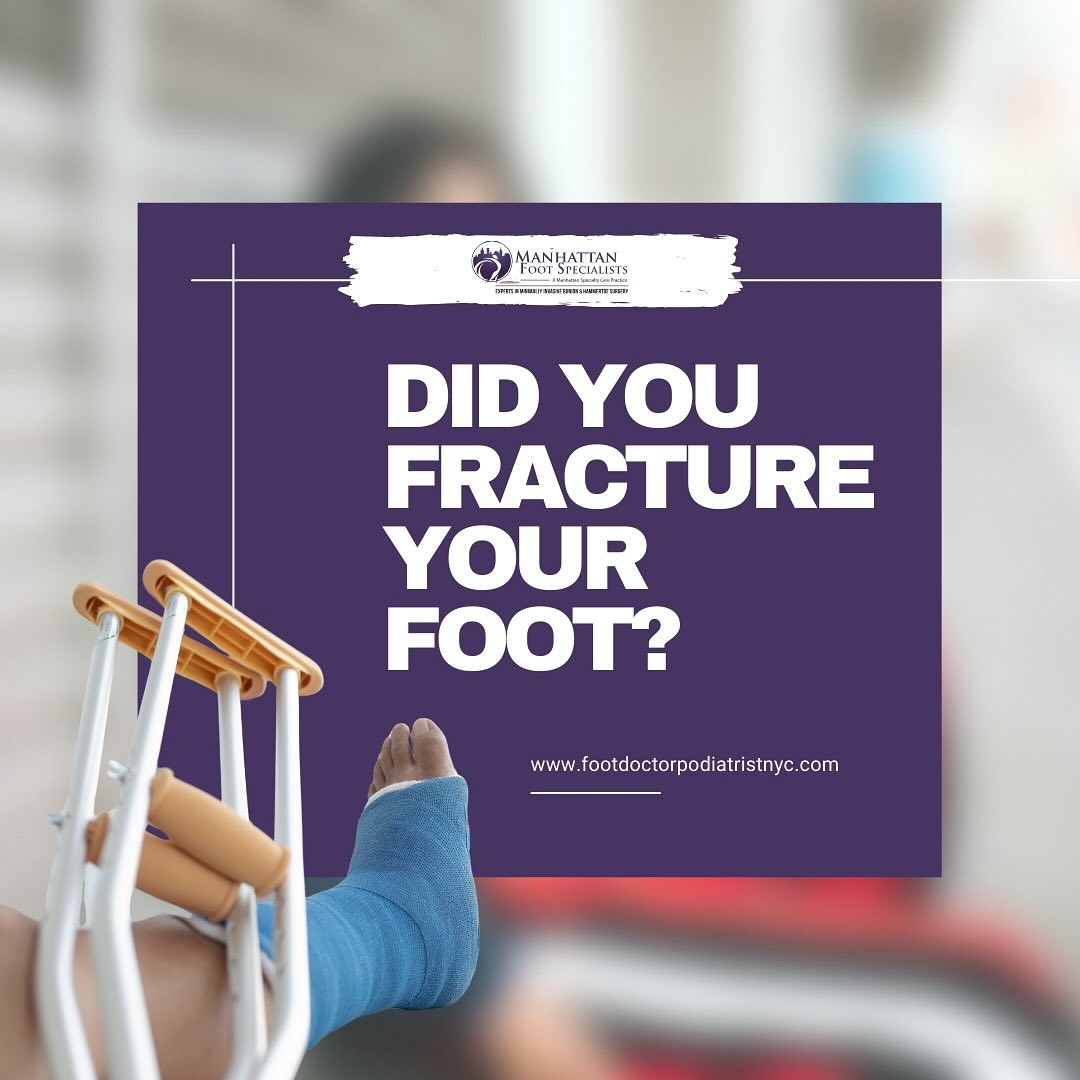
footdoctorpodiatristnyc Did You Fracture Your Foot? 🚨🦶 If you’re experiencing severe pain, swelling, bruising, or difficulty walking after an injury, it might be a foot fracture. Other signs include. Pain. Especially when bearing weight Swelling. Around the affected area Bruising. Discoloration due to internal bleeding Difficulty Walking. Trouble putting weight on your foot Popping Sound. Heard at the time of injury Visit a New York podiatrist for proper diagnosis and treatment! https.//www.footdoctorpodiatristnyc.com/ #FootFracture #NYCPodiatrist #injurycare
The signs of a foot fracture are often easy to miss until walking becomes impossible.
MANHATTAN FOOT SPECIALISTS STAFFHow it works
Same as today. Nothing changes on Instagram.
We turn your post into a full story in your voice within the hour.
One click publishes it to footdoctorpodiatristnyc.com. Nothing goes live without you.
Your stories
Nothing was published anywhere. You decide that. Every word will come from your own posts, your own photos and your own treatments.
Injury Care · From your post
The signs of a foot fracture are often easy to miss until walking becomes impossible.
“Did You Fracture Your Foot? 🚨🦶 If you’re experiencing severe pain, swelling, bruising, or difficulty walking after an injury, it might be a foot fracture. Other signs include. Pain. Especially when bearing weight Swelling. Around the affected area Bruising. Discoloration due to internal bleeding Difficulty Walking. Trouble putting weight on your foot Popping Sound. Heard at the time of injury Visit a New York podiatrist for proper diagnosis and treatment! https.//www.footdoctorpodiatristnyc.com/ #FootFracture #NYCPodiatrist #injurycare”
Foot Surgery · From your post
A side by side look at what minimally invasive bunion and hammertoe correction actually leaves behind.
“👣 Minimally Invasive Foot Surgery. No Scars, Just Results! Say goodbye to foot pain without the fear of big scars! At Manhattan Foot Specialists, we offer advanced minimally invasive techniques for. ✅ Bunion correction ✅ Hammertoe surgery ✅ Other foot deformities These cutting edge procedures provide faster recovery, less pain, and minimal to no visible scarring. so you can walk comfortably & confidently! 📍 Schedule a consultation today! 👉 https.//www.footdoctorpodiatristnyc.com/ #FootHealth #NoScarSurgery #PodiatristNYC #BunionCorrection #HammertoeSurgery #minimallyinvasive”
Foot Health · From your post
Custom orthotics work by correcting the mechanics underneath the pain, not just the symptom on top.
“Suffering from flat feet, heel pain, shin splints, or runner’s knee? 😩 Foot orthotics can help! At Manhattan Foot Specialists, we offer custom orthotics designed to correct your foot mechanics and alleviate pain. Regain your comfort and mobility. Click the link in our bio to explore treatment options! ➡️ https.//www.footdoctorpodiatristnyc.com/procedures/orthotics/ #FootOrthotics #FlatFeet #HeelPain #ShinSplints #RunnersKnee #PodiatryNYC #FootHealth”
One social post becomes another searchable entry point to Manhattan Foot Specialists.
Our own magazine. Clicks and citations from Google Search Console, as of September 15, 2026.
Draft story for footdoctorpodiatristnyc.com · Injury Care
The signs of a foot fracture are often easy to miss until walking becomes impossible.
A twisted ankle, a dropped weight, a hard landing after a jump: foot injuries happen fast, and the pain that follows can feel confusing rather than clear. Is it a bad bruise or something more serious? That question is exactly why we see so many patients walk in unsure of what they are actually dealing with, only to learn an hour later that the bone itself did not hold up.
A true foot fracture rarely stays quiet. The most common signal is pain that gets sharply worse the moment weight is placed on the foot, especially when trying to stand or take a normal step. If putting any pressure on the foot feels genuinely unbearable rather than just sore, that reaction is worth paying attention to instead of pushing through.
Swelling is another marker, particularly when it builds quickly around one specific area rather than spreading evenly across the foot. Bruising often follows soon after, and that discoloration is not cosmetic. It usually points to internal bleeding beneath the skin, which happens when the injury is significant enough to affect deeper tissue and not just the surface.
Difficulty walking is the sign most people notice first, simply because it is the hardest to ignore. Trouble putting weight on the foot, an uneven gait, or needing to shift weight onto the other leg are all practical clues that something structural may be wrong. It is the body's way of protecting an injury before a diagnosis even confirms one.
One detail that surprises people is the popping sound some patients recall hearing at the exact moment of injury. It is not something everyone experiences, but when it happens, it tends to stick in memory. That sound, paired with pain and swelling, is often enough reason on its own to have the foot properly examined.
Foot fractures can be easy to underestimate because the foot still technically moves, even when something inside it is broken. That mobility can trick people into assuming the injury is minor. Without a proper evaluation, though, there is no reliable way to know whether the bone is stable, displaced, or healing correctly once weight bearing resumes too soon.
This is where a podiatrist becomes useful rather than optional. Diagnosing a fracture accurately usually requires imaging and a hands on evaluation, not just a visual guess. We look at the specific pattern of pain, swelling, and function to determine what is actually happening beneath the surface and how it should be treated from that point forward.
If severe pain, swelling, bruising, or difficulty walking shows up after an injury, treat it as a reason to get evaluated rather than wait it out. A fracture managed early tends to be far more manageable than one left to guess about for days. Visit a New York podiatrist and let a proper diagnosis, not assumption, guide the next step.
Draft story for footdoctorpodiatristnyc.com · Foot Surgery
A side by side look at what minimally invasive bunion and hammertoe correction actually leaves behind.
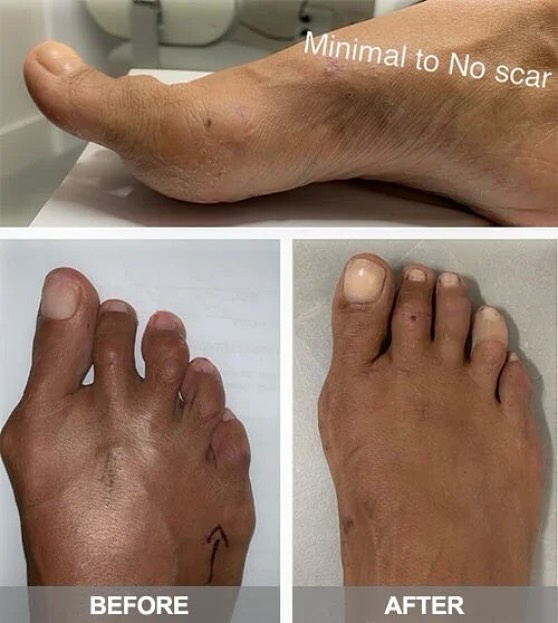
A foot before and after correction tells a more honest story than most before and after photos, because there is nowhere for a bunion to hide. The widened joint, the crowded toes, the faint marker line drawn where an incision will go all sit in plain view. What changes afterward is not just alignment, it is how little evidence remains that anything was done at all.
The marked up foot shows the planning that goes into a bunion correction before any instrument touches skin. That arrow and the small marked line are not decoration, they are a surgical map, drawn precisely so the correction happens through the smallest possible opening. The crowding between the big toe and its neighbors is visible here in a way that explains why the joint eventually needs attention.
Traditional bunion and hammertoe surgery often means a longer incision and a longer visible line once healing is done. Minimally invasive technique works through much smaller access points, which is the entire reason the scarring outcome looks so different. Less cutting through skin and tissue does not just change the cosmetic result, it is also what shortens recovery and reduces the pain that follows the procedure.
The top image makes the point directly, with the toe realigned and the skin along the foot showing minimal to no visible scar. There is no dramatic seam, no raised line drawn across the top of the foot. What is left is closer to the foot's original surface, which is exactly the detail patients ask about most before they agree to any kind of surgery.
Bunions and hammertoes rarely show up alone. The after photo shows toes that sit straighter next to each other, not just a corrected big toe joint. That is the practical benefit of treating foot deformities as related structural issues rather than isolated complaints, since correcting alignment at one joint often improves the position and comfort of the toes around it.
Faster recovery and less pain matter as much as the visible outcome, and the two are connected. Smaller incisions mean less trauma for the body to repair, which is part of why patients are able to bear weight and return to normal footwear sooner than they would after a more invasive open procedure. The cosmetic result is a byproduct of a gentler process, not the main goal of it.
Walking comfortably again is the actual measure of success here, even though the photos focus on appearance. A foot that no longer aches with each step, that fits into regular shoes without pressure on a bunion or a curled toe, is the outcome patients are ultimately asking for when they come in describing pain rather than asking about scarring.
Every case shown here started with an evaluation of the specific deformity, from the degree of the bunion to how the surrounding toes were affected. A consultation is where that assessment happens, and where a minimally invasive approach gets confirmed as appropriate for the individual foot in question rather than assumed as a universal fix. That first conversation shapes everything that follows.
Draft story for footdoctorpodiatristnyc.com · Foot Health
Custom orthotics work by correcting the mechanics underneath the pain, not just the symptom on top.
Foot pain rarely stays in one place. Flat feet can pull on the shin, throw off the knee, and eventually change the way someone walks without them even noticing. Heel pain, shin splints, and runner's knee often look like separate problems, but at Manhattan Foot Specialists we tend to trace them back to the same source: how the foot is actually built and how it strikes the ground.
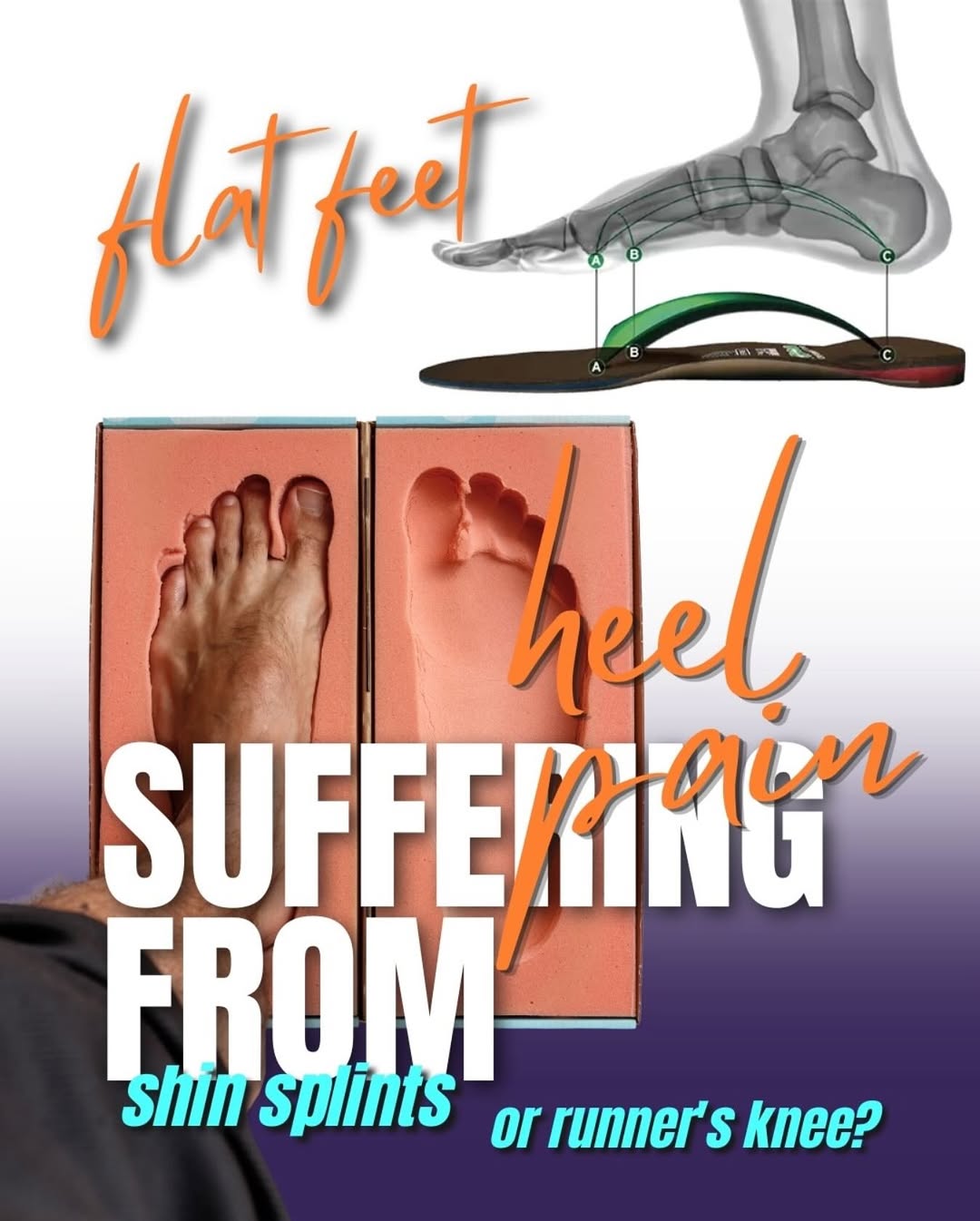
That structural view is easiest to see in plaster. A foot impression, pressed into a foam mold with every toe and arch line intact, captures exactly how weight distributes across someone's foot in a way a verbal description never could. It is the starting point for understanding where the arch collapses, where pressure builds, and where support needs to be added.
An x ray of the foot and ankle tells a similar story from the inside. You can see the long arch running from heel to forefoot, and in a flat foot that arch sits lower than it should, changing the angles at the ankle joint above it. Layered against an orthotic insole, that view illustrates how a contoured support is meant to lift and hold the arch through each step.
That is the mechanical idea behind a custom orthotic. It is not a generic cushion dropped into a shoe. It is shaped to an individual foot's contact points, built to correct the mechanics that are causing pain rather than simply padding the area around it. For flat feet specifically, that means restoring some of the arch structure the foot is not providing on its own.
Shin splints and runner's knee are common examples of pain traveling. When the foot rolls inward more than it should, the lower leg and knee absorb stress they were not designed to handle repeatedly. Runners feel this first, since the impact repeats thousands of times over a single run, but it shows up in walkers and standing workers too, just on a slower timeline.
Heel pain follows its own version of the same pattern. Every step concentrates force through the heel first, and when the arch is not managing that load correctly, the heel takes on more than its share. Over time that repeated strain is what produces the sharp, localized pain that makes mornings and long days on your feet especially difficult to get through.
Custom orthotics are built around that individual mechanic rather than a general shoe size or arch type. That is the distinction we lead with at Manhattan Foot Specialists: correcting the way a foot functions, so the knee, shin, and heel stop compensating for it. We walk through treatment options directly with patients so the plan matches what their own foot impression and imaging actually show.
If flat feet, heel pain, shin splints, or runner's knee sound familiar, the mechanics are worth examining before the pain becomes routine. Treatment options, including custom orthotics, are outlined on our website, and the process starts with understanding your foot the way we do here: through an actual impression and scan of how you stand and move, not a guess.
Keep reading