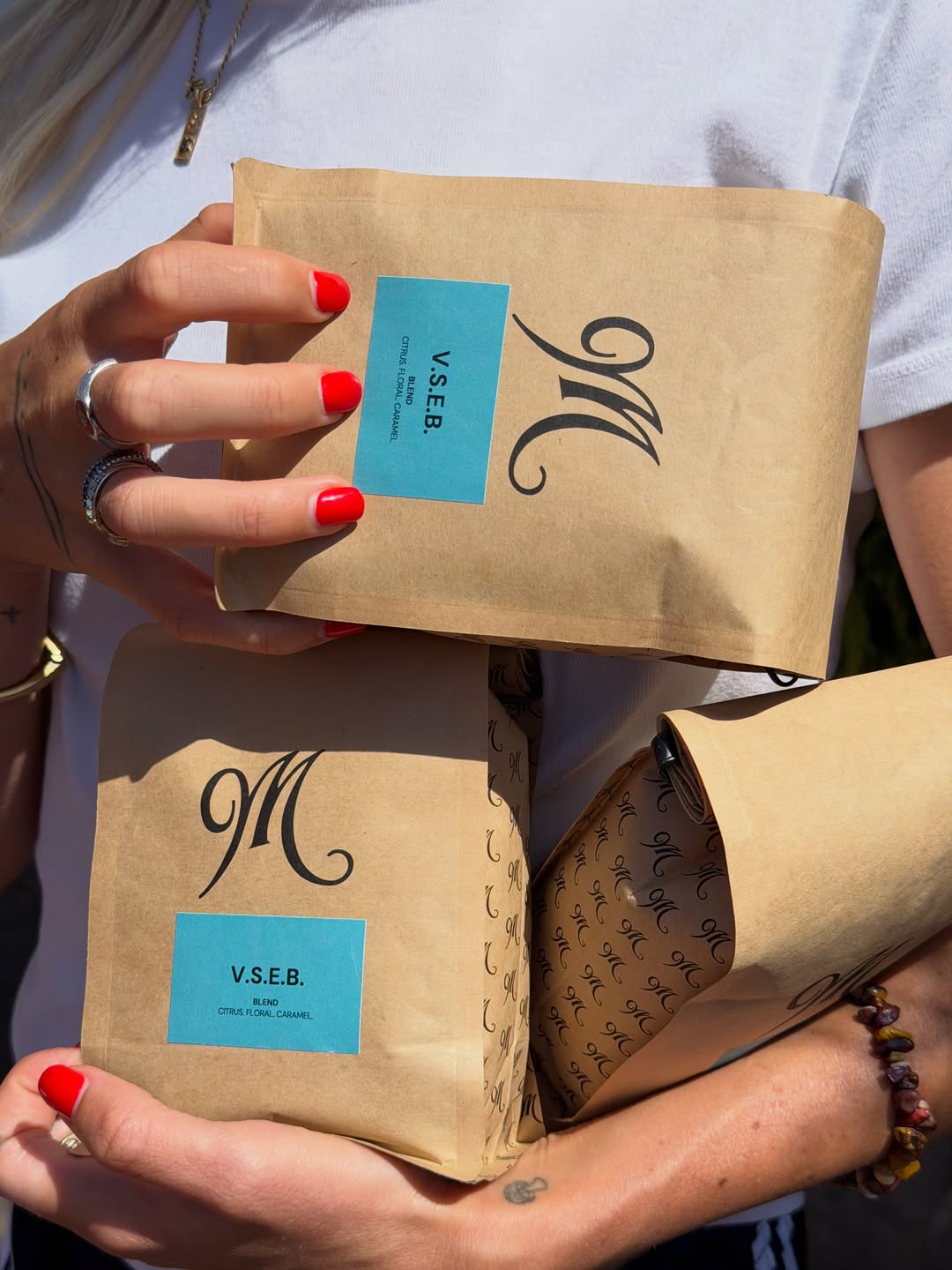
Inside the blend we call V.S.E.B.
Our Very Special Espresso Blend pairs Mexican and Ethiopian coffees for a cup that leans bright, balanced, and a little floral.
MENOTTI'S COFFEE STOP STAFFTurn your social into search
We turn your posts into editorial stories that bring new search traffic to menottis.com. Three of yours will be on this page.
Book a demo
menottis the V.S.E.B., or Very Special Espresso Blend, combines coffees from Mexico and Ethiopia for a bright, balanced blend with notes of citrus, florals, and caramel. we recommend this one as an espresso to bring out its sweetness and creamy flavor. pick up a bag (or several) in store & online at menottis.com
Our Very Special Espresso Blend pairs Mexican and Ethiopian coffees for a cup that leans bright, balanced, and a little floral.
MENOTTI'S COFFEE STOP STAFFHow it works
Same as today. Nothing changes on Instagram.
We turn your post into a full story in your voice within the hour.
One click publishes it to menottis.com. Nothing goes live without you.
Your stories
Nothing was published anywhere. You decide that. Every word will come from your own posts, your own photos and your own menu.
Coffee Notes · From your post
Our Very Special Espresso Blend pairs Mexican and Ethiopian coffees for a cup that leans bright, balanced, and a little floral.
“the V.S.E.B., or Very Special Espresso Blend, combines coffees from Mexico and Ethiopia for a bright, balanced blend with notes of citrus, florals, and caramel. we recommend this one as an espresso to bring out its sweetness and creamy flavor. pick up a bag (or several) in store & online at menottis.com”
New Drink · From your post
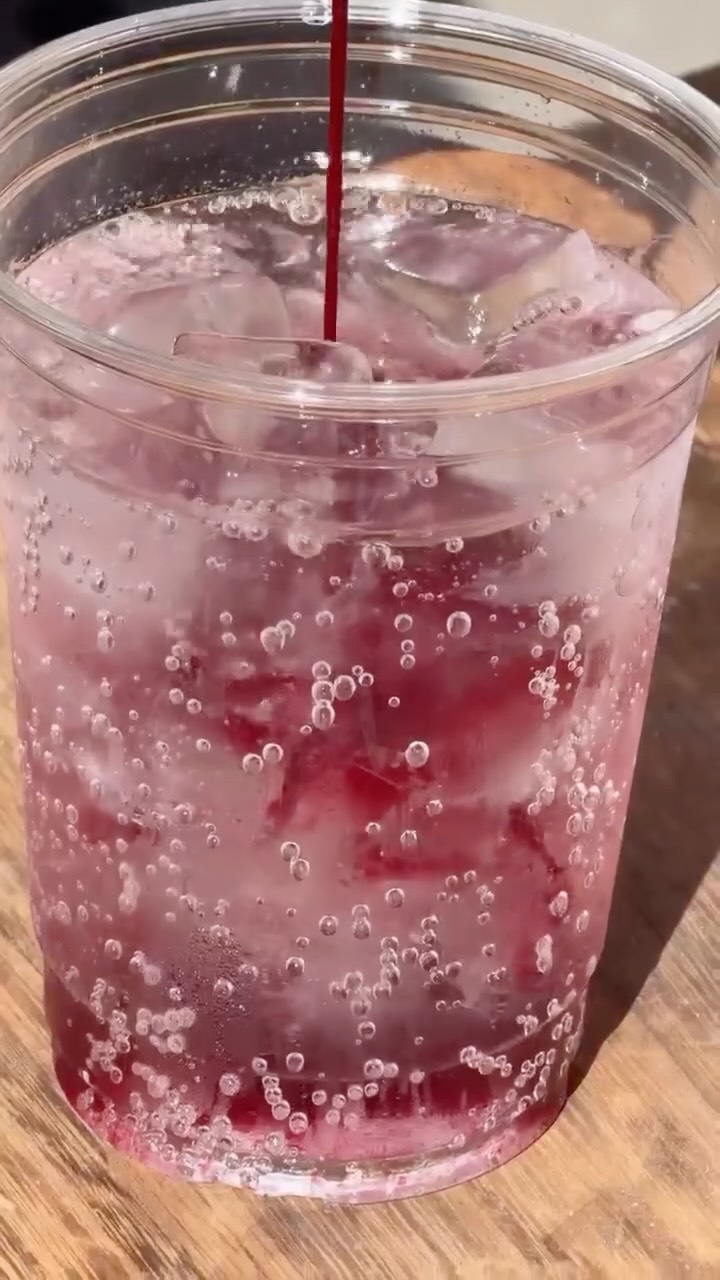
A dark pour of espresso or matcha drops into a bright, fizzy blueberry soda for a drink built to be watched as much as sipped.
“blueberry soda is here! served with your choice of matcha or espresso for a bright & refreshing drink.”
Neighborhood coffee · From your post
Open 7 am to 6 pm across Venice, Culver, and West LA, Menotti's is built around showing up, not standing out.
“your neighborhood coffee stop open 7 am to 6 pm at Venice, Culver, and West LA.”
One social post becomes another searchable entry point to Menotti's Coffee Stop.
Our own magazine. Clicks and citations from Google Search Console, as of September 15, 2026.
Draft story for menottis.com · Coffee Notes
Our Very Special Espresso Blend pairs Mexican and Ethiopian coffees for a cup that leans bright, balanced, and a little floral.
V.S.E.B. stands for Very Special Espresso Blend, and the name is less a marketing flourish than a straightforward description. It is a blend built specifically with espresso in mind, combining coffees from Mexico and Ethiopia into something that reads bright and balanced rather than heavy or one note. The bags stack up in kraft paper printed with our script M, a small detail that shows up clearly whether they are sitting on a shelf or being carried out the door.
The flavor profile we point to is citrus, florals, and caramel, three notes that do not always show up together in the same cup. Citrus tends to bring acidity forward, florals add lift, and caramel rounds things out with a little weight underneath. Blending coffees from two different growing regions is one way to get all three without leaning too hard on any single characteristic, which is part of why this one works as an everyday espresso rather than a novelty.
We recommend pulling V.S.E.B. as espresso specifically, since that method tends to highlight the sweetness and creamy texture that make the blend distinct. Espresso concentrates flavor and body in a way that drip brewing does not always manage, so the caramel notes come through thicker and the citrus stays sharp instead of fading into the background. It is a small technical choice, but it changes how the cup actually tastes once it hits the tongue.
That does not mean espresso is the only way to enjoy it, just the one we think shows the blend at its best. A bag of V.S.E.B. can still work in a home setup built around drip or pour over, though the balance between sweetness and brightness may shift slightly depending on the method. If espresso is not part of your routine, it is still worth trying the blend and noticing how the notes hold up on their own.
The bags themselves are simple, brown kraft paper with a light blue label that lists the blend name, the word blend, and the flavor notes in plain type. There is no elaborate packaging story here, just a bag designed to be picked up, carried, and reordered. Multiple bags stacked together, as they often are when someone is buying more than one at a time, show how consistent that labeling stays from batch to batch.
Mexico and Ethiopia as origin points are worth sitting with for a second. These are two regions known for very different coffee characters, one often leaning toward nuttier, more balanced profiles and the other frequently associated with lighter, more floral and fruit forward cups. Combining them into a single espresso blend is a way of asking both origins to do a specific job, rather than showcasing either one individually the way a single origin coffee might.
Picking up V.S.E.B. does not require a special occasion. It is available in store for anyone stopping by, and it is also listed online at menottis.com for anyone who would rather order ahead or restock without a trip in. Grabbing a bag or several makes sense if espresso is part of your daily rhythm, since a blend built for that method tends to get used up quickly once it becomes routine around the house.
In the end, V.S.E.B. is a coffee built around a clear intention: bright citrus, a floral lift, and a caramel finish, all pulled together through espresso. It is not trying to be everything at once, just a well balanced cup that holds its shape from the first sip to the last. Whether it ends up in a home machine or a to go cup, the blend is meant to be used, not just admired on a shelf.
Draft story for menottis.com · New Drink
A dark pour of espresso or matcha drops into a bright, fizzy blueberry soda for a drink built to be watched as much as sipped.
Blueberry soda is here, and the appeal starts before the first sip. Poured over ice, it fills the cup with a soft pink fizz that catches the light. A thin, dark stream drops in after, either matcha or espresso, cutting straight down through the soda until it pools and spreads. It is a drink you watch before you drink it.
The base itself is simple, blueberry and soda water, nothing more complicated than that. Carbonation is the whole point here. Watching the bubbles rise and cling to the ice, catching the pink tint of the liquid as they climb, gives the drink a kind of visual fizz that matches the actual fizz in the glass.
The choice comes down to matcha or espresso, and each one changes the drink in its own way. Matcha brings a grassy, vegetal edge that sits against the sweetness of the blueberry without fighting it. Espresso goes the other direction, adding a roasted, slightly bitter backbone that deepens the soda instead of brightening it further.
Either pour is added straight into the glass, not stirred in ahead of time. That single choice is what makes the drink interesting to watch. The concentrate falls in a thin, deliberate line, holding its shape for a moment before it starts to bleed into the soda underneath, turning the clear pink into something cloudier and more complex.
Once it is stirred, the layers disappear and the drink becomes one thing: a fizzy, lightly caffeinated blueberry soda with a flavor that shifts depending on which pour you picked. Left unstirred for even a minute, it stays split, dark on top, pink below, ice doing its slow work of pulling everything together on its own.
This is a warm weather drink first and a caffeinated one second. The soda water and ice do most of the work of keeping it refreshing, while the matcha or espresso adds just enough weight to keep it from feeling like plain fruit soda. It reads as something to order on a bright afternoon rather than a first thing in the morning pick me up.
Ordering it comes down to what kind of caffeine mood you are in that day. Matcha keeps the drink lighter and a little more herbal, while espresso pulls it toward something closer to a soda shop take on a coffee drink. Neither version overtakes the blueberry, which stays the throughline no matter which pour ends up in the glass.
The blueberry soda is available now, ready whenever the choice between matcha and espresso needs making. It is a small addition to the lineup, but one built around a drink that is genuinely fun to watch come together, glass by glass, pour by pour, on the counter.
Draft story for menottis.com · Neighborhood coffee
Open 7 am to 6 pm across Venice, Culver, and West LA, Menotti's is built around showing up, not standing out.
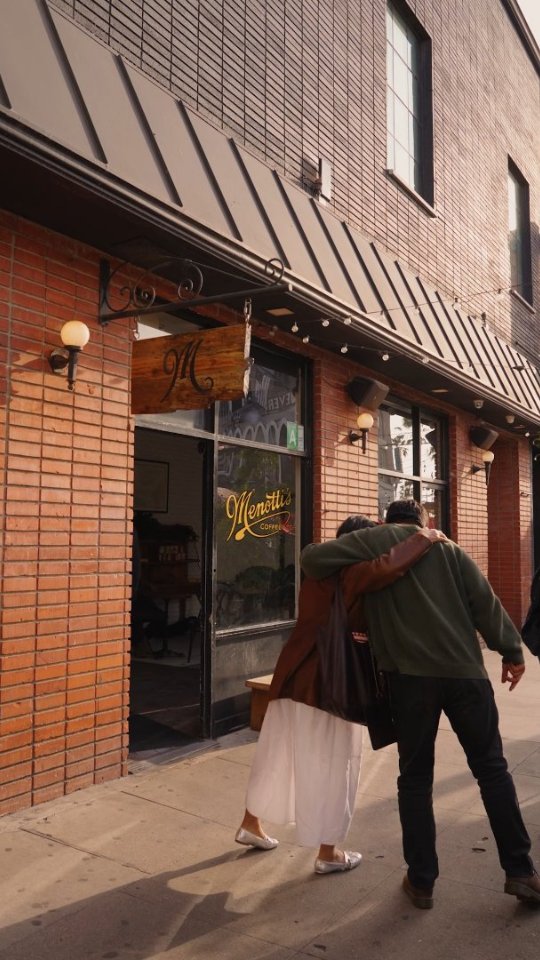
There is a particular kind of storefront that does not need to announce itself. Brick facade, a hand painted M on wood, a black awning catching morning light before the street gets busy. Menotti's sits in that category. It does not perform for the sidewalk. It just opens, every day, at the same hour, in the same three places, and lets that consistency do the talking.
The hours are simple on purpose: 7 am to 6 pm. That window covers the entire useful stretch of a day without pretending to be something else at night. It is not trying to become a bar after dark or a late night hangout. It is a coffee stop, named exactly that, and the schedule reflects a business that knows what part of the day it belongs to.
Venice, Culver, and West LA are not random locations strung together for coverage. They are neighborhoods people move between constantly, on foot, by car, in the middle of errands. Having a Menotti's in each one means the habit does not break just because someone's day starts in one part of the westside and ends in another. The coffee stop travels with the routine instead of asking the routine to travel to it.
That kind of repetition is what turns a coffee shop into a fixture rather than a destination. Nobody plans a special trip to a neighborhood spot. They just end up there, again, because it is close and it is open and it works. Three locations sharing the same hours and the same name make that kind of return visit almost automatic, without anyone having to think about it.
Outside the Venice storefront, the brick and iron scrollwork above the entrance give it a settled, unhurried look, the kind of facade that has clearly been there long enough to stop feeling new. String lights run along the underside of the awning. A small sign with the letter M hangs just above eye level, understated enough that you could walk past it if you were not already looking for it.
That understatement seems intentional. A neighborhood coffee stop does not need a dramatic entrance. It needs a door that is easy to find twice a day if that is what someone wants, and easy to walk past the other days without feeling like they missed something. The quiet signage matches the quiet promise of the hours themselves: available, dependable, not asking for attention it has not earned.
Right outside that same doorway, two people meet with a hug on the sidewalk, the kind of embrace that happens naturally when a coffee stop becomes a place where people cross paths. It is a small, unstaged moment, but it says something about what the three locations are actually for. Coffee is the reason to stop. The sidewalk in front of it is where the rest happens.
That overlap between errand and encounter is basically the whole idea. A coffee stop open from morning through early evening becomes part of the texture of a neighborhood, not just a transaction point. Whether someone is grabbing a cup before work or catching a familiar face on the way out, the same three doors in Venice, Culver, and West LA are open, on schedule, ready for both.
Keep reading