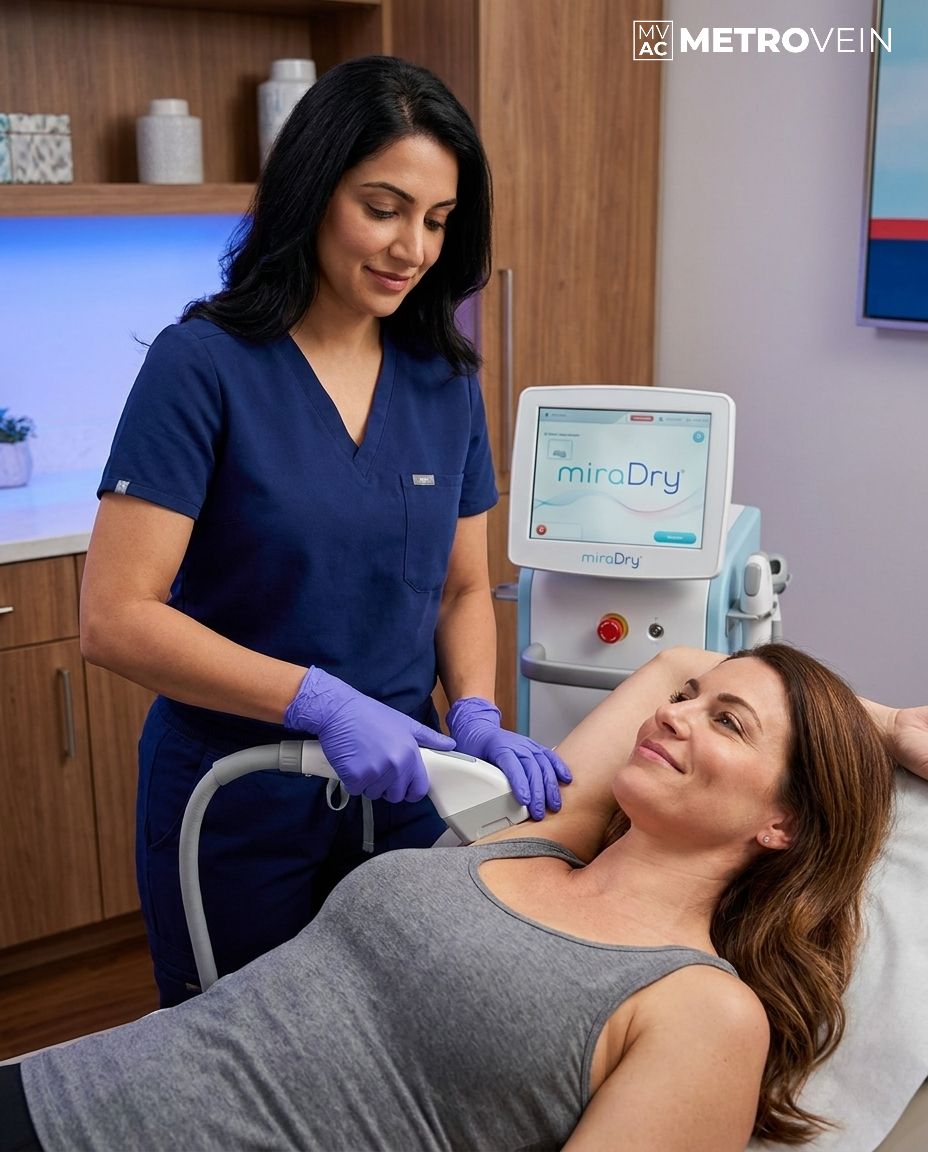
Treating excessive underarm sweating without the recovery time
A closer look at how we approach excessive sweating with MiraDry, a permanent option built for a fast moving city.
METROPOLITAN VEIN AND AESTHETIC CENTER STAFFTurn your social into search
We turn your posts into editorial stories that bring new search traffic to nymetrovein.com. Three of yours will be on this page.
Book a demo
nymetrovein La sudoración excesiva afecta a millones de personas activas. Las glándulas sudoríparas axilares pueden producir más de lo necesario, causando manchas visibles en la ropa y preocupaciones constantes por el olor. Esto se vuelve más difícil de manejar con el calor y el ritmo acelerado de la ciudad. Sin embargo, sudar en exceso no significa resignarse. Los tratamientos modernos como MiraDry son permanentes, mínimamente invasivos y diseñados para adaptarse a tu vida sin tiempo de recuperación. Agenda tu consulta hoy. Tags 🏷️ MiraDry treatment, excessive sweating, confidence, MiraDry, treat excessive sweating
A closer look at how we approach excessive sweating with MiraDry, a permanent option built for a fast moving city.
METROPOLITAN VEIN AND AESTHETIC CENTER STAFFHow it works
Same as today. Nothing changes on Instagram.
We turn your post into a full story in your voice within the hour.
One click publishes it to nymetrovein.com. Nothing goes live without you.
Your stories
Nothing was published anywhere. You decide that. Every word will come from your own posts, your own photos and your own treatments.
Treatment Notes · From your post
A closer look at how we approach excessive sweating with MiraDry, a permanent option built for a fast moving city.
“La sudoración excesiva afecta a millones de personas activas. Las glándulas sudoríparas axilares pueden producir más de lo necesario, causando manchas visibles en la ropa y preocupaciones constantes por el olor. Esto se vuelve más difícil de manejar con el calor y el ritmo acelerado de la ciudad. Sin embargo, sudar en exceso no significa resignarse. Los tratamientos modernos como MiraDry son permanentes, mínimamente invasivos y diseñados para adaptarse a tu vida sin tiempo de recuperación. Agenda tu consulta hoy. Tags 🏷️ MiraDry treatment, excessive sweating, confidence, MiraDry, treat excessive sweating”
Postpartum Care · From your post
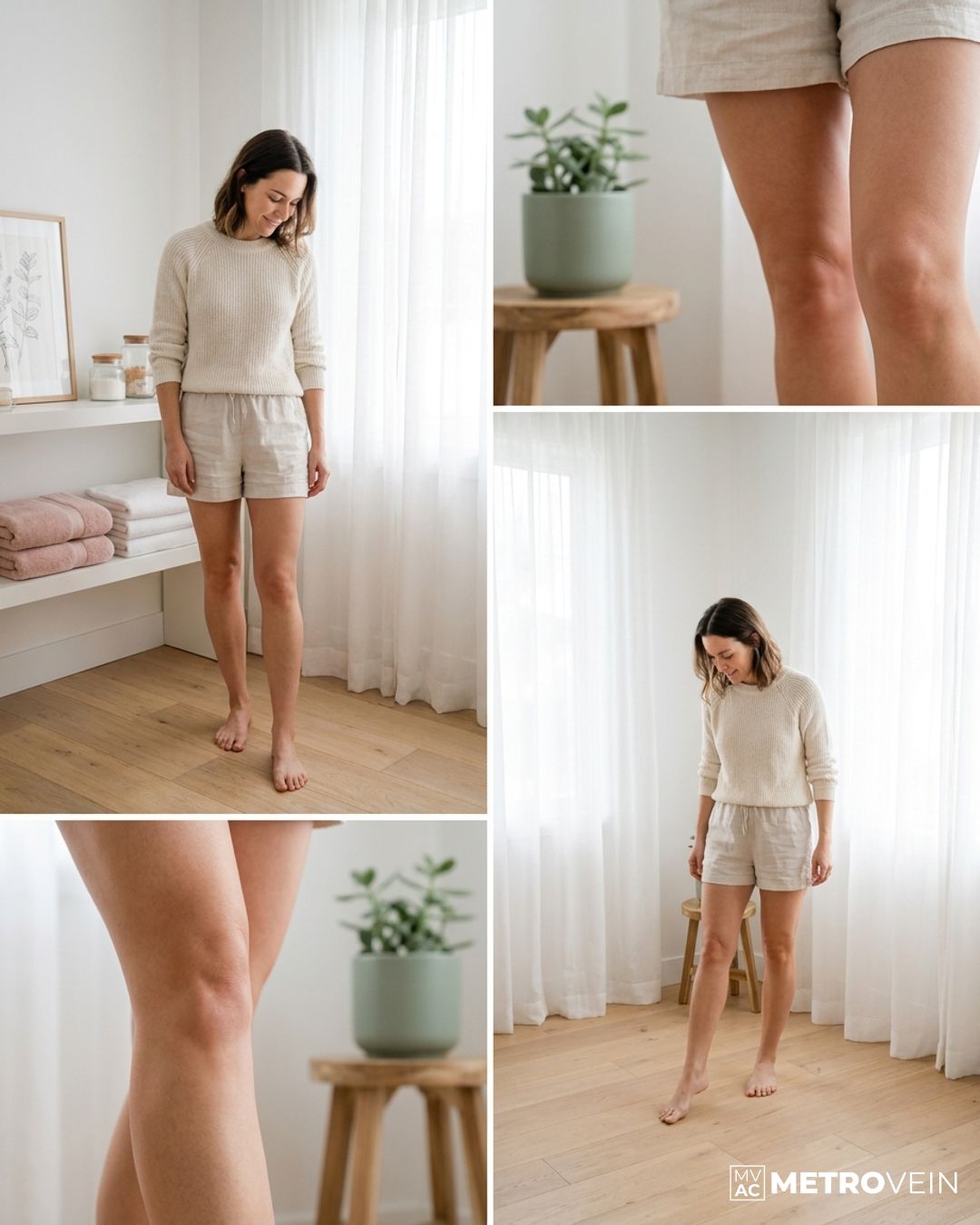
When leg veins do not fade months after childbirth, sclerotherapy offers a nonsurgical way to treat them.
“La escleroterapia es ideal para las venas varicosas y arañas vasculares persistentes que no desaparecen 3 6 meses después del parto. Este procedimiento utiliza microinyecciones de una solución especial, sin necesidad de cirugía ni anestesia general, para cerrar las venas afectadas y restaurar la circulación. ¿El embarazo cambió la apariencia de tus piernas y los síntomas no han desaparecido? Descubre el tratamiento adecuado para ti en el enlace de nuestra biografía. Tags 🏷️ sclerotherapy doctor, feel better on your feet, vascular care clinic, goodbye spider veins, vein consultation nyc”
Vein Health · From your post
Before deciding what to wear each morning becomes a daily negotiation with visible veins, it helps to know that discomfort is not permanent.
“¿Cuántas veces has elegido ropa para esconder tus venas en lugar de ponerte lo que realmente querías? Lo que parece una decisión pequeña tiene un costo real. la confianza que pierdes cada día que esperas. No tienes que seguir esperando para sentirte cómoda en tu propia piel. 📞 Agenda tu consulta en el enlace de nuestra biografía. Tags 🏷️ nyc varicose vein treatment, pain free vein treatment, restore leg comfort, vein health matters, end vein pain”
One social post becomes another searchable entry point to Metropolitan Vein and Aesthetic Center.
Our own magazine. Clicks and citations from Google Search Console, as of September 15, 2026.
Draft story for nymetrovein.com · Treatment Notes
A closer look at how we approach excessive sweating with MiraDry, a permanent option built for a fast moving city.
Excessive sweating is not rare. It affects millions of active people, and for many of them it shows up in one specific place: the underarms, where sweat glands can produce far more than the body actually needs. The result is visible on clothing, and it tends to show up at the exact moments people can least afford to think about it.
In a city that moves as fast as New York does, that problem does not stay contained to one part of the day. Heat, a packed schedule, back to back meetings, a subway platform, none of it pauses to accommodate a change of clothes. What starts as an occasional inconvenience becomes something people plan around, and eventually something they stop mentioning out loud.
The visible marks and the ongoing worry about odor both trace back to the same source: axillary sweat glands doing more work than the situation calls for. Antiperspirants and wardrobe workarounds treat the surface, but they do not change the output. That gap is exactly where a treatment like MiraDry is designed to make a difference, by addressing the glands directly rather than managing around them.
We treat this in a straightforward setting, using a handheld device positioned against the underarm while a patient reclines comfortably. There is no elaborate preparation involved. The session is built to fit into an existing schedule rather than replace it, which matters for people who came in already thinking about the next thing on their calendar.
MiraDry is described as permanent, which is a meaningful word in this context. Sweat glands, once addressed, do not regenerate the way skin does. That is different from a maintenance treatment that needs to be repeated every few months just to hold a result steady. It is also minimally invasive, with a design that avoids the extended downtime associated with more involved procedures.
That last point is often the deciding factor for people who considered treatment before and hesitated. A procedure that demands a week of recovery is hard to justify against a busy life. One built to slot back into normal activity without a lengthy pause is a different proposition entirely, and it changes who is realistically able to consider it.
None of this requires resigning to the problem as permanent in the other direction, something to simply live with indefinitely. Modern options exist specifically because excessive sweating is common enough, and disruptive enough, to warrant a real solution rather than a workaround. The first step is simply a conversation about whether MiraDry fits a particular case.
We schedule consultations to talk through exactly that, one on one, before anyone commits to a treatment plan. If underarm sweating has been shaping wardrobe choices or daily routines longer than it should, the conversation itself costs nothing but the time to have it, and it is the clearest way to find out what changes from here.
Draft story for nymetrovein.com · Postpartum Care
When leg veins do not fade months after childbirth, sclerotherapy offers a nonsurgical way to treat them.
Pregnancy changes a lot about how legs look and feel, and for many women that change does not reverse itself once the baby arrives. Varicose veins and spider veins can linger for months afterward, showing up as visible lines or clusters just beneath the skin. When three to six months pass with no improvement, it is worth treating those veins as a medical question rather than something to simply wait out.
That waiting window matters. The body needs time to recover its circulation naturally after childbirth, and plenty of vein changes do fade on their own during that stretch. But when veins are still prominent past six months, they are less likely to resolve without intervention. That is the point where we start talking with patients about options instead of encouraging more patience.
Sclerotherapy treats affected veins with microinjections of a specialized solution delivered directly into the vein. There is no incision, no general anesthesia, and no operating room involved. The solution works from inside the vein, causing it to close so blood reroutes through healthier pathways nearby. It is a targeted procedure built around the specific veins causing trouble, not a broad treatment of the whole leg.
Closing the affected vein does more than change its appearance. It restores more efficient circulation in that area, which is often where the physical symptoms come from in the first place: heaviness, aching, or that tired feeling in the legs by the end of the day. Treating the vein itself addresses both the visible line and the discomfort that tends to travel with it.
Because there is no general anesthesia and no surgical recovery involved, sclerotherapy fits into a schedule more easily than many people expect. It is the kind of appointment that can happen without reorganizing an entire week around it, which matters for anyone already managing the demands of early parenthood on top of everything else.
Every postpartum body carries its own timeline, and the visible signs are usually the clearest guide. Spider veins often look like fine, web like clusters near the surface, while varicose veins tend to be larger, more raised, and sometimes twisted along the length of the leg. Noticing which pattern applies, and whether it has changed at all since delivery, is useful information to bring into a consultation.
Symptoms are just as telling as appearance. Aching, heaviness, or legs that feel fatigued by early evening are common signals that a vein is not just cosmetic but functionally strained. Pairing what the legs look like with what they feel like gives a fuller picture, and it is exactly the kind of detail that shapes which treatment approach makes sense for a given case.
A consultation is where all of that gets sorted out properly. We look at the veins involved, ask about symptoms and timeline since childbirth, and determine whether sclerotherapy or another approach fits best. If pregnancy changed the way your legs look and the symptoms have not let up, that conversation is the practical next step rather than more time spent waiting to see.
Draft story for nymetrovein.com · Vein Health
Before deciding what to wear each morning becomes a daily negotiation with visible veins, it helps to know that discomfort is not permanent.
Every morning carries a small decision that has nothing to do with style. Long pants instead of shorts. A maxi dress instead of the one that actually fit the occasion. For many of our patients, that decision has been repeated so many times it stopped feeling like a choice at all and started feeling like a rule they had to follow just to leave the house comfortably.
We see this pattern often enough to know it is rarely about fashion. Visible veins, the kind that show up as raised, twisting patterns down the leg, tend to come with heaviness, aching, or a dull fatigue that makes the leg feel older than it is. Clothing becomes a cover, but it does not touch what is actually happening underneath the skin.
The cost is not always dramatic. It shows up as skipping the pool, sitting out a wedding photo, or choosing the same three outfits on rotation because they hide what you would rather not explain. Over time, those small avoidances add up to something bigger: a version of your life that is slightly smaller than the one you actually want to be living in.
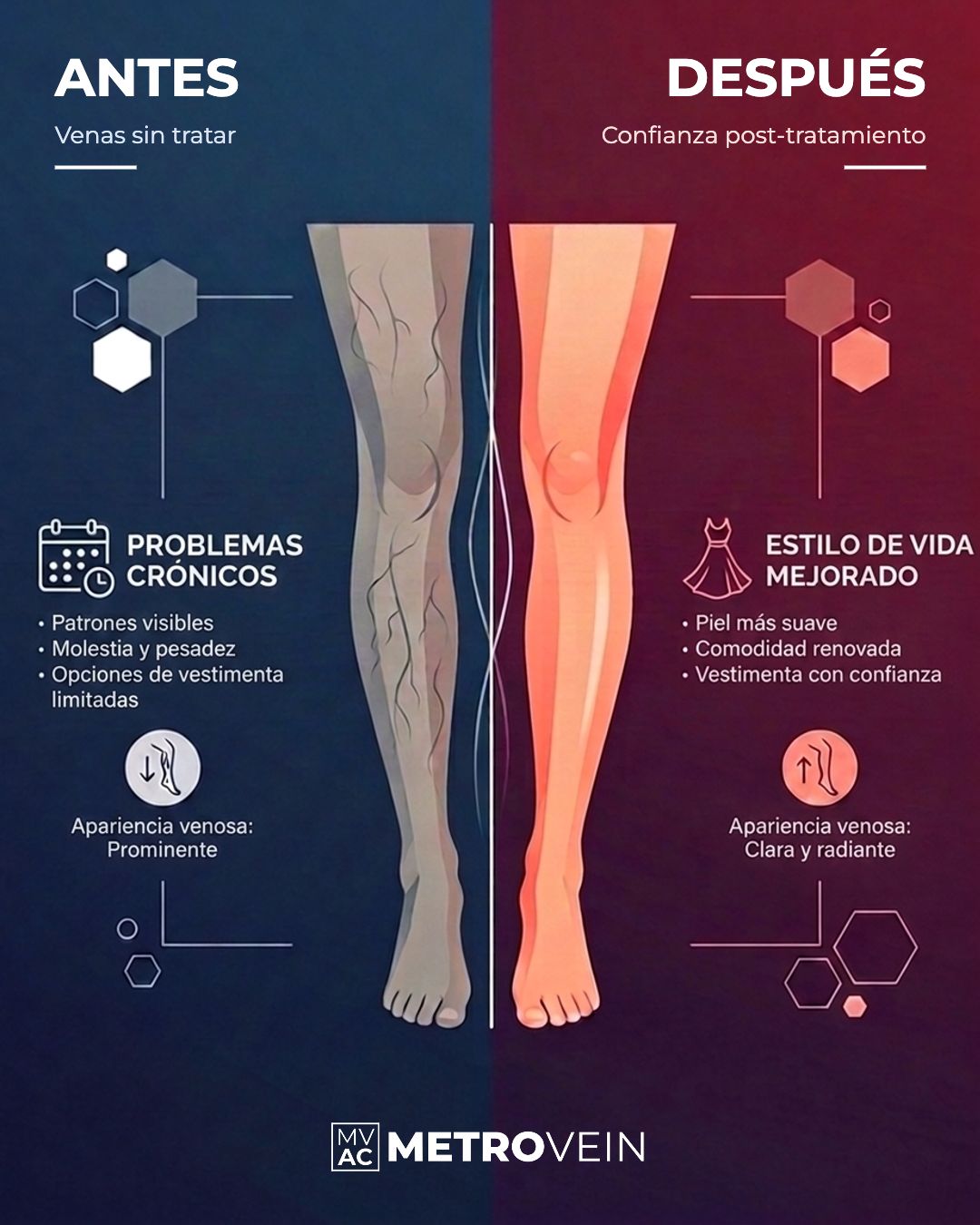
That is the real weight behind chronic vein problems. Beyond the visible patterns, there is molestia and pesadez, the discomfort and heaviness that many patients describe once they finally bring it up. This is a physical sensation as much as a cosmetic one, and it quietly shapes how a person moves through an ordinary day, from stairs to standing in line.
The shift we aim for is not dramatic either, and that is the point. It is smoother skin. It is legs that feel lighter by the end of the day instead of heavier. It is comodidad renovada, a renewed comfort that lets a patient put on the dress they actually wanted instead of the one that does the least explaining.
Confidence, in this context, is practical rather than abstract. It means walking into a room without doing a mental check of what is visible below the knee. It means choosing vestimenta con confianza, clothing chosen with confidence instead of concealment. That difference between hiding and choosing is small on paper but significant in how a person actually experiences their own day.
None of this requires waiting for the problem to become more visible or more painful. The earlier a consultation happens, the more comfortably a treatment plan can be built around your specific legs, your specific symptoms, and your specific life rather than a general worst case scenario that never needed to happen in the first place.
If you have spent more days than you would like picking clothes around your veins instead of around your plans, that pattern is worth mentioning out loud. Our team is here to talk through what pain free vein treatment looks like for your legs specifically. You can schedule a consultation through the link in our bio whenever you are ready to start.
Keep reading