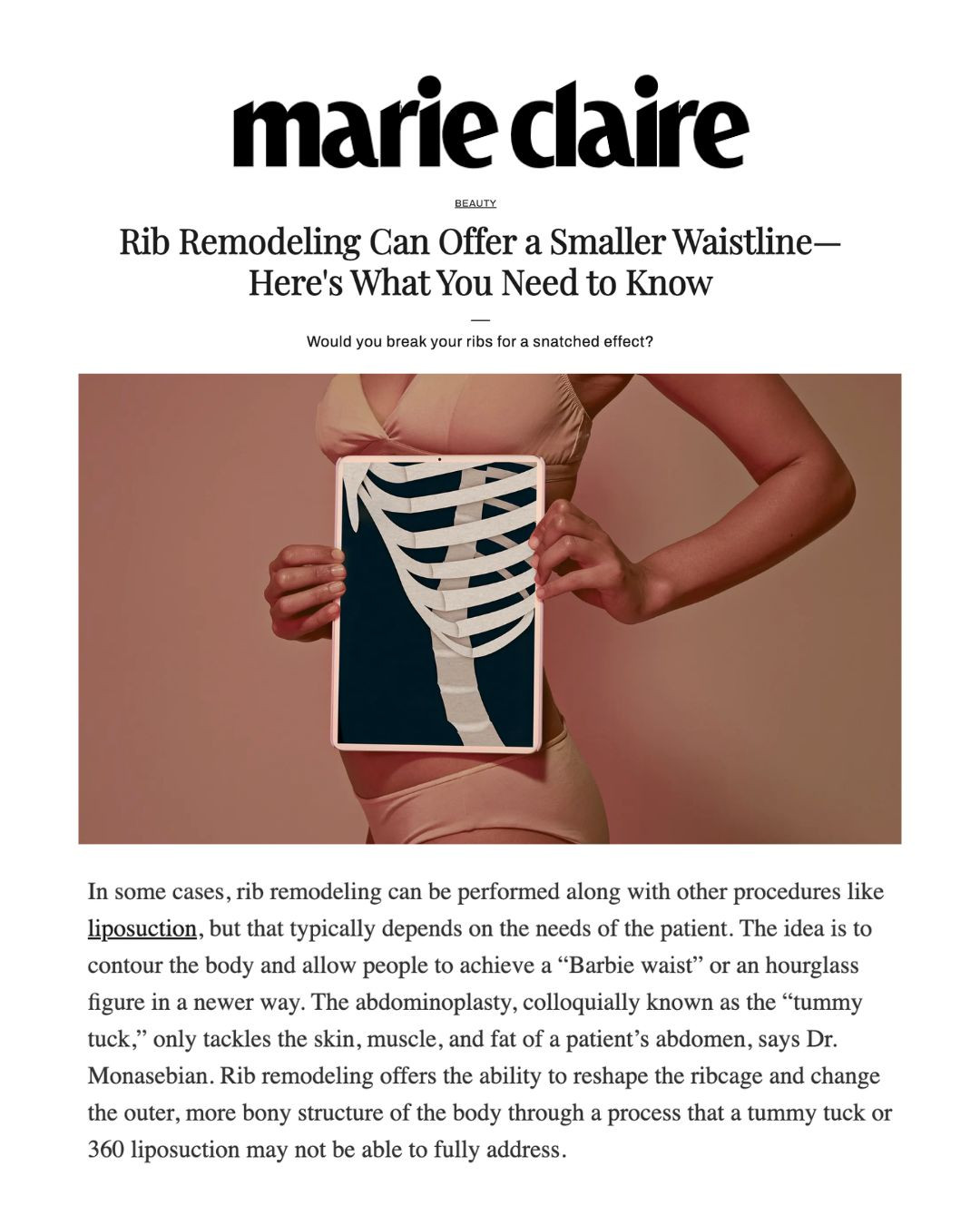
What rib remodeling actually changes that a tummy tuck cannot
Dr. Monasebian breaks down how reshaping the ribcage differs from traditional waist contouring procedures.
PARK AVENUE PLASTIC SURGERY MED SPA STAFFTurn your social into search
We turn your posts into editorial stories that bring new search traffic to parkavenueplasticsurgery.com. Three of yours will be on this page.
Book a demo
parkavenueplasticsurgery @marieclairemag explored rib remodeling as an emerging approach to creating a more defined waistline, featuring Dr. Monasebian for his expertise on the procedure. Unlike traditional body contouring procedures such as a tummy tuck or 360 liposuction, rib remodeling can address the underlying bony structure of the body to create a more sculpted silhouette. Read the full feature, “Rib Remodeling Can Offer a Smaller Waistline. Here’s What You Need to Know,” in Marie Claire, written by @danielleknecole #ParkAvenuePlasticSurgery #NYCPlasticSurgeon #RibRemodeling #BodyContouring #WaistContouring #PlasticSurgeryNYC
Dr. Monasebian breaks down how reshaping the ribcage differs from traditional waist contouring procedures.
PARK AVENUE PLASTIC SURGERY MED SPA STAFFHow it works
Same as today. Nothing changes on Instagram.
We turn your post into a full story in your voice within the hour.
One click publishes it to parkavenueplasticsurgery.com. Nothing goes live without you.
Your stories
Nothing was published anywhere. You decide that. Every word will come from your own posts, your own photos and your own treatments.
Body Contouring · From your post
Dr. Monasebian breaks down how reshaping the ribcage differs from traditional waist contouring procedures.
“@marieclairemag explored rib remodeling as an emerging approach to creating a more defined waistline, featuring Dr. Monasebian for his expertise on the procedure. Unlike traditional body contouring procedures such as a tummy tuck or 360 liposuction, rib remodeling can address the underlying bony structure of the body to create a more sculpted silhouette. Read the full feature, “Rib Remodeling Can Offer a Smaller Waistline. Here’s What You Need to Know,” in Marie Claire, written by @danielleknecole #ParkAvenuePlasticSurgery #NYCPlasticSurgeon #RibRemodeling #BodyContouring #WaistContouring #PlasticSurgeryNYC”
Facelift Results · From your post
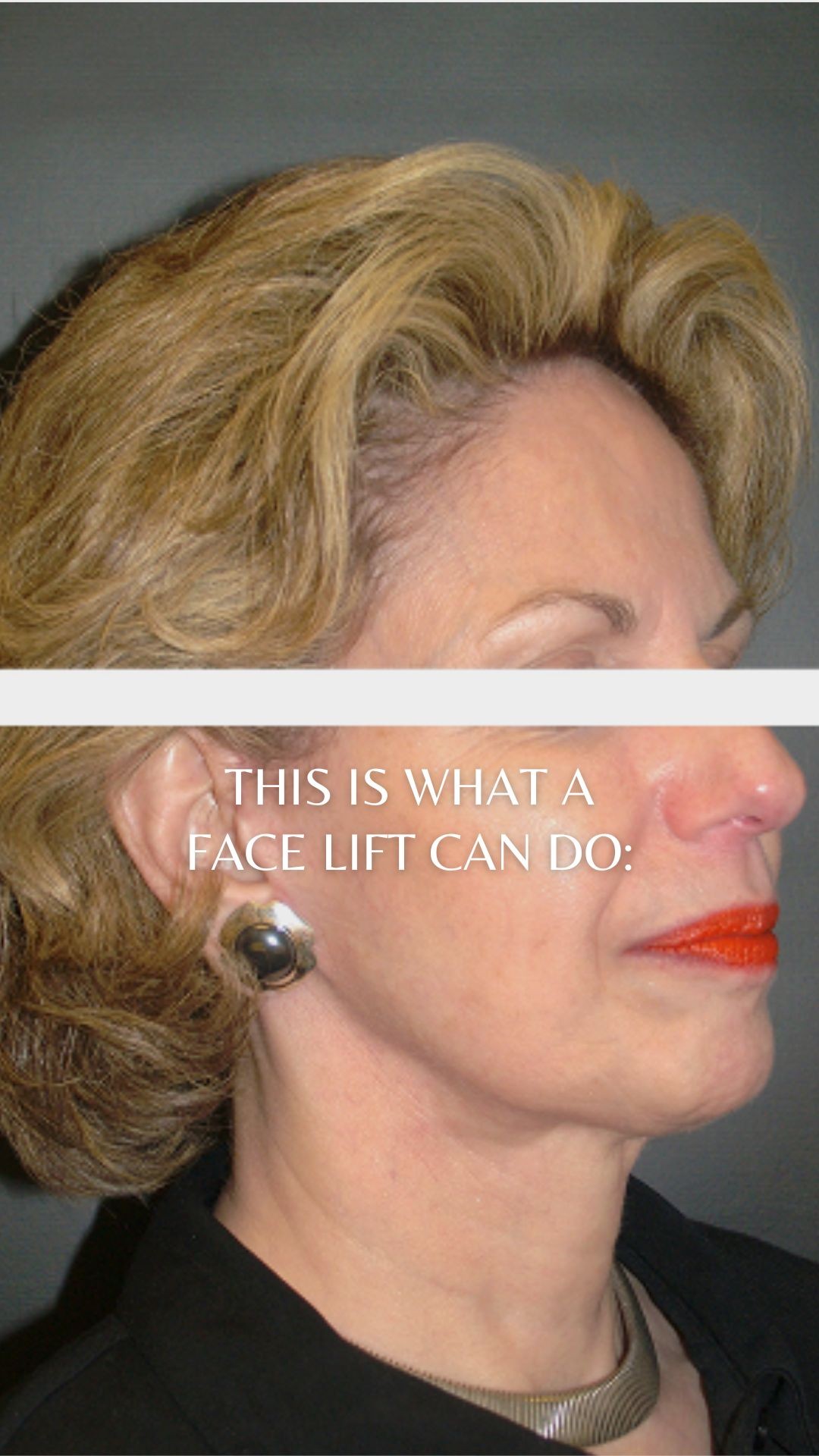
A single before and after side by side shows what precise facial rejuvenation can do without changing who someone looks like.
“What can a facelift do? Explore our patient’s before & after and see what thoughtful, precise facial rejuvenation can achieve. Ready to explore what’s possible for you? Book your consultation by clicking our link in bio, or. 📱 Call 212 472 8700 📍 Visit Us at 950 Park Avenue, New York, N.Y. 10028 #ParkAvenuePlasticSurgery #NYCPlasticSurgeon #Facelift #FaceliftBeforeAndAfter #FacialRejuvenation #FaceliftResults”
Facial Balance · From your post
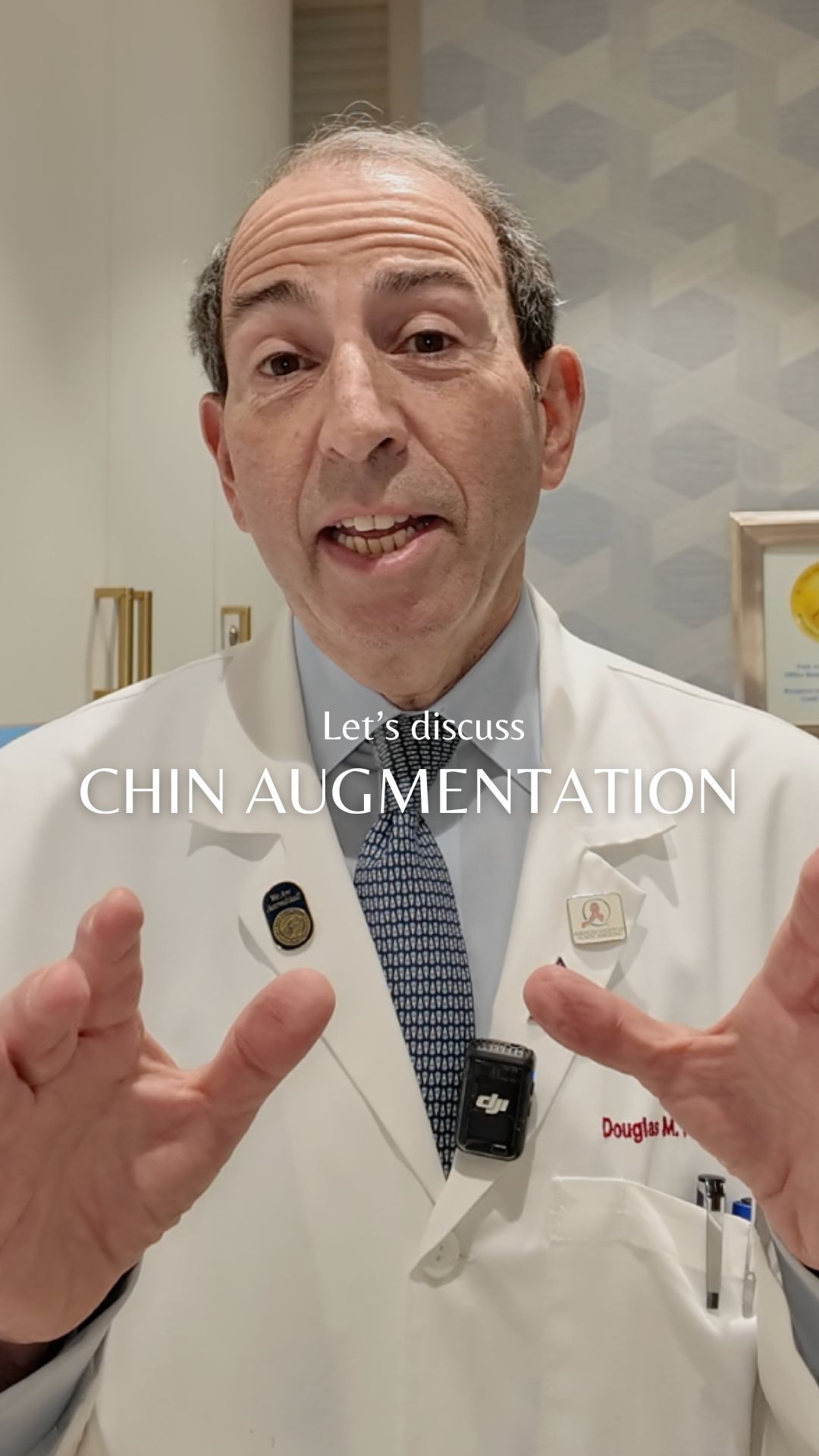
Dr. Monasebian explains how enhancing the chin creates greater definition and harmony throughout the face.
“Dr. Monasebian discusses genioplasty and how enhancing the chin can create greater definition and harmony throughout the profile. Book your consultation by clicking our link in bio, or. 📱 Call 212 472 8700 📍 Visit Us at 950 Park Avenue, New York, N.Y. 10028 #ParkAvenuePlasticSurgery #NYCPlasticSurgeon #Genioplasty #ChinAugmentation”
One social post becomes another searchable entry point to Park Avenue Plastic Surgery Med Spa.
Our own magazine. Clicks and citations from Google Search Console, as of September 15, 2026.
Draft story for parkavenueplasticsurgery.com · Body Contouring
Dr. Monasebian breaks down how reshaping the ribcage differs from traditional waist contouring procedures.
Marie Claire recently turned to Dr. Monasebian to explain rib remodeling, a body contouring approach that works on the ribcage itself rather than the skin, muscle, or fat layered on top of it. The feature positions it as a distinct option in the conversation around waist definition, separate from procedures most patients already know by name.
The distinction matters because so much of body contouring focuses on soft tissue. A tummy tuck addresses skin and muscle across the abdomen. Liposuction, including 360 liposuction around the full waist, removes fat. Both can change shape significantly, but neither one alters the underlying bony framework that ultimately determines how narrow a waistline can appear from the front or side.
Rib remodeling works differently because it targets that framework directly. Dr. Monasebian explains that reshaping the ribcage changes the outer, more structural part of the body rather than only the tissue surrounding it. For patients whose waistline is limited by rib width rather than excess fat or loose skin, that structural approach can address something soft tissue procedures were never designed to touch.
This is part of why rib remodeling is being discussed as an emerging technique rather than a replacement for existing procedures. It is not positioned as better or worse than a tummy tuck or liposuction, but as a separate tool that solves a separate problem. Understanding which structure is actually creating the silhouette a patient wants to change is the starting point for the conversation.
In some cases, rib remodeling is performed alongside other procedures such as liposuction, though Dr. Monasebian notes that this depends entirely on the needs of the individual patient. The goal across these combinations is a contoured, more hourglass shaped silhouette, sometimes described informally as a Barbie waist, achieved through a newer combination of bone and soft tissue work.
That word, combination, is doing real work here. No single procedure is presented as a universal answer. A tummy tuck handles skin, muscle, and fat. Liposuction removes volume. Rib remodeling changes the frame underneath. Where a patient lands depends on which of those layers is actually responsible for the shape they are trying to change in the first place.
What the feature ultimately highlights is a shift in how body contouring gets discussed. Instead of treating the waist as one general area to be trimmed, the conversation is moving toward identifying which specific structure, whether soft tissue or bone, is shaping the outcome. That precision is what separates rib remodeling from a broader, less targeted approach to waist contouring.
For patients researching their options, the value of this distinction is practical. Knowing that rib remodeling addresses the bony structure, while a tummy tuck and liposuction address skin, muscle, and fat, gives a clearer framework for the conversation with a surgeon. It also explains why some patients may need more than one procedure to reach the silhouette they are picturing.
Draft story for parkavenueplasticsurgery.com · Facelift Results
A single before and after side by side shows what precise facial rejuvenation can do without changing who someone looks like.
A facelift is easiest to understand in profile, which is exactly how we photograph our patients. The top image shows a jawline softened by time, with less definition where the neck meets the chin. The bottom image, taken from the same angle, shows a cleaner line from ear to chin and a neck that sits closer to the bone beneath it.
Nothing else in the frame changes. Same hairstyle, same earrings, same dark top, same neutral background. That consistency is deliberate. It keeps the comparison honest and puts the attention exactly where it belongs, which is the lower third of the face and the neck, the two areas a facelift is designed to address.
Skin along the jaw and neck loses support gradually, which is why change there tends to read as tiredness rather than aging in any specific spot. In the after photo, the angle from jaw to neck is sharper and the skin sits with less looseness. It is a structural difference, not a smoothing or a filling in of the skin's surface.
This is the outcome we aim for with facial rejuvenation done through a facelift: definition restored where it has relaxed, without the face looking pulled or unfamiliar. The patient in these photos still has the same features, the same expression, the same bone structure. What has changed is how the skin and tissue sit against that structure.
Every face loses definition differently, which is why we start with a consultation rather than a standard plan. We look at where support has changed, how the skin along the jaw and neck has responded to that, and what a patient is actually hoping to see differently when they look in the mirror or in a photograph like this one.
That conversation is also where we talk through what a facelift will and will not do. It addresses the jawline, the neck, and the lower face. It does not change the eyes, the brows, or the upper face, which is worth knowing before anyone compares their own reflection to a single before and after.
If a photo like this raises a question about your own jawline or neck, that question is worth bringing to a consultation rather than answering on your own. We are located at 950 Park Avenue in New York, and consultations can be booked directly through the link in our bio or by calling 212 472 8700.
The value of a comparison like this one is that it is specific. One patient, one angle, one procedure, shown plainly. It does not promise a universal result, only a real one, which is the standard we hold every before and after to before it goes up for patients considering the same path.
Draft story for parkavenueplasticsurgery.com · Facial Balance
Dr. Monasebian explains how enhancing the chin creates greater definition and harmony throughout the face.
When Dr. Monasebian talks about the chin, he is rarely talking about the chin alone. Genioplasty, the surgical term for chin augmentation, is a procedure that changes one feature but reads across the entire profile. A chin that is set back or underdeveloped can throw off the balance between the nose, the jawline, and the neck, even when none of those other features have changed at all.
That is the point he keeps returning to in conversation: definition. A profile is not judged feature by feature. It is judged as a whole line, from forehead to chin, and the chin often acts as the anchor for that line. Strengthen it, and the rest of the face tends to look more proportionate, more resolved, without anything else being touched.
Harmony is the other word he uses, and it is a deliberate choice. Not bigger, not sharper, not more dramatic. The goal with chin augmentation is a face that looks like it was always meant to fit together this way. That distinction matters, because it shapes how a consultation is approached from the very first conversation about someone's goals.
Because the chin interacts with so much of the lower face, the evaluation has to look past the chin itself. The jawline, the neck, the angle of the nose, even the way the lips sit at rest all factor into whether augmentation is the right move, and how much change would actually read as balance rather than overcorrection.
This is part of why Dr. Monasebian frames genioplasty as a profile discussion rather than a single feature request. Patients often come in focused on one area, but the more useful conversation is about how that area relates to everything around it. A small adjustment to the chin can shift how the whole face is perceived, which is exactly the outcome worth planning for carefully.
A consultation is where these variables get sorted out individually. There is no single chin augmentation that suits every face, because no two profiles start from the same baseline. The conversation covers what is contributing to the current imbalance, what a realistic result looks like, and whether the goal is best served surgically or through another approach entirely.
That kind of specificity is why we encourage anyone considering it to start with a real conversation rather than guessing from photos or trends. Dr. Monasebian's approach centers on what will actually create harmony for that particular face, not a generic version of what chin augmentation is supposed to look like across a wider population of patients.
If chin augmentation, or the broader question of facial balance, is something worth exploring, a consultation is the natural next step. You can book directly through the link in our bio, call us at 212 472 8700, or visit us at 950 Park Avenue in New York. The conversation starts with your profile, not with an assumption about what it needs.
Keep reading