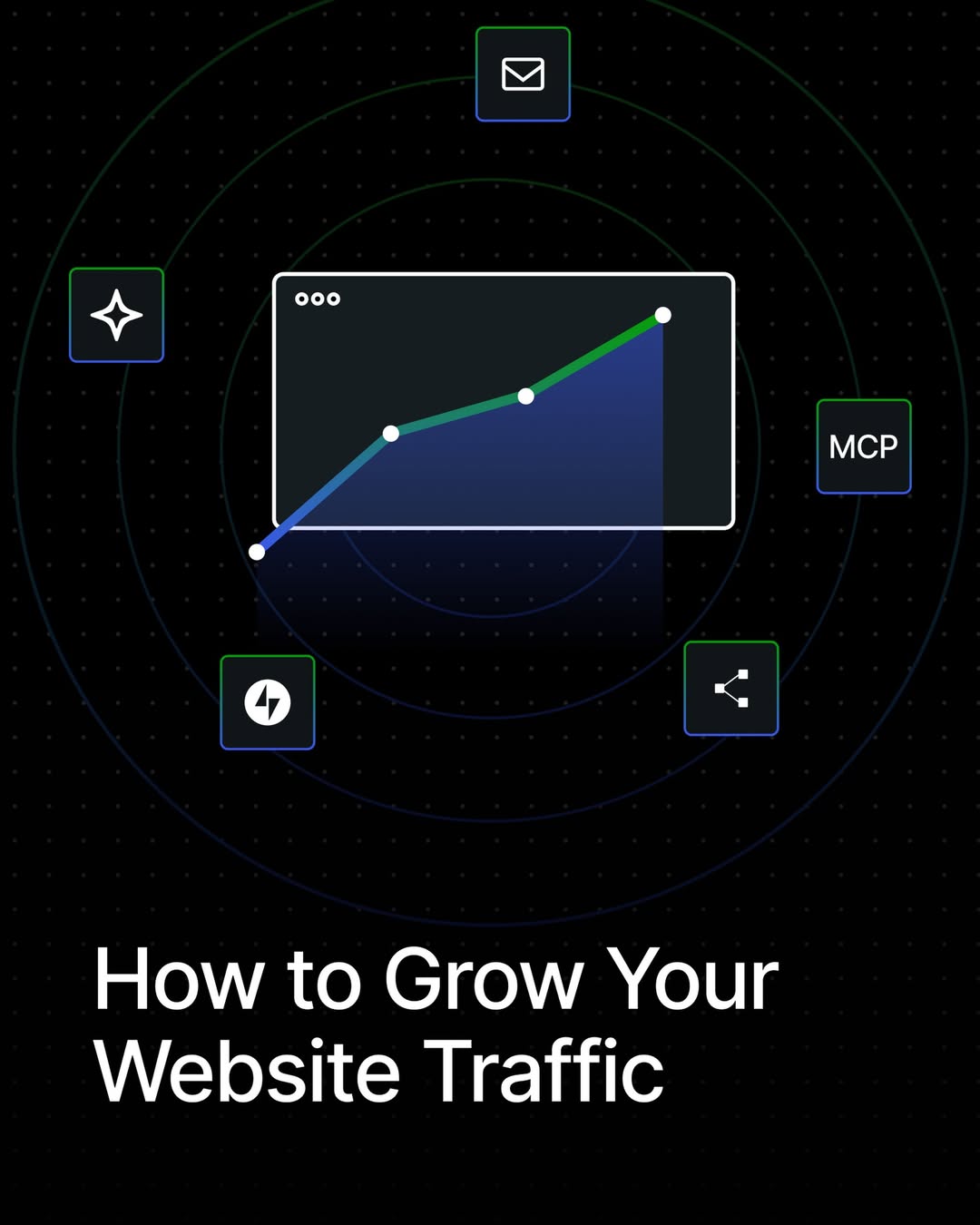
Why fewer people are finding us through Google, and what we are doing about it
Search traffic has changed, so we broke down eight other ways patients actually find a practice like ours.
SHELLING DERMATOLOGY STAFFTurn your social into search
We turn your posts into editorial stories that bring new search traffic to shellingdermatology.com. Three of yours will be on this page.
Book a demo
wordpressdotcom Google isn’t sending as much traffic as it used to. But organic isn’t dead; it’s just spread out. We broke down eight ways to reach people anyway. Here are a few to preview. 📌 Answer the questions your audience is already asking 📌 Turn one post into five different touchpoints 📌 Build a newsletter people actually want to open 📌 Grow your personal visibility, too Pick a couple that fit. Stick with them longer than a week. that’s when you’ll actually see growth. Head to the link in our bio for the full guide. 🔗
Search traffic has changed, so we broke down eight other ways patients actually find a practice like ours.
SHELLING DERMATOLOGY STAFFHow it works
Same as today. Nothing changes on Instagram.
We turn your post into a full story in your voice within the hour.
One click publishes it to shellingdermatology.com. Nothing goes live without you.
Your stories
Nothing was published anywhere. You decide that. Every word will come from your own posts, your own photos and your own treatments.
Practice Growth · From your post
Search traffic has changed, so we broke down eight other ways patients actually find a practice like ours.
“Google isn’t sending as much traffic as it used to. But organic isn’t dead; it’s just spread out. We broke down eight ways to reach people anyway. Here are a few to preview. 📌 Answer the questions your audience is already asking 📌 Turn one post into five different touchpoints 📌 Build a newsletter people actually want to open 📌 Grow your personal visibility, too Pick a couple that fit. Stick with them longer than a week. that’s when you’ll actually see growth. Head to the link in our bio for the full guide. 🔗”
Product Update · From your post
Less clicking, more building: a new navigation layer, AI assisted drafting, and WordPress 7.1 arrive together.
“Less clicking and more building! 🛠️ Our new Hosting Dashboard keeps your navigation in place as you move between sites, so you can actually stay in the flow. Plus, you can now leave the busywork like drafting, categorizing, and comment moderation to ChatGPT or Claude. You still approve each change before it goes live. Oh, and @wordpress 7.1 is already live on your site, and it comes with much more, including shareable post revisions. See what’s new in our latest Changelog. Link in bio.”
Support, explained · From your post
About one in four support conversations end with a real person, and the Assistant is often the one who makes that call.
“Sometimes the right help is a real person. About 1 in 4 support conversations end with a human helper, and roughly half the time, the WordPress.com Support Assistant suggests it. Here’s how that works. Before every reply, the Assistant checks whether you need a human. When a handoff happens, your full chat and a summary go with you. You never explain it twice. Get the right help as fast as possible. Learn more at the link in our bio. 🔗”
One social post becomes another searchable entry point to Shelling Dermatology.
Our own magazine. Clicks and citations from Google Search Console, as of September 15, 2026.
Draft story for shellingdermatology.com · Practice Growth
Search traffic has changed, so we broke down eight other ways patients actually find a practice like ours.
Search traffic used to be predictable. Post something helpful, let Google index it, watch people find their way to the website over time. That pattern has loosened. Organic reach has not disappeared, it has simply spread across more places, which means a practice that only thinks about search rankings is missing most of where people actually spend their time and attention now.
That shift is why we put together a guide on reaching people outside the traditional search box. It is not about abandoning what already works. It is about recognizing that a single blog post or a single ranking cannot carry the weight it used to, and that reaching patients now means showing up in more than one place at once.
The simplest starting point is also the easiest to skip: answer the questions your audience is already asking. Patients searching for a procedure, a concern, or a recovery timeline are not looking for polish, they are looking for a straight answer. Content built around real questions tends to hold attention longer than content built around what a practice wants to promote.
From there, one good answer does not have to live in only one place. Turn one post into five different touchpoints: a short video, a caption, an email, a graphic, a follow up post that goes deeper. The idea stays the same, but the format changes to meet people wherever they happen to be scrolling, reading, or checking their inbox that day.
A newsletter deserves more credit than it usually gets. Building one people actually want to open means writing it like it is useful, not like it is an announcement. Email is one of the few channels a practice fully controls, unaffected by algorithm changes or search updates, which makes it worth treating as a real part of the strategy rather than an afterthought.
Growing personal visibility matters too. Patients respond to people, not just logos, so a provider's own presence, whether that is a face people recognize or a voice they trust, adds a layer that a practice account alone cannot replicate. It rounds out the picture and gives people another reason to remember who they are booking with.
None of this requires doing all eight tactics at once. Pick a couple that fit how the practice actually operates, then stick with them longer than a week, because that is when the results start to show. The full breakdown, all eight approaches, is linked in our bio for anyone ready to build a plan that does not depend on Google alone.
Draft story for shellingdermatology.com · Product Update
Less clicking, more building: a new navigation layer, AI assisted drafting, and WordPress 7.1 arrive together.
Less clicking and more building is the idea behind this release. Anyone who manages more than one site knows the friction of constantly clicking back out to a dashboard just to switch contexts. That small interruption adds up over a day of real work, and it is the exact problem this update is built to remove from the workflow entirely.
The new Hosting Dashboard keeps your navigation in place as you move between sites. Instead of losing your place every time you switch, the structure stays put around you. It sounds like a small interface change, but the practical effect is that you can actually stay in the flow instead of resetting your mental map every few minutes.
The second piece of this release addresses a different kind of friction: the repetitive tasks that eat time without requiring much judgment. Drafting a post, categorizing it correctly, moderating a queue of comments. None of it is hard work exactly, but all of it pulls attention away from the tasks that actually need a person thinking carefully.
Now that busywork can go to ChatGPT or Claude directly. The assistant can draft, categorize, and moderate comments on your behalf, working through the queue while you focus elsewhere. Nothing changes on the site until you say so. You still approve each change before it goes live, so the control stays exactly where it was.
That approval step matters more than it might seem. Automation only earns trust when a human still has the last word, and this setup is built around that principle rather than around removing you from the process. The assistant handles the repetition. You handle the judgment. The site only changes once you have signed off on it.
Alongside both of these changes, WordPress 7.1 is already live on your site. No separate install, no waiting period. It comes with much more, including shareable post revisions, which makes it easier to show someone exactly how a piece evolved without walking them through the editor step by step or exporting anything separately.
Shareable revisions are a small feature with a real use case. Anyone who has tried to explain an edit over a screenshot, or waited on a collaborator to log in just to see a change, will recognize the gap this closes. It is the kind of detail that only shows its value the first time you actually need it.
None of these three updates are dramatic on their own, but together they point toward the same goal: less time spent managing the mechanics of a site, more time spent on the actual work of building it. The full breakdown, including everything else bundled into this release, is available in the latest Changelog, linked in bio.
Draft story for shellingdermatology.com · Support, explained
About one in four support conversations end with a real person, and the Assistant is often the one who makes that call.
Most support questions have a clean answer, and the Assistant handles those directly. But some questions are messier than a script can cover, and pretending otherwise just wastes everyone's time. So before every single reply, the Assistant runs a quiet check in the background: does this conversation still belong with automation, or does it need a person now.
That check is not a one time gate at the start of a chat. It happens continuously, reply after reply, because a simple question can turn complicated halfway through. A billing issue can become a technical one. A quick fix can reveal a deeper problem. The Assistant is built to notice that shift as it happens, not after the conversation has already gone in circles.
About one in four support conversations end with a human helper stepping in. Roughly half of those handoffs are not requested by the customer at all. They are suggested by the Assistant itself, the moment it recognizes the conversation has reached the edge of what it can responsibly resolve on its own. That distinction matters more than it sounds like it should.
A support tool that only escalates when asked is really just a waiting room. One that recognizes the moment on its own is doing actual work, catching the handoff earlier, before frustration builds and before a customer has to make the case for themselves. It shifts the responsibility for noticing the problem away from the person who is already stuck.
The part of a bad handoff everyone recognizes is having to explain the same problem twice, once to the bot and again to the person who takes over. That repetition is where trust in automated support usually breaks down, because it turns the first conversation into wasted effort instead of progress toward an actual answer.
When a handoff happens here, the full chat history travels with it, along with a summary of what has already been covered. The human helper starts already caught up, not starting from a blank screen. You do not have to reconstruct the problem from scratch or repeat details you already gave, which is the entire point of building the handoff this carefully.
The goal is not to minimize how often people talk to a human, and it is not to maximize it either. It is to get each conversation to the right kind of help as fast as possible, whether that is an instant automated answer or a person who can look at something more closely. Speed only counts if it points somewhere useful.
That is the practical idea behind the Assistant: judgment applied conversation by conversation, not a fixed rule applied to everyone the same way. Some questions resolve in seconds. Others need a person from the very first message, and knowing which is which, quickly and consistently, is what makes the whole system worth relying on.
Keep reading