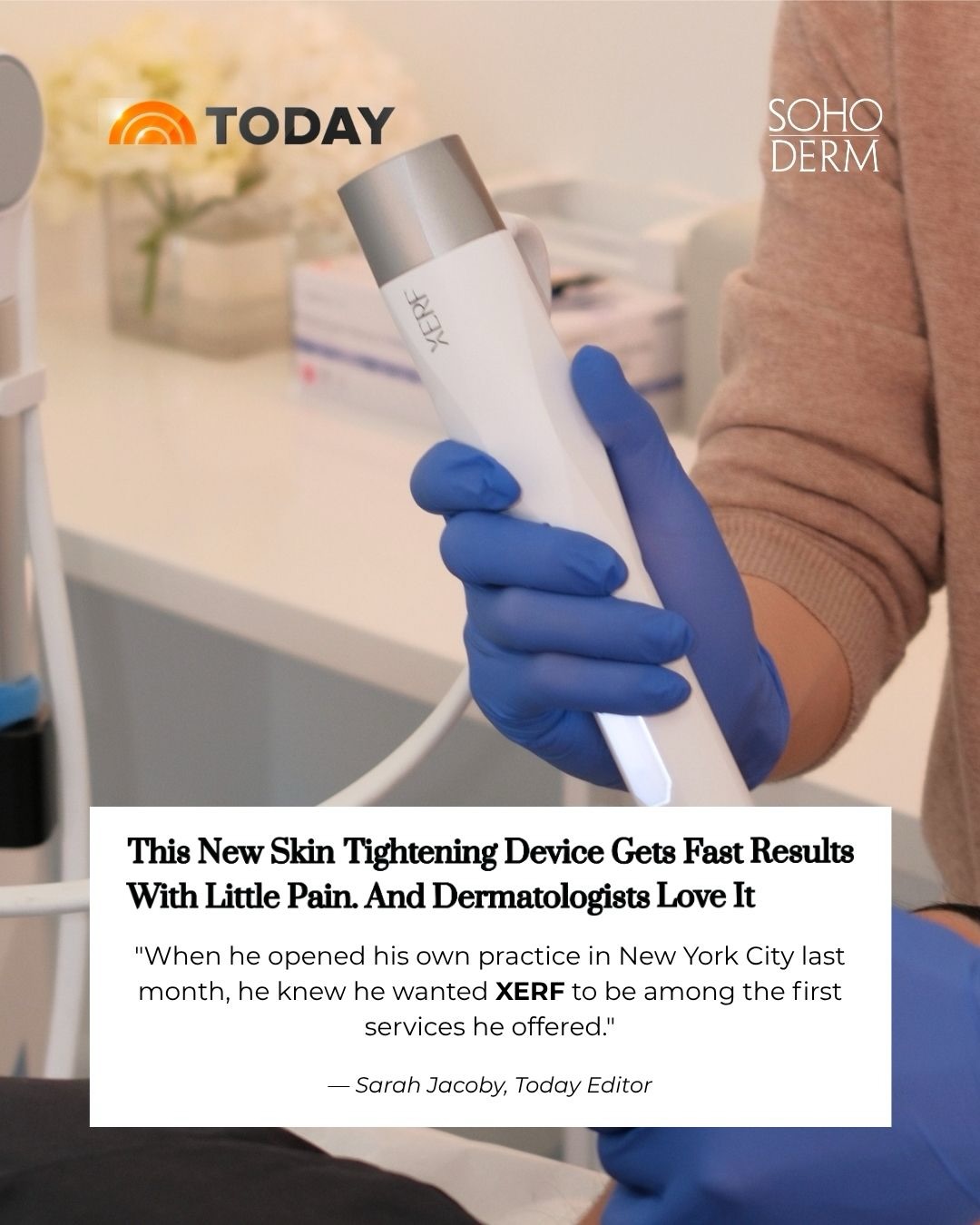
Why XERF became one of the first treatments we offered at Soho Derm
A multifrequency radiofrequency device from Korea is drawing attention for tightening skin with little downtime and minimal pain.
SOHO SKIN & LASER DERMATOLOGY STAFFTurn your social into search
We turn your posts into editorial stories that bring new search traffic to sohoderm.com. Three of yours will be on this page.
Book a demo
sohoderm XERF is the hottest lifting treatment from Korea and it’s not just a trend. It’s science 🧪🧬. It’s the first device in the world to use multifrequency monopolar radiofrequency (6.78MHz and 2MHz) to tighten and lift the skin. It’s noninvasive and has minimal downtime and pain. There’s a reason @dr.david.kim treated 6 patients right before the Met Gala and they looked incredible on the red carpet 😎 #beauty #antiaging #glow #selfcare #lifting
A multifrequency radiofrequency device from Korea is drawing attention for tightening skin with little downtime and minimal pain.
SOHO SKIN & LASER DERMATOLOGY STAFFHow it works
Same as today. Nothing changes on Instagram.
We turn your post into a full story in your voice within the hour.
One click publishes it to sohoderm.com. Nothing goes live without you.
Your stories
Nothing was published anywhere. You decide that. Every word will come from your own posts, your own photos and your own treatments.
Skin Tightening · From your post
A multifrequency radiofrequency device from Korea is drawing attention for tightening skin with little downtime and minimal pain.
“XERF is the hottest lifting treatment from Korea and it’s not just a trend. It’s science 🧪🧬. It’s the first device in the world to use multifrequency monopolar radiofrequency (6.78MHz and 2MHz) to tighten and lift the skin. It’s noninvasive and has minimal downtime and pain. There’s a reason @dr.david.kim treated 6 patients right before the Met Gala and they looked incredible on the red carpet 😎 #beauty #antiaging #glow #selfcare #lifting”
PRP Explained · From your post
A close look at how we prepare platelet rich plasma before it goes to work on scalp and skin.
“Platelet Rich Plasma (PRP) is derived from your own blood and is packed with growth factors that can help stimulate hair follicles, boost collagen production, and expedite skin recovery! It can be injected directly into the scalp and the skin, or in combination w/ microneedling and lasers to take it to the next level! ✨👼🏻 #beauty #antiaging #skin #nyc #dermatology”
Beauty Aisle · From your post
Our dermatologist shares the affordable products he recommends most, no prescription required.
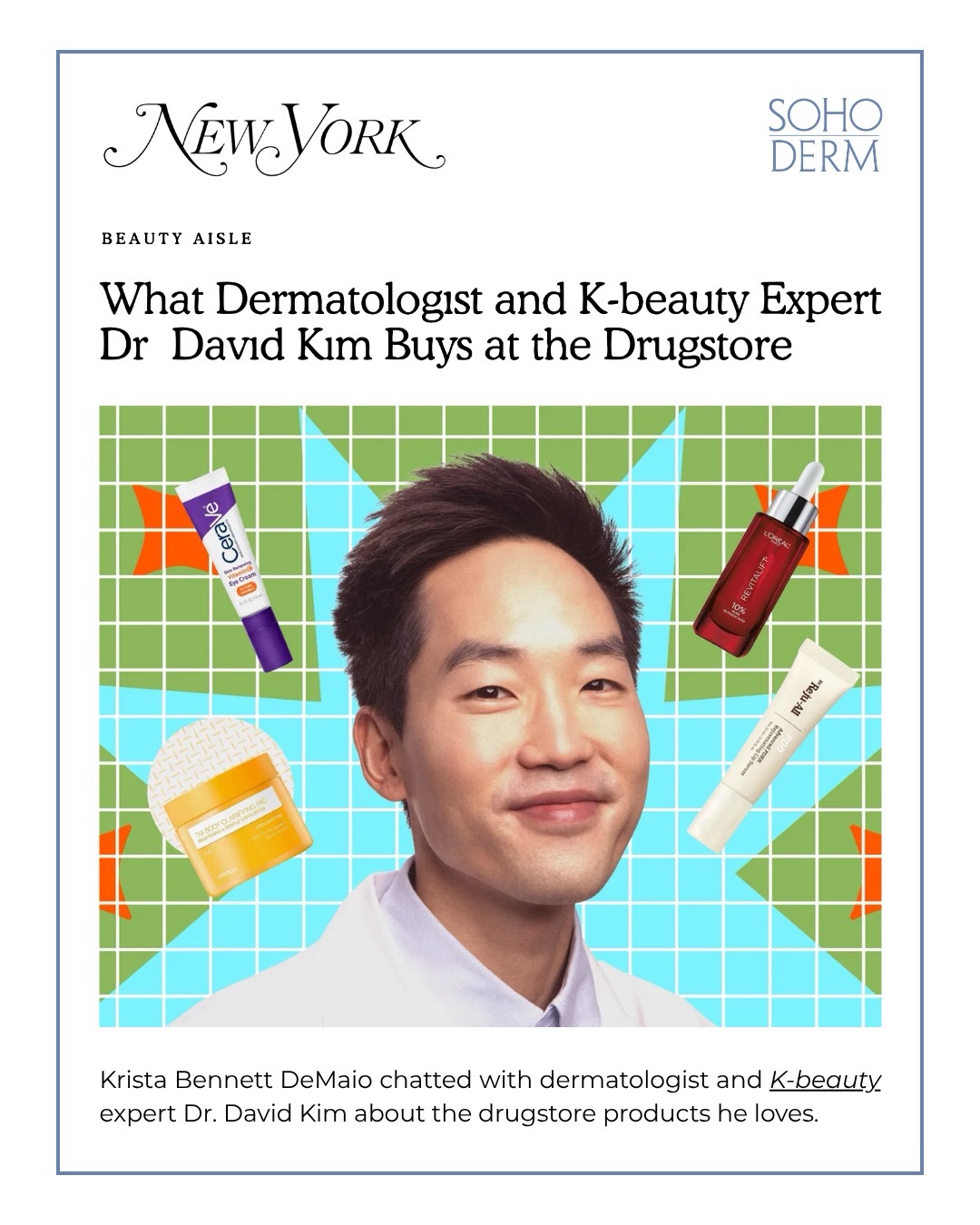
“Best of the best drugstore edition! @thestrategist @nymag These are some of the best drugstore products @dr.david.kim recommends all the time! 😊 #skincare #skincaretips #smart #affordable #dermatology”
One social post becomes another searchable entry point to Soho Skin & Laser Dermatology.
Our own magazine. Clicks and citations from Google Search Console, as of September 15, 2026.
Draft story for sohoderm.com · Skin Tightening
A multifrequency radiofrequency device from Korea is drawing attention for tightening skin with little downtime and minimal pain.
XERF arrived in New York with a reputation already attached to it. Before it had a following here, it had one in Korea, where it built a name as a lifting treatment that worked without surgery or long recovery. When we opened our practice, we knew we wanted it to be among the first services on our menu, not an afterthought added once we settled in.
The pull isn't just that it's popular. XERF is the first device in the world built around multifrequency monopolar radiofrequency, running at 6.78MHz and 2MHz. Those two frequencies work at different depths, which is part of why the treatment can tighten skin without cutting it open. It's a mechanical distinction, not a marketing one, and it's the reason dermatologists talk about it in clinical terms rather than trend terms.
Radiofrequency devices aren't new, but running two frequencies at once is a more recent approach. The higher frequency and the lower one each reach the skin differently, which allows the treatment to address tightening from more than one angle in a single session. That combination is what separates XERF from single frequency tools, and it's the detail that keeps coming up whenever the device is discussed seriously.
What patients notice first is usually the downtime, or the lack of it. XERF is noninvasive, and the pain and recovery associated with it are described as minimal. There's no scalpel, no stitches, no weeks spent out of sight waiting for swelling to settle. For people who want visible tightening without rearranging their schedule around recovery, that's often the deciding factor over more invasive options.
That timeline matters most when there's an actual deadline attached to it. Doctor David Kim treated six patients shortly before the Met Gala, a window that leaves no room for extended healing. They walked the red carpet afterward looking the way they wanted to look, which says less about glamour and more about how fast a noninvasive treatment needs to work to be useful under real pressure.
It's a useful example because it strips away the abstraction. A tightening treatment can sound appealing in theory, but the Met Gala turnaround shows what it actually means in practice: a session, a short recovery window, and results that hold up under close, unflattering lighting. That's a higher bar than most skincare claims are ever asked to meet.
We didn't add XERF because it was trending. We added it because the mechanism behind it is specific and explainable, not vague. Multifrequency monopolar radiofrequency is a real engineering choice, not a buzzword, and it gives us a way to offer tightening to patients who want results without surgery, without a long recovery, and without guessing whether the science actually supports what they're being told.
Treatments come and go quickly in this industry, and most of them lean on hype to get attention. XERF is getting attention for a different reason: dermatologists are describing it in technical terms, patients are using it ahead of major events, and the device itself is doing something genuinely new with frequency. That's a rarer combination, and it's exactly why we made room for it early.
Draft story for sohoderm.com · PRP Explained
A close look at how we prepare platelet rich plasma before it goes to work on scalp and skin.
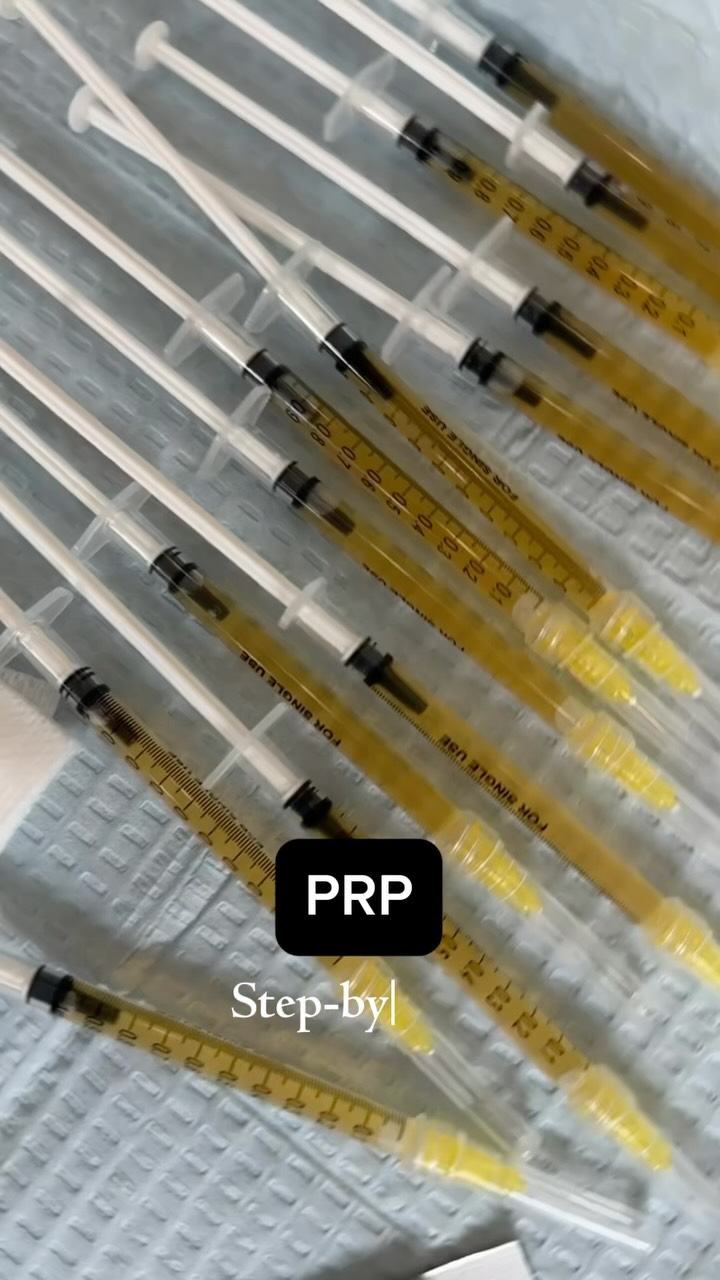
Lined up on a tray, a row of syringes holds a pale yellow liquid drawn from a spin that separates blood into its parts. What is left behind is plasma rich in platelets, pulled from the patient's own blood rather than any external product. Every syringe is labeled for single use, and the process starts and ends with material that already belongs to the person receiving it.
That yellow tint is the whole story in miniature. Whole blood goes into a centrifuge, spins down, and separates into layers. The plasma layer, dense with platelets and growth factors, gets drawn off and loaded into these syringes. Nothing is added and nothing is synthetic. The color alone tells you the separation worked, since a properly spun sample settles into that same straw colored liquid every time.
Platelets carry growth factors that signal tissue to repair itself, which is the entire reason PRP gets used on scalp and skin in the first place. Injected into the scalp, it can help stimulate hair follicles that have slowed down. Injected into skin, it can support collagen production and speed up recovery after other treatments. The mechanism is the body responding to its own concentrated signal, not a foreign substance.
We use PRP two ways depending on the goal. Injected directly, it targets the scalp for hair or targets skin for texture and tone on its own. Combined with microneedling, the plasma gets worked into the channels created by the needles, reaching deeper than a topical application could on its own. Paired with laser treatments, it can support the skin's recovery process after the laser does its part.
None of what ends up in that syringe happens quickly. Blood is drawn, spun, and separated before a single injection takes place, and the syringes seen here represent that finished stage, ready and measured for single use. Each one is marked with volume gradations along the barrel, the kind of detail that matters when precision in dosing is part of what makes the treatment consistent from one session to the next.
The combination approach exists because PRP alone has a ceiling and so does microneedling or laser alone. Microneedling creates access points in the skin. Lasers create controlled disruption that prompts renewal. PRP supplies the growth factors that support what happens next. Layering them is less about doing more and more about giving each step something useful to work with once the skin starts to heal.
For anyone new to PRP, the tray of syringes is a useful reality check. There is no vial of manufactured serum here, no ingredient list to read. What you see is a small volume of the patient's own plasma, concentrated and ready to be reintroduced exactly where it is needed, whether that is a thinning patch on the scalp or an area of skin recovering from a recent procedure.
The appeal of PRP comes down to that simplicity. It is not a foreign additive layered onto the skin from outside, it is the body's own repair signal, isolated and redirected. Whether it is used on its own or folded into a microneedling or laser session, the goal stays the same: put concentrated growth factors exactly where the tissue is already trying to recover, and let that process do the rest.
Draft story for sohoderm.com · Beauty Aisle
Our dermatologist shares the affordable products he recommends most, no prescription required.
Not every effective skincare product requires a trip to a specialty counter or a dermatology office. Dr David Kim, who sees patients here and has built a following for making K beauty accessible, spends plenty of time in the drugstore aisle too. He is candid about the fact that some of the most reliable products in his own recommendations are the ones sitting on a regular shelf, priced for daily use rather than special occasions.
That candor matters because patients often assume good skincare has to be expensive to work. Dr Kim pushes back on that idea in how he counsels people. His picks tend to favor formulas with a clear purpose: hydration that holds up, barrier repair that is gentle enough for sensitive skin, and treatment products that pull double duty without irritating. Nothing about his approach depends on packaging or price point.
Among the products he recommends often is a CeraVe option, the kind built around ceramides and formulated to support the skin barrier rather than strip it. It is the sort of pick that works for a wide range of skin types, which is likely why it comes up so consistently in his conversations with patients and in interviews about what actually belongs in a routine.
He also points to a vitamin C serum from La Roche Posay, a brand known for pharmacy grade formulations that still meet a dermatological standard. Vitamin C serums are prized for brightening and for their role in supporting collagen, but not all of them are stable or well tolerated. Dr Kim's endorsement suggests this one holds up to both scrutiny and daily wear.
Given his expertise in Korean skincare, it is no surprise that a K beauty pick makes his list as well, alongside a lightweight option from Klairs. Korean formulas are often built around barrier support and multi step layering, but Dr Kim's guidance tends to simplify that idea for people who are not trying to build an elaborate routine, just an effective one that fits into daily life.
What ties these products together is not brand loyalty or trend, it is function. Each one addresses something specific: hydration, brightening, barrier repair, calming. That kind of clarity is useful for patients standing in a drugstore aisle facing dozens of options and little guidance. Dr Kim's approach removes some of the guesswork by naming exactly what a product is meant to do.
There is also something reassuring about a dermatologist willing to say plainly that the drugstore has real answers. It suggests that good skin health is not gatekept behind expensive ingredients or elaborate marketing. Dr Kim's picks reflect years of clinical experience applied to products anyone can pick up on their way home, which is a kind of accessibility that patients genuinely appreciate.
We hear this from patients often: they want fewer products and more confidence in what they are buying. Dr Kim's recommendations offer that. They are not flashy, and they are not positioned as miracle solutions. They are simply formulas he trusts enough to mention by name, repeatedly, to people looking for a routine that works without requiring a specialist's budget to maintain.
Keep reading