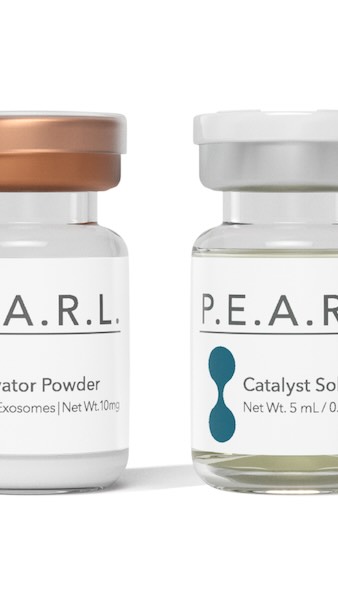
Why we are introducing P.E.A.R.L. exosome therapy to our practice
A two vial system pairs cultured exosomes with PDRN to give aging skin both a signal and the raw material to respond to it.
THE DERMATOLOGY AND LASER GROUP STAFFTurn your social into search
We turn your posts into editorial stories that bring new search traffic to dermatologyandlasergroup.com. Three of yours will be on this page.
Book a demo
dermatologyandlasergroup The future of aesthete is Regenerative Medicine! I am excited to introduce AnteAGE ( @anteageskin )P.E.A.R.L., a breakthrough US made product that finally combines the two most powerful forces in regeneration. 1. Exosomes (The Signal). Cultured from stem cells, these signal your aging cells to regenerate healthy new tissue. 2. PDRN (The Building Blocks). Purified DNA particles, this provides the raw “fuel” your cells need to repair themselves instantly.
A two vial system pairs cultured exosomes with PDRN to give aging skin both a signal and the raw material to respond to it.
THE DERMATOLOGY AND LASER GROUP STAFFHow it works
Same as today. Nothing changes on Instagram.
We turn your post into a full story in your voice within the hour.
One click publishes it to dermatologyandlasergroup.com. Nothing goes live without you.
Your stories
Nothing was published anywhere. You decide that. Every word will come from your own posts, your own photos and your own treatments.
Regenerative Medicine · From your post
A two vial system pairs cultured exosomes with PDRN to give aging skin both a signal and the raw material to respond to it.
“The future of aesthete is Regenerative Medicine! I am excited to introduce AnteAGE ( @anteageskin )P.E.A.R.L., a breakthrough US made product that finally combines the two most powerful forces in regeneration. 1. Exosomes (The Signal). Cultured from stem cells, these signal your aging cells to regenerate healthy new tissue. 2. PDRN (The Building Blocks). Purified DNA particles, this provides the raw “fuel” your cells need to repair themselves instantly.”
In The Room · From your post
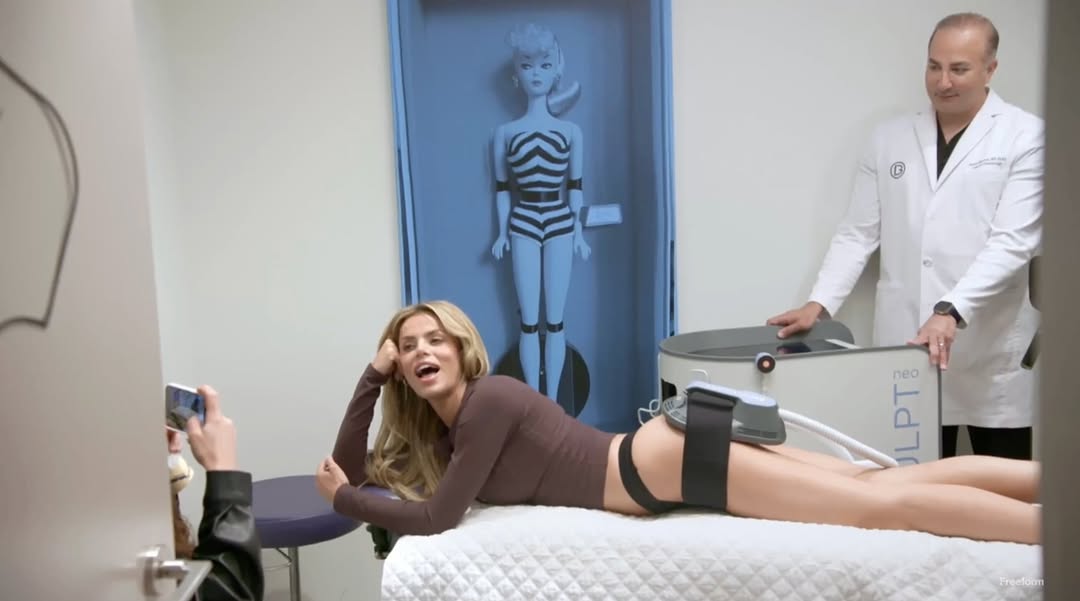
A treatment room we know well turns up on a Hulu show, with a familiar device and a very unfamiliar audience.
“✨ Exciting News! ✨ The Dermatology and Laser Group and Emsculpt NEO are featured on @lovethynader, now streaming on @hulu! Watch as the Nader Sisters try an Emsculpt NEO treatment and share how it can help boost body confidence and take results to the next level. 📺 Don’t miss this amazing new show! Credit. Love Thy Nader on Hulu Season 1, Episode 7 #emsculptneo #emsculpt #lovethynader #hulu”
Recognition · From your post
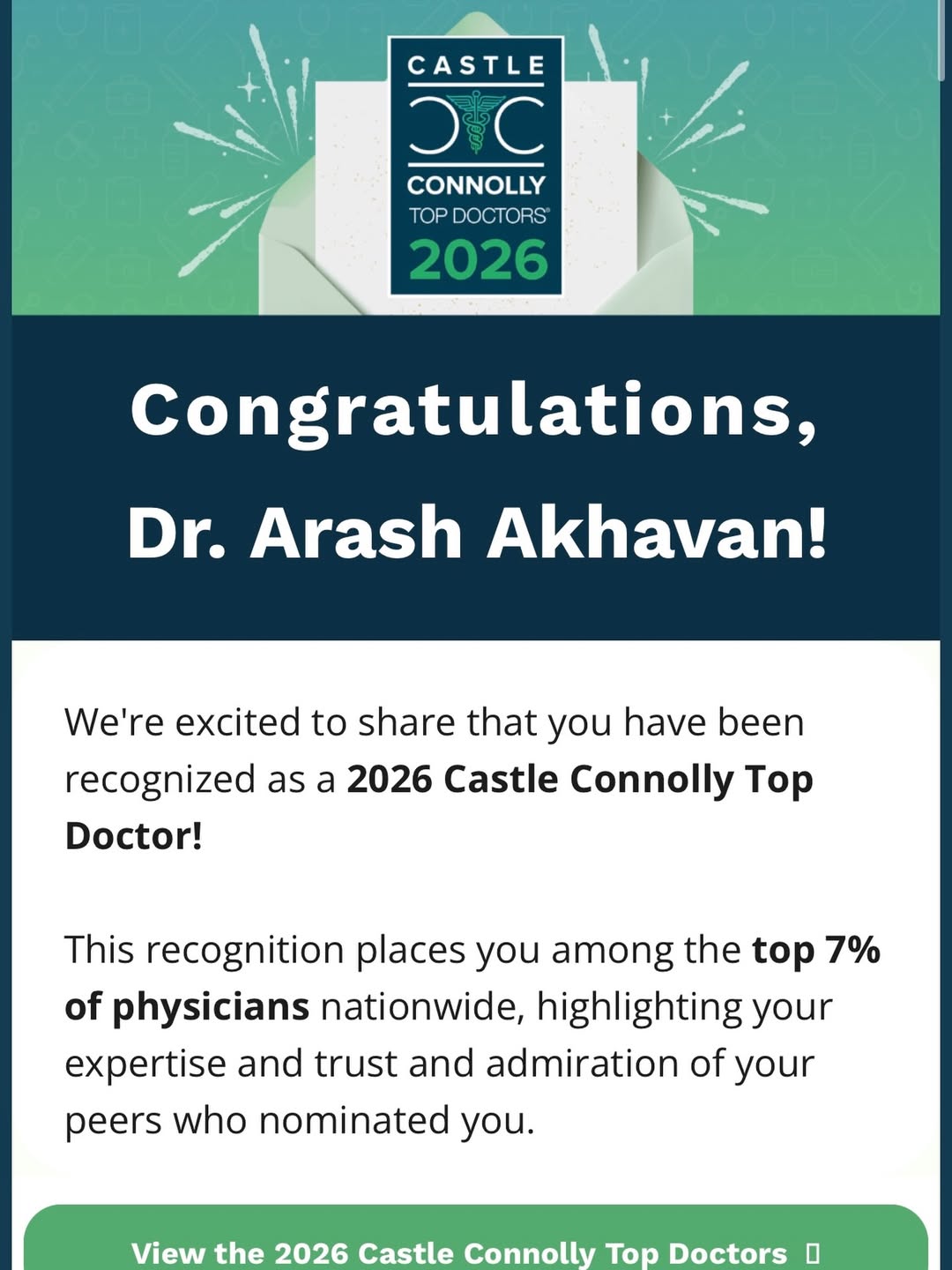
The recognition places Dr. Akhavan among the top 7 percent of physicians nationwide, based on nominations from fellow doctors.
“Thank you @castle_connolly for the recognition! We are proud to have Dr. Arash Akhavan included with such a great group of colleagues.”
One social post becomes another searchable entry point to The Dermatology and Laser Group.
Our own magazine. Clicks and citations from Google Search Console, as of September 15, 2026.
Draft story for dermatologyandlasergroup.com · Regenerative Medicine
A two vial system pairs cultured exosomes with PDRN to give aging skin both a signal and the raw material to respond to it.
We have started offering P.E.A.R.L. from AnteAGE, a two vial regenerative treatment that arrives exactly as it looks: one vial holding an activator powder with a warm metallic cap, the other holding a catalyst solution with a white cap, meant to be combined at the time of treatment rather than sold as a single premixed formula.
The idea behind P.E.A.R.L. is that regeneration needs two separate things to happen at once, and most products only address one of them. A cell has to be told to repair itself, and then it needs the actual material to do the repairing. Skip either half and the process stalls before it really starts, no matter how good the intention behind it is.
The activator vial contains exosomes cultured from stem cells. We think of these as the signal. Exosomes carry messages to aging or stressed cells, essentially instructing them to shift back into a repair state and start producing healthier tissue instead of continuing along the slower path of breaking down over time.
The second vial holds PDRN, purified DNA particles that act as raw fuel. Once a cell receives the signal to repair itself, it still needs material to build with. PDRN supplies that directly, giving cells the components they need to carry out repair right away instead of waiting on the body to manufacture its own supply first.
Put together, the two vials are designed to work in sequence rather than separately. The exosomes issue the instruction, and the PDRN gives the cell what it needs to follow through immediately. That pairing, a signal paired with a building material, is what separates this from treatments that only stimulate skin without supplying anything for it to work with afterward.
We describe this as regenerative medicine rather than a typical cosmetic treatment because the goal is not to mask aging skin but to change how the cells themselves behave underneath it. It is a US made formulation, and the net weights on each vial, 10mg for the powder and 5mL for the solution, reflect a clinical, measured approach rather than a generic serum mixed by eye.
For patients, the appeal is straightforward. Instead of one product doing one job, P.E.A.R.L. is built to address both sides of repair within a single session, combined right before use so the exosomes and PDRN stay active and paired as intended rather than sitting premixed on a shelf.
We see this as part of a broader shift happening in aesthetics right now, one that treats the skin's own regenerative capacity as the actual target of treatment rather than something to simply work around or cover over with topical products alone.
Draft story for dermatologyandlasergroup.com · In The Room
A treatment room we know well turns up on a Hulu show, with a familiar device and a very unfamiliar audience.
We have watched a lot of patients lie down on that treatment bed, but not many of them had a camera crew and a television audience waiting on the other side of the door. That changed when our office and the Emsculpt NEO device appeared on Love Thy Nader, now streaming on Hulu, in an episode that put a familiar piece of equipment in front of a much wider audience than we are used to.
In the episode, the Nader sisters come in to try Emsculpt NEO for themselves, and the appeal is easy to understand once you see it in motion. It is a treatment built around a simple idea: pairing muscle stimulation with a heating component in one session, so the conversation is not only about appearance but about how the body feels afterward, which is closer to how our patients actually talk about it.
The setting is exactly what our patients see when they come in for a session, down to the exam table, the padded strap positioned across the midsection, and one of our physicians standing by the machine console. There is no set dressing here, no exaggerated version of the room built for television. It is the same space we use every day, which is part of what made it a natural fit for a show built around real reactions rather than a scripted demonstration.
What comes through in the episode is less about the technology itself and more about the conversation happening around it, the kind we have in this room often. Body confidence gets discussed in a lot of directions these days, and having a mainstream show sit with that topic for a full segment, using an actual treatment rather than a general discussion, gave the moment a specificity that is often missing from that conversation.
Emsculpt NEO is not a treatment that photographs particularly well in a single still image, since so much of what it does happens beneath the surface during the session itself. A television segment gives it room to be shown in motion, with real time reactions, rather than compressed into a before and after graphic. That format suited what the Nader sisters were experiencing, and it suited the way we prefer to explain the treatment to anyone curious about it.
Having Love Thy Nader choose our office for that segment says something about how the show approached the topic generally, favoring an actual clinical setting over a generic backdrop. Season one, episode seven puts viewers directly in the room where the treatment happens, walking through the process the way a curious first time patient might experience it, questions included, rather than skipping straight to a summary of results.
For us, the appeal of the episode is less about visibility and more about accuracy. Anyone who has been curious about Emsculpt NEO but has not booked a consultation gets to see, in real time, what the appointment actually looks like, from the room itself to the equipment to the tone of the conversation around it, before ever stepping through our door.
The episode is available now on Hulu as part of Love Thy Nader season one, episode seven, for anyone who wants to see the treatment room before they ever book a visit. We will keep doing the same work in that same space either way, camera crew or not, since the room and the routine were never built for television in the first place.
Draft story for dermatologyandlasergroup.com · Recognition
The recognition places Dr. Akhavan among the top 7 percent of physicians nationwide, based on nominations from fellow doctors.
Dr. Arash Akhavan has been named a 2026 Castle Connolly Top Doctor, a recognition that places him among the top 7 percent of physicians nationwide. We are proud to share this news, not as a headline for its own sake, but because of what the recognition actually measures and who is doing the measuring when a distinction like this gets handed out.
Castle Connolly Top Doctors are not selected through advertising or self nomination. Physicians are nominated by their peers, meaning the doctors evaluating Dr. Akhavan's work are other doctors who understand what good dermatological care actually requires. That detail matters more to us than the award itself, because it reflects judgment from people with the training to know the difference.
Being nominated by colleagues means this recognition grew out of years of daily clinical work rather than a single standout case or moment. It reflects consistency: how a physician handles diagnosis, how they manage complex or unusual cases, and how they are regarded by others in the field who refer patients and consult on difficult decisions. That kind of trust builds slowly and is not easy to manufacture.
For patients, a distinction like this offers a useful shortcut. Choosing a dermatologist often means relying on reviews or referrals without much visibility into how a physician is actually regarded within their own profession. A peer nominated recognition gives that decision something more grounded to stand on, built from the perspective of people who evaluate medical skill for a living.
We think recognition means the most when it comes from within the field rather than from outside it. Patients can sense confidence and bedside manner, but they cannot always evaluate clinical judgment, diagnostic accuracy, or how a physician performs in the more difficult, less visible parts of the job. Castle Connolly's process is built specifically to surface that kind of assessment from people qualified to make it.
Dr. Akhavan's inclusion this year places him alongside a wide group of physicians across the country who were nominated through the same rigorous process. We do not take that company lightly. It is a reminder that dermatology, like any specialty, has a wide range of practitioners, and being named among the top 7 percent says something specific about where his work stands within that range.
For our practice, this recognition is really about reinforcing what patients should expect when they walk through our doors. It is confirmation, from outside our own walls, that the standard of care we hold ourselves to is recognized by physicians elsewhere in the field. That kind of external validation carries weight precisely because we do not control it.
We are grateful to Castle Connolly for the recognition and to the colleagues who took the time to nominate Dr. Akhavan. Awards like this do not change the day to day work of practicing medicine, but they do offer a clear, external marker of where that work stands. We are proud to carry this one into 2026 and to keep it as a standard to meet.
Keep reading