The tiny chin muscle that decides whether Botox fixes or breaks your smile
One small muscle called the DLI explains why the lower face is the hardest place to inject well.
YOUR LASER SKIN CARE STAFFTurn your social into search
We turn your posts into editorial stories that bring new search traffic to yourlaserskincare.com. Three of yours will be on this page.
Book a demo
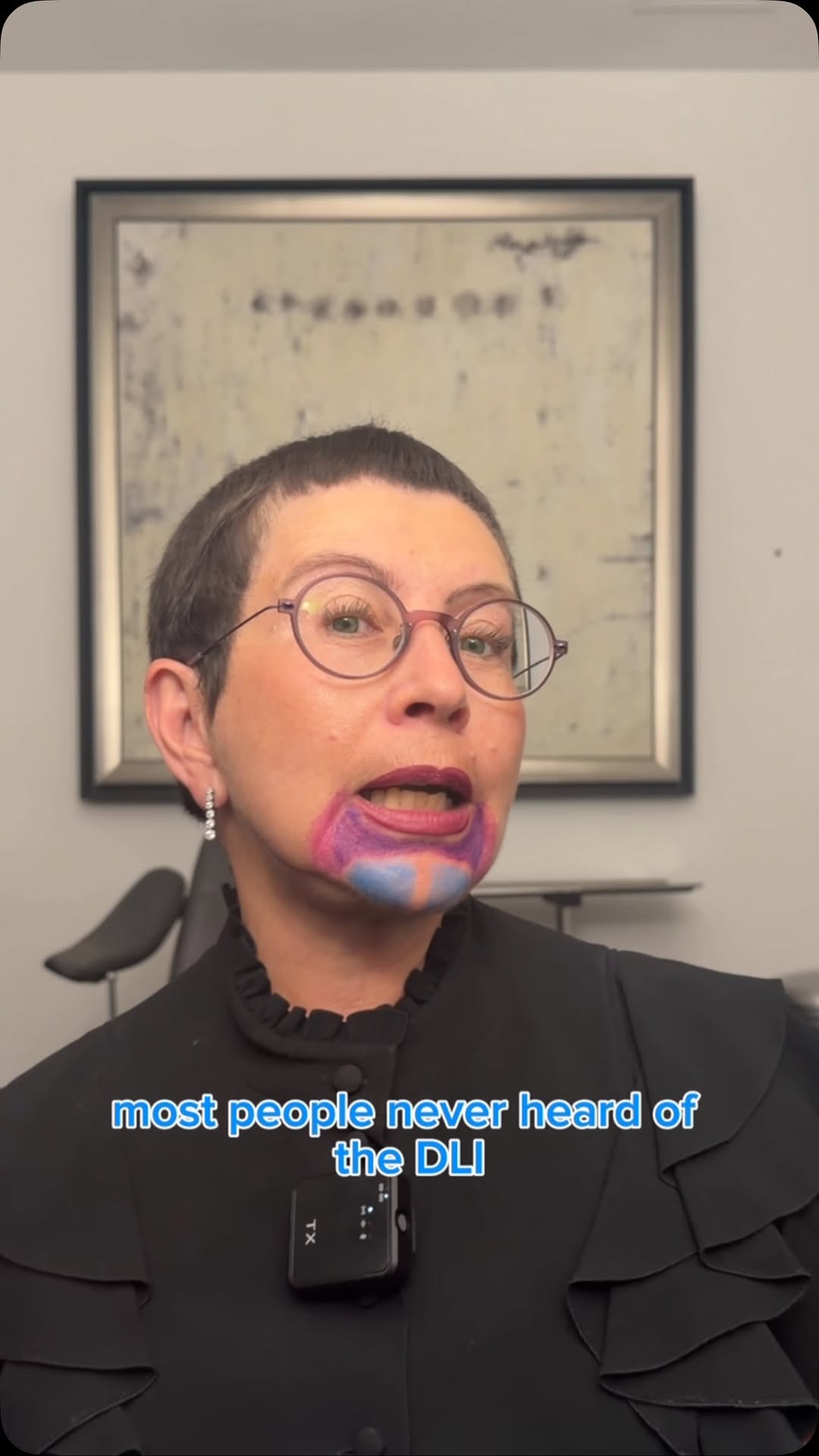
yourlaserskincare Botox can cause a crooked smile, and it can also fix one. The difference comes down to one small muscle most people have never heard of, the DLI. The depressor labii inferioris sits low on the chin, between the mentalis and the DAO, and its job is to pull your lower lip down when you talk or smile. That is exactly how a crooked smile happens, when Botox meant for the chin or the mouth corners spreads and catches the DLI on one side, that side stops pulling evenly and the smile goes uneven. It usually comes from injecting too close to the muscle or the product migrating afterward, which is the whole reason the no rubbing, no heavy exercise aftercare rules exist. The good news is it is temporary and correctable, either by balancing the other side with a couple of units or by letting it resolve as the Botox wears off. This is why the lower face is the hardest area to treat well. Precision down here is not a bonus, it is the whole thing. #Botox #BotoxComplications #LowerFaceBotox #NaturalBotox #BeverlyHillsMedSpa
One small muscle called the DLI explains why the lower face is the hardest place to inject well.
YOUR LASER SKIN CARE STAFFHow it works
Same as today. Nothing changes on Instagram.
We turn your post into a full story in your voice within the hour.
One click publishes it to yourlaserskincare.com. Nothing goes live without you.
Your stories
Nothing was published anywhere. You decide that. Every word will come from your own posts, your own photos and your own treatments.
Botox Precision · From your post
One small muscle called the DLI explains why the lower face is the hardest place to inject well.
“Botox can cause a crooked smile, and it can also fix one. The difference comes down to one small muscle most people have never heard of, the DLI. The depressor labii inferioris sits low on the chin, between the mentalis and the DAO, and its job is to pull your lower lip down when you talk or smile. That is exactly how a crooked smile happens, when Botox meant for the chin or the mouth corners spreads and catches the DLI on one side, that side stops pulling evenly and the smile goes uneven. It usually comes from injecting too close to the muscle or the product migrating afterward, which is the whole reason the no rubbing, no heavy exercise aftercare rules exist. The good news is it is temporary and correctable, either by balancing the other side with a couple of units or by letting it resolve as the Botox wears off. This is why the lower face is the hardest area to treat well. Precision down here is not a bonus, it is the whole thing. #Botox #BotoxComplications #LowerFaceBotox #NaturalBotox #BeverlyHillsMedSpa”
Treatment Notes · From your post
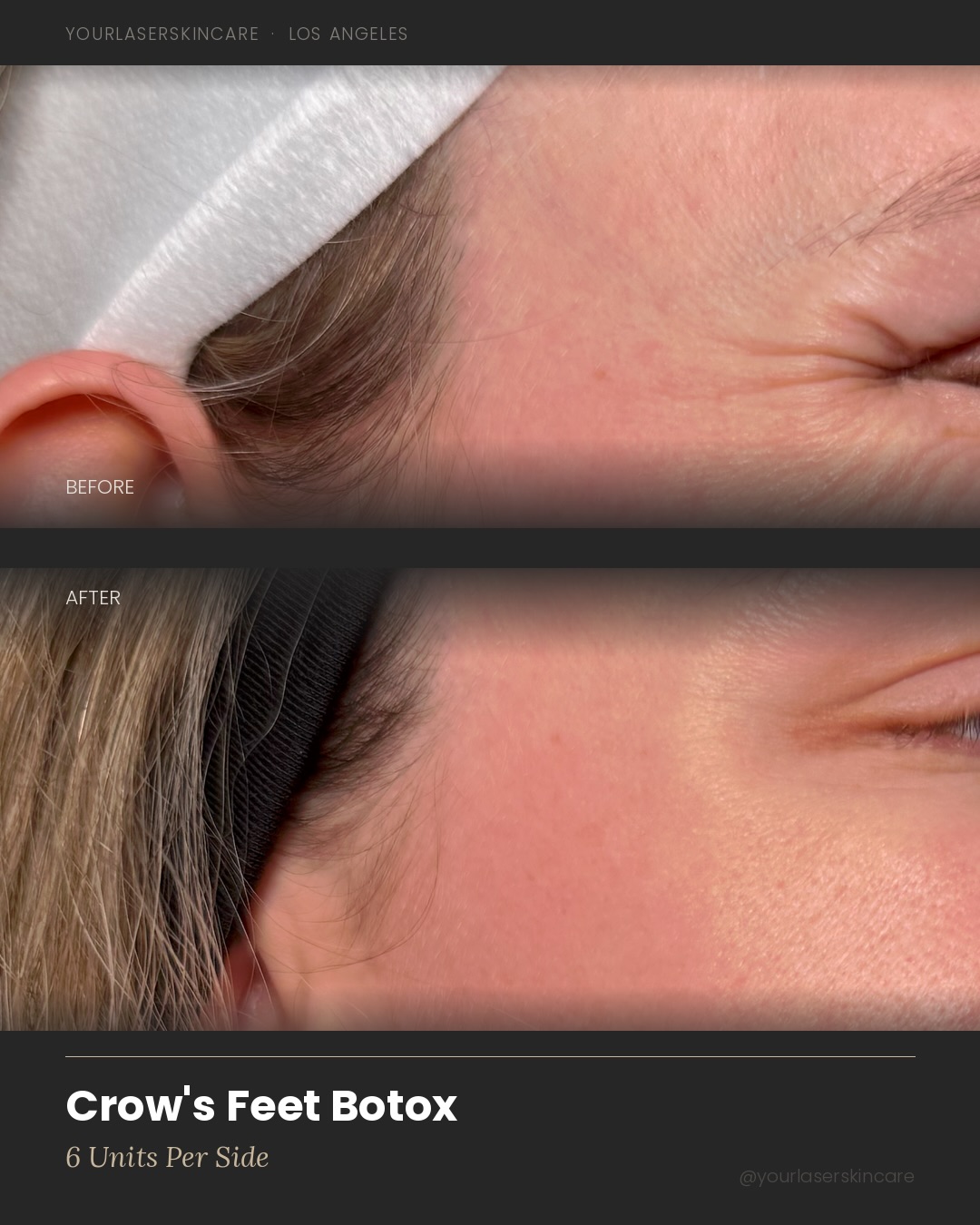
A look at what actually causes the lines at the corner of the eyes and how six units per side softened them without changing the smile.
“The lines at the corner of your eyes only show up when you smile. That’s because they come from movement. The muscle around the eye, the orbicularis oculi, contracts every time you smile or squint and folds the skin at the corner. Over time those folds start to stay. A few units softens the pull so the lines ease when you smile, without touching the smile itself. This was six units per side, placed to keep the eyes natural and expressive. Book a consultation through the link in our bio. #CrowsFeet #Botox #BotoxBeforeAndAfter #BeverlyHillsMedSpa #NaturalResults”
Treatment Notes · From your post
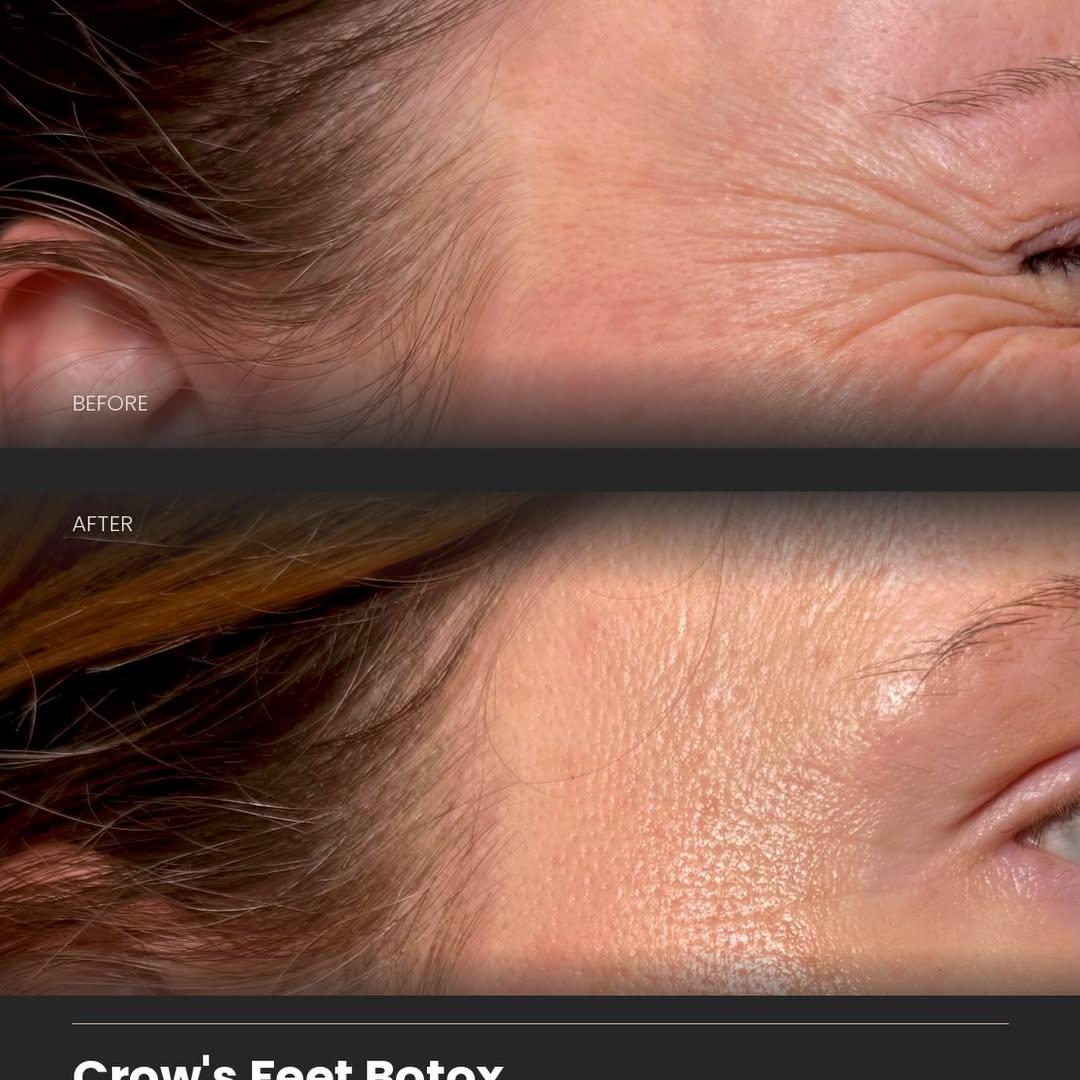
A close look at what actually happens to the skin at the corner of the eye, and how a small, precise dose changes it without changing the smile.
“The lines at the corner of your eyes are made by your smile. Every time you smile the muscle around the eye contracts and folds the skin at the outer corner. For years the folds bounce back, then they start to linger, and eventually they stay. A few units eases the pull so the fold softens when you smile, and the smile itself stays exactly the same. This was eight units per side, dosed to keep the eyes moving and natural. Book a consultation through the link in our bio. #CrowsFeet #Botox #BotoxBeforeAndAfter #BeverlyHillsMedSpa #NaturalResults”
One social post becomes another searchable entry point to Your Laser Skin Care.
Our own magazine. Clicks and citations from Google Search Console, as of September 15, 2026.
Draft story for yourlaserskincare.com · Botox Precision
One small muscle called the DLI explains why the lower face is the hardest place to inject well.
Most patients have never heard of the depressor labii inferioris, and there is no reason they should have. It is a small muscle, low on the chin, tucked between two others most people also cannot name, the mentalis and the DAO. But this muscle, the DLI for short, is the difference between a Botox result that looks even and one that leaves a smile pulling unevenly to one side.
The DLI has one job. When you talk or smile, it pulls your lower lip down on its side of the face. Both sides are supposed to fire together, evenly, so your smile looks symmetrical without you ever thinking about it. The moment one side stops doing its job properly, the imbalance shows up immediately, and it shows up in the exact place people notice first, right at the mouth.
A crooked smile after Botox is not usually the result of a wrong muscle choice. It happens when product meant for the chin or the corners of the mouth spreads slightly further than intended and reaches the DLI on just one side. Once that happens, one side of the lower lip stops pulling down as it should, the other side keeps working normally, and the imbalance between the two is what reads as a crooked smile.
There are two common reasons this spread happens. Sometimes it comes from injecting a little too close to the DLI itself, before it has ever had a chance to settle. Other times the product is placed correctly and migrates afterward, moving into muscle it was never meant to reach. That second scenario is exactly why aftercare instructions exist at all, and why we take them seriously with every patient.
No rubbing the treated area, no heavy exercise, no lying face down for the first few hours. These rules can sound like small print, but they are directly tied to keeping product where it was placed. Rubbing and increased blood flow both make migration more likely, and migration is the mechanism behind a crooked smile far more often than a mistake in the original injection.
The lower face is widely considered the hardest area to treat well, and the DLI is a big part of why. Muscles here sit close together, overlap in function, and each one has a narrow job that depends on staying separate from its neighbors. There is very little room for product to drift before it starts affecting a muscle it was never meant to touch, which raises the stakes on every single injection.
This is also why precision in the lower face is not a finishing touch, it is the entire treatment. Depth, placement, and dosage all matter more here than almost anywhere else on the face, because the margin for error is so small. Treating the chin or mouth corners well means respecting exactly where the DLI sits and staying deliberately clear of it.
If a crooked smile does happen, it is not permanent. It can often be corrected by adding a couple of units to balance the opposite side, restoring symmetry while everything settles. If correction is not needed, it resolves naturally as the Botox wears off over time. Either way, understanding the DLI is what allows a asymmetry like this to be explained, managed, and fixed rather than feared.
Draft story for yourlaserskincare.com · Treatment Notes
A look at what actually causes the lines at the corner of the eyes and how six units per side softened them without changing the smile.
The lines at the corner of the eyes do not sit there all day. They show up when you smile, when you squint into the sun, when you laugh at something genuinely funny. That timing is the clue. These are not lines caused by dryness or sun damage sitting on the surface. They are caused by movement, which means the muscle underneath is doing something specific every single time.
The muscle responsible is called the orbicularis oculi. It rings the eye and contracts every time the face smiles or squints, pulling the skin at the corner into a fold. Do that enough times over enough years and the fold stops fully releasing. The skin starts to hold a little of the shape even at rest, which is how a movement line slowly becomes a line you notice in photos.
In this case the treatment was six units per side, placed specifically to ease that pull without flattening it. The goal was never to stop the muscle from working. It was to soften how hard it contracts, so the fold at the corner of the eye is gentler when it does happen. The eye still closes, still squints, still does its job.
That distinction matters more here than almost anywhere else on the face. Overdo the corner of the eye and the smile stops reaching the eyes at all, which reads as flat rather than refreshed. Six units is a conservative number by design. It is enough to take the edge off repeated folding without removing the muscle's ability to move the way it naturally would.
Photographed at rest, both sides look calm. The difference only becomes obvious in the after image once the same partial smile is attempted. Before, the fold at the corner pulls into several distinct lines radiating out toward the hairline. After, that same partial smile shows a much smaller, softer crease. The eye is still expressive. It is just not folding as hard as it used to.
This is also why crow's feet respond differently to Botox than lines caused by volume loss or sun exposure. Because the cause is muscular and repetitive, a small, targeted dose has an outsized effect. There is no filler involved, no change to the shape of the face. The treatment is only interrupting a pattern of movement that has been happening thousands of times a week for years.
Every consultation for this area starts with watching the face move before anything is marked. Smiling, squinting, talking. The muscle contracts differently for everyone, and the amount of fold at rest versus in motion tells us how conservative or how targeted the dose should be. Six units per side is a starting point we adjust based on that movement, not a fixed number we apply to every face.
The result we are working toward is simple to describe and harder to execute well: a smile that still looks like a smile, with less of the fold it used to leave behind. If crow's feet are something you have been watching change in photos, a consultation is the place to look at how your own muscle moves before deciding what, if anything, to soften.
Draft story for yourlaserskincare.com · Treatment Notes
A close look at what actually happens to the skin at the corner of the eye, and how a small, precise dose changes it without changing the smile.
The lines at the corner of your eyes are made by your smile, not by anything going wrong with your skin. Every time the muscle around the eye contracts, it folds the skin at the outer corner in the same place, over and over. For years those folds bounce back the moment your face relaxes. That is simply how a young, elastic muscle behaves.
The trouble starts slowly. The folds that used to disappear the second you stopped smiling begin to linger a little longer each time. Eventually they stop leaving at all, and the line is there even at rest, long after the smile has ended. This is not a sign of neglect. It is the natural result of a muscle doing the same motion thousands of times a year.
In the before image, the skin above the brow and at the outer eye shows fine, layered lines that deepen toward the crease, visible even at rest. That kind of texture builds gradually, which is exactly why the fix does not need to be dramatic. A few carefully placed units ease the pull of the muscle just enough to let the fold soften.
The case shown here used eight units per side, a dose chosen specifically to keep the eyes moving naturally. The goal was never to stop the muscle from working. It was to reduce the force behind the fold so the skin has less reason to crease deeply every time you smile, laugh, or squint into the sun.
The after image shows skin that reads smoother and more even in tone at the same angle, with the deep folds at the eye corner far less pronounced. The eyebrow still lifts. The eye still narrows when the smile happens. What has changed is the depth of the crease left behind once the expression passes, not the expression itself.
This is the part that matters most when crow's feet are involved. Too much product in this area can flatten the outer eye and make a smile look stiff or uneven, which is often the exact thing people are afraid of before they come in. Dosing by the side, in small units, is how that risk gets managed rather than avoided by guesswork.
Eight units per side is a modest, targeted amount, not a maximum. It is chosen based on how much movement is already happening in that specific muscle and how deep the resting folds have become. The eyes stay expressive because the treatment is built around preserving that movement, using just enough product to change the outcome without changing the mechanics.
Every face folds a little differently at the outer eye, depending on muscle strength, skin thickness, and how expressive that side of the face naturally is. That is why dosing here is never a fixed number applied to everyone. We start with a consultation to look at how your eyes move first, then build a plan around that movement rather than around a standard amount.
Keep reading